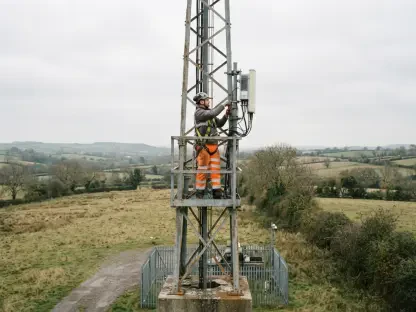

Integrating point-of-sale terminals directly into the operational workflow allows telecom infrastructure providers to track every electricity recharge transaction in real time. This technological evolution marks a definitive end to the era of manual utility management, where field technicians previously navigated the complexities of physical cash handling at remote sites. At the recent Cairo ICT 2026 exhibition, the alliance between Basata and Benya Towers showcased how financial technology is being recontextualized as a foundational layer for industrial automation. For companies managing thousands of cellular towers, the logistics of keeping prepaid electricity meters running has historically been a source of significant operational friction. By transitioning to an integrated digital ecosystem, these organizations are not merely updating their payment methods but are fundamentally restructuring their operational DNA. This shift allows for a level of transparency and efficiency that was virtually unattainable under traditional management models, proving that fintech is now a critical utility for the infrastructure sector.
Optimizing Remote Logistics through Digital Payment Solutions
The core mechanism driving this transformation involves the strategic deployment of specialized point-of-sale devices across the entirety of a telecom provider’s physical network. In the traditional framework, the process of recharging electricity meters at isolated tower sites was fraught with logistical hurdles, often requiring field personnel to carry large sums of cash into remote regions. This practice naturally introduced substantial risks, including the potential for loss, theft, or accounting errors that could take weeks to reconcile. By implementing a fintech-driven solution, these field teams now execute transactions through a secure digital platform that validates every payment instantly. This automation ensures that funds are allocated directly to the utility provider without intermediary delays. Consequently, the reliance on physical currency is minimized, allowing infrastructure firms to streamline their financial workflows while simultaneously enhancing the security of their field operations and the safety of their personnel.
Centralizing Information with Real-Time Management Hubs
Beyond the immediate convenience of digital transactions, the integration of fintech platforms creates a centralized management hub that serves as a single source of truth for the entire organization. This robust database tracks every granular detail of site maintenance, from unique meter identification numbers and specific card data to precise transaction amounts and chronological timestamps. For an entity like Benya Towers, maintaining full administrative control over this information is vital for long-term strategic planning. Managers can now monitor the status of every site in real time, observing consumption patterns and identifying potential anomalies before they escalate into systemic failures. The ability to dynamically add or remove site data from a central dashboard provides a level of agility that manual systems could never provide. This data-driven oversight transforms utility management from a reactive chore into a proactive strategy, ensuring that infrastructure remains resilient in an increasingly demanding digital landscape.
Improving Systemic Reliability and Operational Continuity
Ensuring service continuity is perhaps the most significant operational imperative for any telecommunications provider, as network downtime can have cascading effects on thousands of end-users. In many regions, power outages caused by depleted prepaid meter balances are a recurring problem that stems from the delays inherent in manual reconciliation and physical cash settlements. Fintech partnerships address this vulnerability by providing real-time monitoring and automated reporting tools that alert management long before a meter reaches a critical threshold. By maintaining a constant digital connection to utility accounts, infrastructure providers can proactively manage recharges, ensuring that no site goes offline due to a lack of funds. This proactive stance is essential for meeting service-level agreements and maintaining the high reliability expected in the modern digital era. By removing the logistical bottlenecks of the past, companies can focus their resources on expanding their network reach and improving service quality, confident that their foundational power requirements are being managed.
Strengthening Field Accountability through Secure Access
One of the most critical advantages of this automated approach is the resolution of longstanding last-mile operational challenges through enhanced field accountability. By assigning individual digital balances and specific POS terminals to field representatives, the system establishes a clear and traceable chain of command for every dollar spent. Management can define specific access rights within the platform, ensuring that technicians only interact with authorized meters and services relevant to their specific assignments. This granular level of control effectively eliminates the risk of unauthorized resource use and provides a transparent audit trail for financial reporting. When every transaction is linked to a specific user and location, the potential for internal discrepancies is virtually eliminated. This rigorous oversight not only protects the company’s financial interests but also empowers field workers with reliable tools that simplify their daily tasks. The result is a more professional and efficient workforce that can focus on technical maintenance rather than administrative hurdles.
Scaling Industrial Fintech for Corporate Ecosystems
The convergence of telecommunications infrastructure and financial technology signals a broader shift in the B2B sector, where fintech is increasingly viewed as an industrial tool rather than just a consumer convenience. Companies like Basata are successfully leveraging massive operational footprints, originally developed for merchant and consumer payments, to solve the complex needs of large-scale institutions. This evolution demonstrates that fintech providers can scale their offerings to manage tens of thousands of industrial locations, providing the sophisticated tools necessary to maintain modern infrastructure. For an infrastructure arm like Benya Towers, this partnership represents an essential upgrade to their operating system, aligning with their overarching goals of total digital transformation. As the complexity of physical networks grows, the need for integrated, smart financial solutions becomes more pronounced. This trend suggests that the future of infrastructure management will be defined by deep integrations between technology providers and financial institutions, creating a seamless ecosystem for growth.
Advancing National Goals for Financial Transparency
On a national level, these partnerships are instrumental in advancing goals related to digital transformation and financial inclusion, specifically within the regional market as it moves through the 2026 to 2028 period. By transitioning large-scale corporate utility payments into a digital framework, the telecommunications industry is actively contributing to the development of a cashless economy. This shift reduces the influence of the shadow economy and enhances the overall transparency of financial flows between the energy and telecom sectors. Moreover, the success of this model provides a blueprint for other industries, such as logistics and manufacturing, to adopt similar integrated management systems. As financial transparency becomes a standard requirement for corporate governance, the adoption of automated fintech solutions will likely accelerate across all sectors of the economy. This systemic change not only improves operational efficiency at the company level but also strengthens the national economic infrastructure by fostering a more reliable and transparent environment.
Evaluating Operational Excellence and Future Strategies
The strategic alliance between financial technology leaders and infrastructure providers established a new benchmark for operational excellence in the industrial sector. By integrating automated payment systems, organizations successfully mitigated the risks associated with manual cash handling and improved their overall service reliability. Moving forward, companies should have prioritized the adoption of real-time data analytics to further refine their resource allocation and energy consumption strategies. It became evident that the transition to a fully digital utility management system was not merely a technological upgrade but a necessary step for maintaining competitive advantage. Industry leaders recommended that similar organizations conduct a comprehensive audit of their current manual workflows to identify areas where fintech integration could have provided immediate efficiency gains. These collaborations demonstrated that the path to sustainable growth involved a deep commitment to digital transparency and the elimination of traditional logistical bottlenecks. Ultimately, the successful automation of telecom infrastructure served as a critical case study for the broader application of fintech in the B2B marketplace.