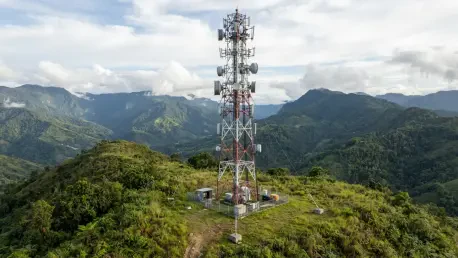

The activation of a shared site in Minj marks the first practical application of a nationwide program designed to consolidate passive telecommunications assets. This development in the Jiwaka Province represents a fundamental pivot in how Papua New Guinea manages its digital connectivity infrastructure. For decades, the industry operated under a model of duplication, where each carrier maintained its own isolated physical network at a massive individual cost. By enabling Digicel PNG to activate commercial equipment on a tower owned by Vodafone PNG, the industry has effectively dismantled the old silos of proprietary ownership. This shift is not merely a technical adjustment but a strategic alignment intended to address the persistent digital divide in rural regions. The implementation follows a rigorous negotiation period that concluded in late 2025, setting the stage for a more collaborative era. As the site begins serving the local community, it proves that rivals can find common ground.
Strategic Integration: Overcoming Geographical and Financial Barriers
Rugged Terrain: Managing Construction Costs in the Highlands
The rugged terrain of Papua New Guinea, particularly within the Highlands, presents some of the most daunting engineering challenges for telecommunications engineers anywhere in the world. Building a single greenfield tower in these remote districts requires an astronomical capital investment that often yields very slow returns on investment. Crews must frequently construct new access roads through dense rainforest or rely on expensive helicopter lifts to transport heavy steel components and sensitive transmission gear. Beyond the initial build, these sites require constant refueling of diesel generators because the national power grid does not reach many of these isolated peaks. By adopting a co-location model, operators can split these immense overhead costs, turning what was once a financial liability into a shared manageable expense. This collaborative approach allows for network expansion into areas that were previously deemed commercially unviable due to the sheer difficulty.
Operational Efficiency: Securing Assets and Reducing Expenses
In addition to the physical construction hurdles, securing and maintaining telecommunications infrastructure in isolated provinces remains a significant operational burden. Vandalism, theft of diesel, and local security threats often jeopardize the uptime of individual towers, leading to service blackouts and costly emergency repairs. Under the new shared framework, carriers can consolidate their security resources, providing a more robust defense for the equipment that serves the entire community. Instead of three different companies paying for three different security details at three separate locations, a single fortified site can house the equipment of multiple providers. This centralized approach also streamlines maintenance schedules, as technicians can service multiple network components during a single visit. Consequently, the reduction in recurring operating expenses allows these companies to protect their profit margins while simultaneously improving the overall resilience of the network for the users.
National Frameworks: Driving Connectivity and Market Evolution
Collaborative Governance: Establishing the Nationwide Program
This operational milestone in Minj is the result of a coordinated effort that includes a series of bilateral agreements involving Digicel PNG, Vodafone PNG, and the state-owned Telikom PNG. These contracts, finalized between 2026 and 2028, establish a national framework that treats base infrastructure as a shared utility rather than a tool for blocking competition. This movement toward infrastructure neutrality is essential for the sustainable growth of the sector in developing markets where resources are limited. The project in the Jiwaka Province is now serving as the blueprint for a reciprocal initiative in the Baiyer River region of the Western Highlands. In that upcoming phase, Vodafone is scheduled to install its transmission gear on an existing Digicel mast, further solidifying the trust between these corporate entities. This systematic rollout ensures that technical standards are uniform across the country, making it easier for new technologies to be integrated as the network matures.
Sustainable Growth: Practical Steps for Long-Term Resilience
The move toward infrastructure sharing proved to be a decisive step in stabilizing the regional digital economy. Stakeholders recognized that the traditional model of isolated expansion was no longer sustainable in the face of rising energy costs and complex local logistics. Looking ahead, the focus shifted toward the integration of renewable energy sources, such as solar and wind hybrids, to power these shared sites and reduce reliance on imported fuels. Carriers also explored the possibility of opening these shared towers to third-party internet service providers to further diversify the digital ecosystem. Government regulators maintained a transparent framework to ensure that co-location fees remained fair and did not become a new barrier to entry. By prioritizing collective infrastructure health over individual dominance, the telecommunications sector in Papua New Guinea established a foundation for long-term technological resilience that served as a model for other Pacific nations.