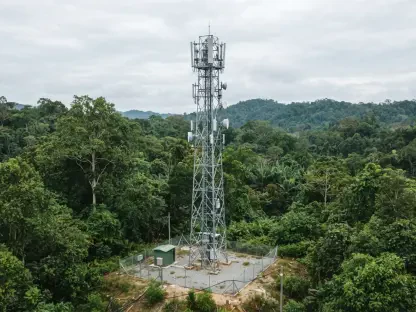

Innovative antenna array structures are overcoming the diminishing returns typically associated with increasing the physical size of traditional mobile equipment. This breakthrough was prominently displayed at the Africa Tech Festival 2026, where the collaboration between Vodacom and Huawei showcased the massive potential of the U6GHz spectrum for the African continent. This particular frequency range is emerging as a critical pillar for digital infrastructure, designed to handle the increasing density of mobile traffic in urban centers while maintaining a sustainable cost profile for operators. By merging advanced hardware engineering with localized network expertise, the two companies successfully demonstrated how to bypass the physical constraints that once made high-frequency deployments look impractical. This effort is not merely a technical showcase; it is a fundamental shift in how telecommunications providers can scale their networks to meet the demands of a rapidly evolving digital economy. As Africa transitions toward more sophisticated mobile services, the deployment of such innovations ensures that the network backbone remains resilient and capable of supporting next-generation applications.
Strategic Value of New Frequencies
Global Spectrum Standards
The U6GHz band, which encompasses the 6425–7125 MHz range, has reached a point of global consensus, earning the designation of the “golden spectrum” for its unique technical properties. This range was formally identified for International Mobile Telecommunications during the 2023 World Radiocommunication Conference, a move that aligned approximately 80% of the global population under a unified frequency strategy. For African operators, this alignment is crucial because it ensures a stable ecosystem for device manufacturing and infrastructure development, reducing the long-term costs of hardware acquisition. The contiguous wideband nature of the U6GHz resource allows for the massive data pipes necessary to support 5G-Advanced and provides a clear evolutionary path toward 6G. By securing this spectrum now, regional leaders are positioning the continent to stay in lockstep with global technological trends, ensuring that local businesses and consumers have access to the same high-performance connectivity found in the world’s most developed digital markets.
International cooperation on these standards has further encouraged manufacturers to accelerate the production of compatible chipsets and handsets, creating a more mature market for high-capacity mobile services. This standardized approach prevents the fragmentation that often plagues new technology rollouts, allowing Vodacom to leverage a global supply chain to drive down device prices for its subscribers. Moreover, the integration of U6GHz into the global IMT framework signals to investors that the African digital economy is built on a stable and forward-looking foundation. As more countries adopt this frequency, the resulting economies of scale will make it significantly easier to upgrade existing networks without the financial risk associated with proprietary or non-standard bands. This strategic foresight ensures that the digital infrastructure being built today will remain relevant and compatible with the global ecosystem for years to come, fostering long-term economic stability and technological growth.
Network Capacity: Managing the Crunch
Beyond international standardization, the U6GHz band serves as the primary solution to the looming capacity crunch facing mobile networks as data consumption reaches unprecedented levels across the region. Traditional frequencies, such as the C-band, are increasingly congested as more users migrate to 5G services, leading to potential performance degradation in high-traffic areas like major business hubs and transport interchanges. The introduction of U6GHz provides the essential headroom needed to maintain ultra-high speeds and low latency, which are the hallmarks of a premium digital experience. This spectrum effectively acts as a necessary expansion of the existing network capacity, allowing for a more seamless transition as the number of connected devices continues to grow from 2026 toward the end of the decade. By deploying this high-capacity resource, operators can guarantee a consistent quality of service for both individual consumers and corporate clients, preventing the bottlenecks that stifle innovation.
Maintaining this level of network reliability is particularly important for the growth of mobile-centric industries such as financial technology and digital trade, which rely on instantaneous data transmission. As consumer habits shift toward data-heavy applications like high-definition video and cloud-based services, the demand for throughput is expected to outpace the capabilities of older spectrum allocations. The strategic use of U6GHz ensures that the network can absorb this surge in demand without a corresponding drop in user experience or connection stability. This capacity expansion also facilitates the growth of the Internet of Things, allowing thousands of sensors and smart devices to operate simultaneously in urban environments. By addressing these capacity needs proactively, Vodacom and Huawei are ensuring that the digital infrastructure remains a step ahead of market demand, providing a stable and scalable platform that supports the continued expansion of the African digital economy and its integration into global markets.
Overcoming Deployment Hurdles
Engineering and Efficiency: The VitaAAU Solution
Historically, moving to higher frequency ranges like the U6GHz band has been complicated by the physical reality of path loss, where signals weaken significantly more quickly than they do at lower frequencies. In practical terms, the U6GHz spectrum suffers from a coverage deficit of approximately 13 dB when compared to the established C-band, which traditionally meant that operators would need to double the number of base stations to achieve the same coverage area. Such a requirement would be economically prohibitive for many African markets, where infrastructure investment must be balanced against the need for affordable consumer pricing. The challenge for engineers was to find a way to enhance signal propagation without requiring a massive increase in physical tower count or power consumption. Without a specialized technological intervention, the U6GHz band would likely remain a niche resource, leaving broader residential and suburban areas without the benefits of wideband connectivity.
To solve this dilemma, the implementation of the VitaAAU system has introduced RetinaMIMO technology, which marks a significant departure from traditional massive MIMO architectures. This system utilizes advanced beam scanning to reconstruct radio link topology at the millisecond level, effectively preventing the “three-dimensional coverage collapse” that usually plagues high-frequency signals. By precisely directing energy and optimizing the way antennas interact with the environment, this innovation allows the U6GHz signal to match the coverage footprint of the C-band. This means that mobile operators can utilize their existing tower sites and infrastructure, avoiding the logistical nightmare of acquiring new land and building additional towers. This leap in engineering efficiency demonstrates that high-frequency spectrum can be deployed at scale without the traditional high-frequency penalty, providing a blueprint for sustainable network expansion that prioritizes both technical performance and capital expenditure efficiency.
Empirical Validation: Performance Metrics
Empirical validation of these technologies at the Vodacom Lab has yielded data that supports a radical shift in deployment strategies for the next several years. Testing results showed that the RetinaMIMO-enabled solution produced a 30% increase in coverage range while simultaneously reducing overall energy consumption by 30% compared to standard 1024-Antenna Element solutions. These metrics are particularly significant for the African market, where power stability and operational costs are major factors in network sustainability. By achieving coverage parity with existing 5G bands, the U6GHz innovation enables a “co-site, co-coverage” model that streamlines the upgrade process. This level of efficiency ensures that the environmental impact of expanding digital services is minimized, aligning with global sustainability goals while providing the technical foundation for a massive rollout. The success of these trials confirms that the technical barriers to large-scale U6GHz adoption have been effectively neutralized.
The successful validation of U6GHz innovations ultimately established a new standard for telecommunications infrastructure across the continent. By resolving the coverage and efficiency bottlenecks that once plagued high-frequency spectrum, the partnership moved the industry closer to a ubiquitous, high-speed wireless future. These efforts proved that through targeted engineering, the physical limitations of radio waves could be managed effectively to support the massive data requirements of a modern society. The project demonstrated that sustainable network growth was achievable by utilizing existing assets more intelligently rather than relying on invasive new constructions. As a result, the technical foundation was laid for a more resilient digital economy that prioritized performance and affordability. This unified approach to innovation successfully removed the final barriers to large-scale 5G-Advanced deployment, ensuring that the benefits of the digital age reached every corner of the region and supported long-term growth.