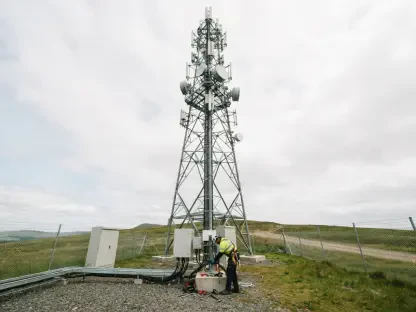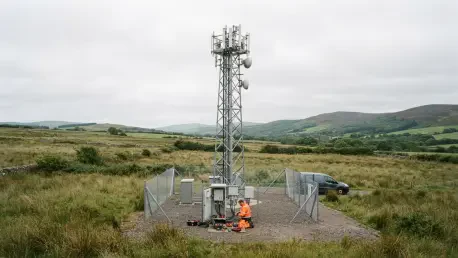

Market analysts have pinpointed 2026 as a cyclical trough for organic growth within the cell tower sector due to the lingering effects of major carrier consolidations. As wireless data consumption by Americans reached an unprecedented 159 trillion megabytes only a year ago, the industry is bracing for a projected quadrupling of traffic by 2032. This exponential surge in connectivity requires a massive physical foundation of steel towers and high-capacity radios. Within this high-stakes environment, the market is currently dominated by three specific Real Estate Investment Trusts: American Tower, Crown Castle, and SBA Communications. These entities manage the essential conduits for digital communication, positioning themselves as critical gatekeepers. While the current fiscal climate presents specific headwinds, the underlying demand for bandwidth remains an undeniable force. Understanding how these companies manage their portfolios is essential for anyone tracking the long-term sustainability of the sector’s famous dividend yields.
Navigating the Sector Trough
Cyclical Growth Trends
Current market conditions indicate that the stagnation observed in organic growth is primarily a function of “churn,” a term used to describe the cancellation of leases when wireless carriers streamline their networks. Much of the downward pressure felt in 2026 results from the multiyear integration of T-Mobile and Sprint, alongside recent financial shifts among smaller players like DISH and EchoStar. As these carriers decommission redundant sites, tower owners face a temporary reduction in revenue that masks the steady demand from other network expansion efforts. This consolidation phase is a necessary transition as the industry moves away from older technology generations toward a more unified 5G standard. While the loss of rental income is tangible, the infrastructure itself remains largely irreplaceable, and the barriers to entry for new competitors continue to be prohibitively high, protecting the long-term value of existing tower installations across the country.
Beyond carrier mergers, the 2026 trough is influenced by the cautious capital allocation strategies of major telecom giants like AT&T and Verizon. These companies are currently balancing their network densification needs with the requirement to manage debt loads incurred during previous spectrum acquisitions. Consequently, domestic site leasing revenue has experienced a slight cooling, forcing REIT management teams to lower their immediate revenue guidance. However, this period of relative quiet is being used to optimize tower footprints and negotiate lease renewals that include annual escalators. Analysts observe that while the top-line figures might appear flat in the immediate term, the operational efficiency of the tower model remains intact. The fixed-cost nature of the business ensures that once these legacy churn issues are fully realized, the remaining tenant base will provide a highly profitable foundation that supports consistent cash flow and dividend coverage.
The 2027 Infrastructure Rebound
The horizon for 2027 looks remarkably different, driven by a scheduled surge in capital expenditure following the next major spectrum events. A critical upper C-band spectrum auction is planned for April 2027, an event that historically serves as a massive catalyst for tower growth. Whenever wireless carriers purchase new frequencies, they are legally and competitively obligated to deploy the corresponding hardware to put that spectrum to use for their subscribers. This process involves adding new radios and antennas to existing towers, which triggers amendment revenue for the REITs. This upcoming “spectrum wave” is expected to reignite the organic growth engine that has been idling during the consolidation trough. The industry anticipates that the physical necessity of these upgrades will override short-term budget constraints, as carriers must compete on network speed and reliability in a market where data consumption continues to grow by double digits annually.
Looking ahead toward 2028, the technological shift toward more advanced 5G applications and the early exploration of 6G will further cement the necessity of tower density. The anticipated rebound in 2027 is not just about clearing the 2026 churn but about establishing a new baseline for data delivery capacity. As the C-band spectrum is deployed, towers will see a significant increase in equipment weight and wind load, often leading to more lucrative lease terms for the infrastructure owners. This cyclical recovery is a well-documented pattern in the telecommunications industry, where periods of spectrum acquisition are invariably followed by periods of intensive infrastructure build-out. For investors, this suggests that the current lull is a preparation phase for a multiyear growth cycle. By focusing on the 2027 recovery, the market is signaling that the fundamental utility of tower assets is expanding as they become the primary distribution points for an increasingly decentralized and data-hungry digital economy.
Strategic Profiles and Market Performance
Diversification and Operational Focus
American Tower is currently differentiating itself through a hybrid business model that pairs its massive global tower portfolio with a sophisticated data center division. This strategy is anchored by its CoreSite acquisition, which has proven to be a significant growth driver as data processing moves closer to the edge of the network. In the third quarter of 2026, the company reported that its data center revenue grew by more than 17%, reaching a total of $313 million. This diversification provides a unique hedge against the flat organic growth currently seen in the North American tower market. By capturing revenue from both the transmission and the storage of data, American Tower is positioning itself to benefit from the broader cloud computing and artificial intelligence booms. This dual focus allows the firm to maintain a healthy Adjusted Funds From Operations payout ratio of 64.5%, ensuring that dividends are well-covered even as the tower segment navigates a period of consolidation.
Crown Castle has recently completed a significant transformation, emerging as a pure-play operator focused exclusively on the U.S. tower market. This shift involved the high-profile sale of its fiber and small cell business, which generated $8.4 billion in proceeds. The decision to divest these assets was driven by a need to simplify the corporate structure and focus on the higher-margin macro tower business. While the sale allowed the company to pay down $7 billion in debt and reduce interest expenses, it also necessitated a substantial dividend cut in 2025 to align payouts with the new revenue reality. Currently, Crown Castle offers a high yield of 4.77%, but its Adjusted Funds From Operations payout ratio stands at 92.4%. This high ratio leaves a very narrow margin for error, making the company’s performance highly sensitive to any fluctuations in U.S. carrier spending. However, management has already identified $65 million in annual cost savings as part of this restructuring effort.
Security and Future Investment Considerations
SBA Communications stands out in the REIT sector for its exceptionally conservative financial management and disciplined approach to dividend growth. While the company offers a lower current yield of 2.69% compared to its peers, it maintains a remarkably safe payout ratio of only 41% of its Adjusted Funds From Operations. This strategy provides a massive cushion that allows the company to continue increasing its dividend even during periods of domestic market stagnation. Since 2019, SBA has grown its dividend from $0.37 to $1.25, representing one of the most aggressive growth rates in the industry. This focus on long-term compounding is supported by an investment-grade credit rating of BBB, which was earned earlier this year. The rating lowers the company’s cost of capital, providing a competitive advantage when seeking to acquire new assets or refinance existing debt. By prioritizing financial stability over immediate high yields, SBA appeals to investors who value safety.
The evaluation of these infrastructure assets concluded that the 2026 market trough was a predictable byproduct of industry consolidation rather than a loss of long-term utility. To successfully manage a portfolio through this transition, investors were encouraged to prioritize firms with strong coverage ratios and manageable debt maturities. The analysis showed that while lease cancellations from legacy carrier mergers created a temporary drag on performance, the underlying quadrupling of data demand necessitated ongoing physical upgrades. Strategic considerations for the coming years involved focusing on the 2027 spectrum deployment as a primary catalyst for capital appreciation. Actionable steps for stakeholders included shifting toward REITs with diversified revenue streams, such as data centers, to mitigate the risks of regional carrier churn. Ultimately, the durability of these dividends was confirmed by the essential nature of the steel and radios that power the mobile world, providing a clear outlook for renewed growth.