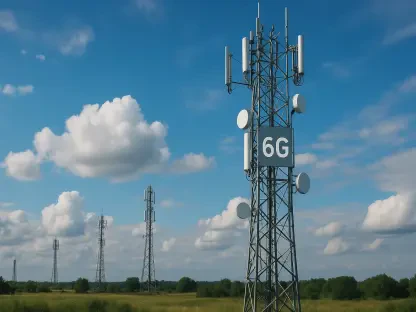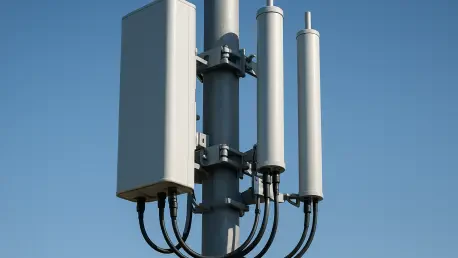

The pursuit of near-instantaneous connectivity recently took a giant leap forward as engineers transformed a quiet suburban neighborhood into a high-tech proving ground for the next generation of wireless technology. This shift represents a critical move from the pristine, echo-free chambers of research centers to the unpredictable terrain of the real world. By deploying a pre-standard 6G stack in Concord, California, Verizon and Ericsson have proven that the ambitious goals of next-generation wireless are no longer confined to whiteboard sketches or theoretical simulations.
The trial utilized a massive 400MHz carrier within the 7GHz spectrum, a frequency range previously underutilized for commercial mobile broadband. This bandwidth capacity is significantly larger than what is typically available in standard 5G deployments, promising speeds and data handling capabilities that could redefine the internet of things. The successful demonstration in a residential setting provides a blueprint for how future networks will navigate the complex geometry of modern cities and suburbs alike.
Moving Beyond the Laboratory to the Streets of Concord
Transitioning 6G from controlled environments to field trials is a pivotal step in the lifecycle of any wireless technology. While laboratory tests confirm that hardware can function in a vacuum, only an outdoor setting can account for the chaotic interference of atmospheric conditions, vehicle traffic, and signal diffraction. The Concord trial successfully demonstrated that a pre-standard 6G stack could maintain high performance even when subjected to the variables of a suburban environment, validating years of foundational research.
By moving the equipment into the streets, the engineering teams were able to observe how a 400MHz carrier behaves when it interacts with real-world topography. This leap in potential bandwidth is essential for supporting future applications that require massive data throughput, such as high-fidelity augmented reality or autonomous infrastructure management. The demonstration proved that the jump from 5G to 6G will not just be a gradual improvement, but a significant expansion of the digital airwaves.
Why the 7GHz Band Is the Strategic Sweet Spot for Next-Gen Connectivity
The 7GHz band has emerged as a critical “sweet spot” for the telecommunications industry, sitting perfectly between the long-range coverage of low bands and the extreme throughput of millimeter-wave frequencies. As global demand for high-performance data continues to surge, there is a pressing need for spectrum that can penetrate buildings while carrying vast amounts of information. This trial specifically addressed that demand, proving that the 7125MHz to 7400MHz range is viable for the next phase of mobile evolution.
Furthermore, the choice of this frequency aligns with the focus of the National Telecommunications and Information Administration (NTIA) on repurposing specific spectrum blocks for commercial use. By targeting this range, the trial demonstrated how the industry can address urban obstacles that often hinder high-frequency signals. The ability of the 7GHz band to balance capacity with signal resilience makes it a prime candidate for the high-density networks required in the coming years.
Technical Execution: Stress-Testing 6G Against Physical Obstacles
To execute this rigorous test, Ericsson base stations were integrated directly into the existing network infrastructure, while a mobile laboratory—housed in a large utility unit—acted as the receiver. This mobile lab was uniquely designed to simulate diverse indoor-to-outdoor environments by utilizing various wall and window materials. This allowed researchers to measure “penetration loss” with high precision, determining exactly how much a 6G signal weakens when it passes through common building structures.
The performance analysis extended to both line-of-sight and non-line-of-sight scenarios across distances of 100 to 200 meters. Engineers evaluated throughput, latency, and signal stability while the mobile unit moved through areas with heavy foliage and structural obstructions. These results were vital for understanding how to maintain a consistent connection in a suburban landscape where trees and architectural features often disrupt wireless paths.
Industry-Wide Synergy Through the 6G Innovation Forum
This breakthrough was the result of a collaborative ecosystem driven by the Verizon-led 6G Innovation Forum. Originally formed by a core group of hardware and software developers, the forum has recently expanded to include fourteen members, including tech giants like NVIDIA, Amazon Web Services, and Cisco. This expansion reflects an industry-wide consensus that the path toward 6G requires deep cross-sector integration to establish unified global standards and functional network designs.
Expert focus within this forum has also shifted toward the logistical challenge of relocating existing federal users to free up spectrum for future commercial auctions. By coordinating with the FCC and various government agencies, the members are working to ensure that the necessary airwaves are available for widespread deployment. This collective research is instrumental in shaping the technical specifications before the 2026 finalization, ensuring that the hardware is ready for the market as soon as the standards are set.
Roadmap for the Future: Preparing for a 6G Reality
The data gathered from the Concord trial provided a foundational characterization of how signals behaved in suburban settings, allowing for more accurate network planning in the 2026 to 2028 window. It offered a roadmap for integrating high-speed data with advanced sensing capabilities, moving toward a reality where connectivity is as ubiquitous as oxygen. Stakeholders shifted their focus toward refining these technical insights as the specification finalization approached, ensuring that the transition from current 5G limitations would be both smooth and revolutionary.
Ultimately, the trial confirmed that the next era of wireless communication was prepared to move from the drawing board to actual city streets. Engineers identified specific strategies for bridging the gap between current network density and the high-capacity demands of future applications. This successful field test established the 7GHz band as a cornerstone of future connectivity, providing the necessary evidence to support upcoming spectrum auctions and global infrastructure investment.