
During a volatile session on November 24, Mayor Lara Sanoica had to intervene multiple times as residents voiced concerns over the project’s environmental footprint. The Rolling Meadows City Council ultimately green-lighted a transformative redevelopment project for the nearly 40-acre site located at 3800 Golf Road, marking a pivotal moment in the local economy’s shift toward modern digital infrastructure. This decision followed an intense public meeting where officials attempted to balance fiscal modernization against a wave of resident concerns regarding transparency and potential ecological impacts. The transition of this vacant office property into a high-tech data hub signals a move toward long-term financial stability for the municipality, which has struggled to fill large corporate office spaces in recent years. By approving the special use permit and the associated tax incentives, the council has paved the way for Digital Realty to begin a massive overhaul of the landscape, replacing old structures with essential hardware.
Infrastructure Scope and Public Reaction
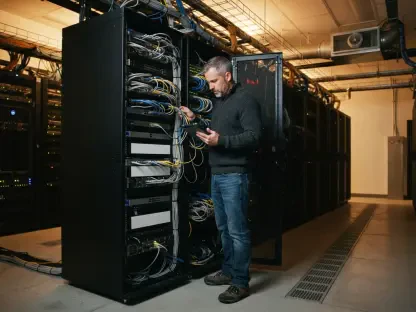
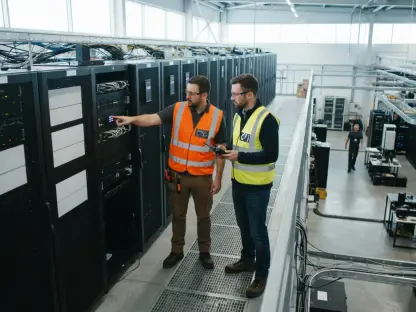
The redevelopment will be spearheaded by Digital Golf Road LLC, an affiliate of the global firm Digital Realty, which plans to transform the site into a state-of-the-art facility designed for high-density computing. The comprehensive master plan involves demolishing the existing vacant office building to make way for a cutting-edge data center and a dedicated 4.6-acre ComEd substation. This substation is a critical component of the design, engineered specifically to provide 240 megawatts of power to the facility, ensuring it can handle the immense energy loads required for modern server farms. Local officials emphasized that the current power grid would not be able to support such a development without this specialized infrastructure, which represents a significant private investment in the city’s utility capacity. The project requires precise engineering to ensure that the electrical load is managed safely and efficiently while maintaining the overall integrity of the local grid.
The council meeting was marked by a sharp divide in public sentiment, with residents voicing both strong support and vocal opposition throughout the lengthy proceedings. Proponents of the development, including labor representatives and local trade unions, focused on the tangible economic benefits that such a large-scale construction project would bring to the region. They argued that the facility would generate a significant number of high-paying union construction jobs, providing stable employment for hundreds of workers during the multi-year build-out. Furthermore, supporters highlighted that the massive tax revenue generated by the data center could eventually alleviate the financial burden on individual homeowners. These advocates stressed that in an era where digital services are indispensable, hosting the infrastructure that powers smartphones is a logical step for any city looking to remain relevant in the modern marketplace while also securing a robust and diversified revenue stream.
Economic Development and Tax Benefits
A primary driver for the approval was the staggering projected increase in tax revenue facilitated by the Class 6B tax incentive, which local officials described as a game-changer for the city’s budget. While this incentive reduces property tax assessments from 36% to 16% for a 12-year duration, the sheer scale of the new development means that overall contributions will skyrocket compared to the current vacant office building. Assistant City Manager Glen Cole presented data showing that while the property currently generates roughly $2 million in property taxes annually, this figure is expected to rise to $17 million shortly after the project’s start. By the tenth year of operation, the annual tax contribution is projected to reach approximately $25 million, providing a massive influx of cash that the city can use for public services. This shift represents a move from a stagnating asset to one that provides high-value revenue with very little demand for municipal services in return.
The long-term fiscal impact extends far beyond the city’s general fund, as the project is projected to contribute over $113 million to Rolling Meadows through the year 2041. Local school districts, specifically Districts 15 and 214, are set to be the biggest beneficiaries, with an estimated $95 million in projected tax revenue over the same period. Crucially, because the data center will not house residents, it will provide this massive boost to the tax base without adding a single new student to the school system, effectively providing revenue that does not increase the burden on educational resources. Other local entities, including Cook County and the Rolling Meadows Park District, are also expected to receive millions in funding from the redevelopment. City leaders noted that once fully operational, the data center could represent approximately 10% of the city’s entire tax base, significantly protecting the community from future economic downturns and budget shortfalls.
Environmental Protection and Strategic Risks
City officials addressed environmental anxieties by highlighting the use of closed-loop cooling systems, which significantly minimize water waste compared to the older technologies used in earlier data centers. Alderman Mike Koehler emphasized that his support for the project was rooted in technical data, noting that these modern systems recycle water internally rather than continuously drawing from the city’s supply. Furthermore, the facility will utilize Tier 4 backup generators, which represent the highest current standard for low emissions and are intended only for emergency use or periodic testing. Regarding noise concerns, leaders pointed out that the site’s location near two major expressways already produces ambient noise levels that likely exceed the projected output of the data center’s containment systems. The developer has committed to using sound-dampening materials and strategic landscaping to ensure that any residual hum from the cooling fans remains below the strict ordinance levels.
Beyond environmental considerations, the council weighed the strategic risk of the developer seeking deannexation to the neighboring village of Schaumburg if the project were rejected in Rolling Meadows. Alderman Kevin O’Brien noted that since the property sits directly on the border, losing the project to a neighboring jurisdiction would be a double loss for the city. If Schaumburg were to annex the site, Rolling Meadows would lose all regulatory oversight and the associated tax windfall while still being potentially affected by the facility’s proximity and any environmental spillover. Maintaining the project within city limits ensures that Rolling Meadows retains full control over the development’s standards and the long-term economic benefits it provides. This competitive landscape forced the council to consider the broader regional implications of their vote, recognizing that large-scale technology firms have multiple options for where they locate their critical digital hardware.
Governance Process and Project Completion
The proceedings concluded with a firm defense of the representative democratic process and the council’s authority to make complex planning decisions on behalf of the community. Aldermen countered claims of a lack of notification by pointing out that the project had been discussed in four consecutive State of the City addresses and marketed publicly starting back in 2023. Alderman Mandy Reyez suggested that the late-stage outcry was perhaps more a result of a general lack of engagement with local government agendas until projects reach their final authorization phases. She emphasized that the city had followed all legal requirements for public hearings and notices, ensuring that the process remained transparent and open to those who chose to participate. The council asserted that as elected representatives, they were tasked with making difficult decisions that balance the immediate concerns of a vocal minority against the long-term fiscal health of the municipality.
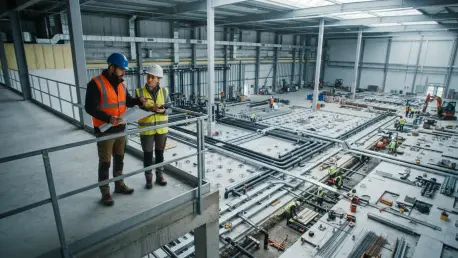
Ultimately, the council officially authorized the development through a split vote, cementing its role as a cornerstone of the city’s future infrastructure and economic strategy. With a final investment of at least $466 million by Digital Realty, the construction timeline was set to extend through June 2031, ensuring a steady stream of activity and revenue for the coming years. This decision moved the project from the planning phase into active development, providing a clear path for the demolition of the Golf Road office building and the subsequent installation of the high-power substation. Leaders focused on the next steps, which involved finalizing site plans and ensuring that the environmental safeguards promised during the hearings were strictly enforced during the build-out. By securing this massive data center, the city positioned itself as a key node in the regional tech corridor, creating a blueprint for how suburban municipalities could adapt to the shifting global economy.