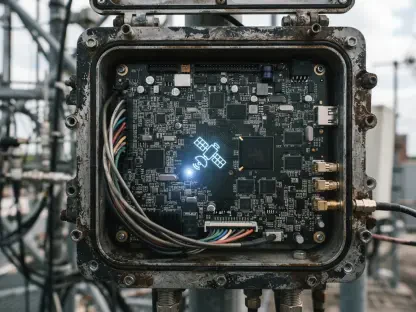

Operating on the 868 MHz and 915 MHz bands allows Suzi to bypass the heavy congestion typically found in the saturated 2.4 GHz radio frequency spectrum. This shift represents a fundamental realignment of how low-power devices communicate within increasingly complex domestic and industrial environments. For years, the industry relied on the 2.4 GHz band, which remains notoriously susceptible to interference from common household items like Wi-Fi routers and microwave ovens. The official launch of the certification program for Suzi marks a critical evolution for the Connectivity Standards Alliance, addressing the persistent range and penetration issues that have limited the expansion of smart home systems into larger properties. This extension is not merely a technical update but a strategic expansion of the Zigbee 4.0 physical layer, designed to ensure that connectivity remains robust even when signals must travel through thick concrete walls or across expansive outdoor spaces without the need for excessive hardware.
The Physical Advantage of Sub-GHz Technology
Overcoming Structural Obstacles and Range Limitations
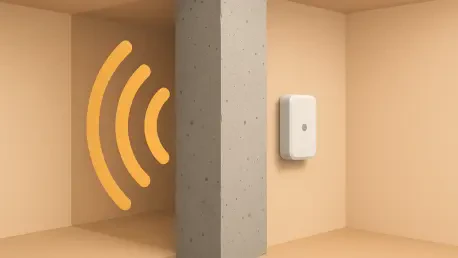
The transition to sub-gigahertz frequencies fundamentally alters the reliability of automated systems by leveraging the inherent physical properties of longer radio waves. Unlike the shorter waves of the standard 2.4 GHz band, which are frequently absorbed or reflected by dense construction materials, the 800-900 MHz signals utilized by Suzi are capable of diffracting around large obstacles and penetrating thick barriers such as brick and reinforced concrete. This characteristic is particularly vital for modern homeowners who often encounter dead zones in basements or detached structures where traditional signals fail to reach. By providing a connection that is less impeded by the physical environment, Suzi enables a level of architectural freedom that was previously unattainable for complex projects. This shift ensures that sensors and controllers can be placed based on functional needs rather than signal proximity, improving the user experience in diverse residential layouts.
Extending the operational range of a smart network is a highly visible benefit of this technological advancement, moving far beyond the typical limitations of standard indoor protocols. In practical applications, this means that smart devices can now be deployed hundreds of feet away from a central gateway without losing stability. For properties with extensive gardens or separate outbuildings like guest houses and garages, Suzi offers a seamless way to incorporate remote security cameras, gate controllers, and environmental sensors into a single network. By reducing the dependency on a dense grid of intermediate repeating nodes, the overall complexity of the installation is minimized, leading to lower costs and fewer points of failure. This increased reach effectively bridges the gap between indoor automation and outdoor management, allowing for a truly comprehensive ecosystem that covers the entire perimeter of a modern property with a single, unified standard that is easy to manage.
Maintaining Mesh Resilience in a Sub-GHz Environment
While many long-range communication protocols rely on a simplistic star topology, Suzi maintains the sophisticated mesh networking architecture that has defined Zigbee’s success for decades. In a star configuration, every single device must maintain a direct and constant link to a central hub, which often creates bottlenecks and leaves the system vulnerable to a single point of failure. By contrast, a mesh network allows each mains-powered device to act as a router, relaying information from distant nodes back to the coordinator. This self-healing capability is essential for ensuring that the network remains operational even if one specific device encounters an obstruction or technical malfunction. The integration of this resilience into the sub-gigahertz space means that users do not have to choose between range and reliability. Instead, they gain a network that becomes stronger as more devices are added, providing a highly scalable solution for large-scale deployments.
The practical implementation of this mesh architecture in the sub-gigahertz band translates to a more fluid and adaptable network behavior in challenging environments. For instance, if a newly parked vehicle or a temporary structure blocks the primary path between a garage door sensor and the main house, the system can automatically reroute data through a nearby smart plug or outdoor lighting fixture. This dynamic pathfinding is what distinguishes professional-grade automation from consumer-grade novelties, offering the level of reliability required for critical security and safety applications. Furthermore, because Suzi operates in a less congested frequency space, the overhead required for managing these mesh paths is reduced, leading to faster response times and improved energy efficiency for battery-powered end-devices. This combination of physical reach and logical flexibility positions the protocol as the premier choice for demanding installations that require both wide coverage and high data integrity.
Integration with the Zigbee 4.0 Framework
Modernizing the User and Installer Experience
The arrival of Suzi coincides with a broader effort within the Zigbee 4.0 framework to simplify the often-complex processes of device commissioning and network management. One of the standout features of this update is a revamped pairing protocol that streamlines the way new hardware is introduced into an existing ecosystem. This improvement is particularly beneficial for professional installers who are tasked with setting up dozens of sensors and switches in a single session. By enabling batch commissioning, the new standard allows multiple devices to be authenticated and integrated simultaneously, drastically reducing the labor hours previously spent on repetitive manual pairing tasks. This efficiency gain not only lowers the overall cost of professional installations but also minimizes the potential for human error during the setup phase. As smart home technology moves toward mass adoption, these quality-of-life enhancements are critical for ensuring systems stay accessible.
Complementing the physical reach of the Sub-GHz extension is the introduction of Zigbee Direct, a feature that leverages Bluetooth Low Energy to facilitate direct communication between smartphones and smart devices. This addition solves a long-standing challenge where users needed a specific hub or gateway just to perform basic setup or diagnostic tasks. With Zigbee Direct, a homeowner or technician can use a standard mobile app to configure a Suzi-enabled device, check its signal strength, or update its firmware without navigating through the central coordinator. This direct interaction model is paired with advanced security protocols that meet modern cybersecurity standards, protecting the network from unauthorized access even at extended ranges. By prioritizing both ease of use and data integrity, the Zigbee 4.0 standard ensures that the expansion into lower frequencies is accompanied by a more modern, secure, and user-friendly interaction layer that bridges hardware and software.
Hardware Requirements and Coexistence Strategies
Transitioning to a sub-gigahertz environment necessitates a shift in hardware architecture, as the physical components required for 2.4 GHz communication are fundamentally incompatible with 800-900 MHz waves. This reality means that existing Zigbee 3.0 coordinators and hubs cannot be upgraded to support Suzi through simple software updates. Consequently, the industry is seeing the emergence of a new generation of dual-band gateways designed to bridge the gap between legacy installations and the future of long-range connectivity. These advanced coordinators house multiple radio modules, allowing them to manage standard short-range bulbs and plugs alongside the new long-range sensors simultaneously. This approach protects the consumer’s investment in current technology while providing a clear pathway for expanding their network into previously unreachable areas. For the end-user, the management of these two disparate frequency bands is handled entirely by the gateway.
The transition strategy adopted by the Connectivity Standards Alliance emphasizes a gradual and inclusive evolution rather than an abrupt replacement of existing standards. Manufacturers are encouraged to develop products that can participate in hybrid networks, where the high bandwidth of the 2.4 GHz band is used for data-heavy tasks, while the Suzi extension handles low-bandwidth, long-range status updates. This coexistence is managed through sophisticated software stacks, such as the silicon-independent solutions developed by firms like Exegin Technologies. By making the underlying software compatible with a wide range of hardware chips, the ecosystem fosters competition and innovation among silicon vendors. This diversity in the supply chain is expected to accelerate the availability of Suzi-enabled products, moving from professional-grade industrial equipment to mainstream consumer electronics. As these new hardware options become standard, the distinction between short and long range will fade.
Strategic Market Impact and Future Applications
Challenging Competitors and Enhancing Interoperability
For several years, the choice between Zigbee and Z-Wave often came down to a trade-off between the extensive product ecosystem of the former and the superior range of the latter. With the launch of the Suzi extension, Zigbee has effectively dismantled the primary competitive advantage of Z-Wave by offering comparable sub-gigahertz performance within its own open and widely adopted framework. This strategic move is likely to consolidate the market, as manufacturers can now leverage a single protocol to meet the needs of both dense indoor environments and sprawling outdoor installations. Furthermore, Zigbee’s lower licensing costs and massive developer community provide it with a significant edge in driving down the price of long-range smart home hardware. As the market shifts, we can expect to see a wider variety of specialized Sub-GHz sensors, from moisture monitors for agriculture to industrial occupancy sensors, all operating under the familiar Zigbee banner.
The relationship between Suzi and the Matter protocol is another vital aspect of its strategic positioning in the modern smart home landscape. While Matter aims to provide a unified language for all smart devices to communicate, it still relies on underlying transport layers like Thread, Wi-Fi, and Zigbee to carry that data across the physical space. Suzi serves as a robust foundation for Matter-compatible ecosystems, offering a high-reliability network layer that can support complex automation routines across vast distances. By acting as a bridge between the physical radio environment and the high-level application layer, Suzi ensures that Matter-enabled hubs can reach devices that were previously outside their coverage zone. This synergy between standards is crucial for achieving the industry’s ultimate goal: a truly interoperable smart home where the user no longer needs to worry about which radio frequency a specific sensor uses. Instead, the focus remains on the convenience that a connected world provides.
Expanding Reach: Beyond Residential Boundaries
Beyond the typical suburban household, the capabilities of Suzi opened up significant opportunities in the commercial and industrial sectors where 2.4 GHz interference was previously a deal-breaker. Large-scale warehouses and multi-story office complexes often feature heavy machinery and metal shielding that create impenetrable barriers for high-frequency signals. In these environments, the deployment of Suzi-based networks allowed for real-time tracking of assets and environmental monitoring without the prohibitive cost of installing miles of ethernet cabling or hundreds of signal repeaters. This shift toward sub-gigahertz connectivity provided facility managers with a scalable and cost-effective way to implement smart building technologies that improved energy efficiency and operational safety. The ability to maintain stable connections through multiple floors and across heavy-duty equipment demonstrated that the Zigbee protocol had matured into a versatile solution capable of handling the most demanding physical challenges.
The certification of Suzi represented a pivotal moment that successfully addressed the long-standing range limitations of the Zigbee protocol. By decoupling the technology from the congested 2.4 GHz band, the industry provided developers with the tools needed to create truly comprehensive smart environments. Stakeholders who invested in dual-band hardware infrastructure early on found themselves well-positioned to capitalize on the increasing demand for reliable outdoor and large-property automation. Moving forward, enthusiasts should prioritize the integration of these long-range capabilities into the broader Matter ecosystem to ensure maximum interoperability. Manufacturers were encouraged to continue the development of specialized Sub-GHz sensors that could take full advantage of the superior penetration characteristics of the 868 and 915 MHz bands. As the technology matured, the barriers between different property types effectively vanished, leaving behind a robust framework for the modern era.