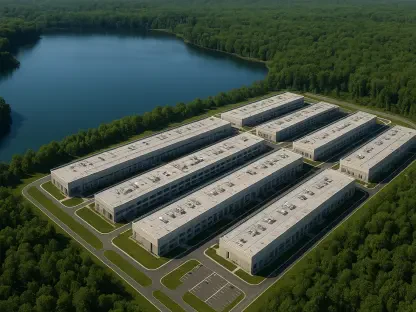

Property underwriters are increasingly concerned with the fire risks posed by dense battery arrays and advanced liquid cooling systems required to keep AI servers from overheating. This anxiety stems from a massive influx of capital into artificial intelligence infrastructure, which is projected to reach an astronomical $6.7 trillion by 2030. Within this total, roughly $5.2 trillion is earmarked specifically for AI workloads, marking a radical departure from the storage-heavy data centers that dominated the landscape in previous years. As technology giants race to secure the compute capacity needed for the next generation of digital services, the insurance and reinsurance markets are being forced to adapt to a landscape defined by extreme power densities. These new facilities do not merely scale up existing technology; they introduce entirely new physical and financial exposures that challenge traditional risk assessment. The evolution from standard cloud storage to high-performance computing represents a fundamental shift in how global infrastructure must be underwritten and managed in a 2026 market.
Specialized Hazards in Infrastructure Development
Managing Construction: Engineering Complexity and Pressure
The rapid development of AI-centric facilities introduces significant pressures that extend beyond simple building logistics. Constructing these high-specification environments involves complex engineering challenges, particularly regarding the integration of specialized power grids and sophisticated thermal management systems. Insurers are now finding that traditional underwriting models, which historically treated engineering, property, and transit risks as separate silos, are inadequate for the highly integrated nature of modern digital infrastructure. The unprecedented speed at which these projects move from planning to operation creates a compressed timeline for risk assessment, often leaving underwriters with less data than they typically require. Structural failures or engineering errors during the construction phase can lead to cascading delays that impact global supply chains. As a result, there is a growing need for insurers to involve specialist engineers early in the design process to ensure the structures can handle the immense stresses.
High-Value Transit: The Marine Cargo Exposure
A unique and often overlooked facet of the current infrastructure surge is the extreme concentration of value within the hardware itself. The specialized chips and Graphics Processing Units (GPUs) required for AI training are not only expensive but also exceptionally sensitive to moisture, temperature fluctuations, and physical vibrations during transit. This creates massive exposures for marine cargo and inland transit insurance markets, where a single shipment can represent hundreds of millions of dollars in capital value. If a container ship experiences a localized fire or a logistics hub faces a natural disaster, the financial impact of losing a single batch of advanced processors could dwarf the value of the entire vessel’s remaining cargo. Insurers are responding by demanding more rigorous logistics oversight, including real-time environmental monitoring and enhanced security protocols to prevent theft. This concentration of value means that the logistics of moving hardware has become a high-stakes component of the global risk profile.
Operational Safety: Thermal and Fire Hazards
Once a facility is live, it faces unique physical hazards driven by high power consumption and intense heat generation. The immense draw of AI servers increases the risk of electrical failure and fire, necessitating specialized risk engineering that goes far beyond standard commercial requirements. This includes the physical segregation of battery arrays to prevent fire propagation and the installation of highly sensitive smoke and heat detection systems. Traditional firefighting methods are often insufficient for these environments, as water-based suppression can cause as much damage to the servers as the fire itself. Consequently, insurers are pushing for the adoption of inert gas suppression systems and specialized containment strategies. The goal is to isolate potential failures before they spread to the rest of the server hall. This proactive approach to fire safety is critical for maintaining the operational uptime that clients expect from high-performance facilities, as even a small fire can lead to weeks of downtime.
Reliability Concerns: Advanced Liquid Cooling Systems
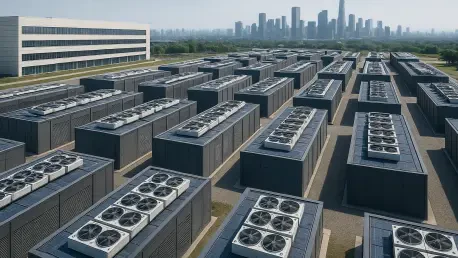
The integration of specialized cooling systems represents another major hurdle for developers and their insurers. Unlike the air-cooled racks used in the past, contemporary AI servers generate heat at levels that require advanced liquid-to-chip or immersion cooling technologies. These systems involve the circulation of dielectric fluids or water in close proximity to high-value electronics, introducing a risk of leakage that could destroy millions of dollars in equipment in seconds. Underwriters are increasingly scrutinizing the quality of the plumbing and the redundancy of leak-detection sensors within these facilities. Furthermore, the specialized power requirements often necessitate the construction of dedicated substations and on-site energy storage, adding layers of mechanical complexity. The insurance market must therefore pivot toward a technical evaluation of these bespoke components, recognizing that the failure of a single cooling pump or a faulty valve can result in a total loss of the computational assets housed within the facility.
Systemic Risks and Market Evolution
Insurance Clash: The Interconnected Loss Scenario
The concept of “insurance clash” has emerged as a critical concern for the global reinsurance market as data centers become more interconnected. A single localized incident, such as a fire at a major regional hub, can ripple across multiple insurance lines simultaneously. For example, a failure at a facility could trigger property damage claims for the physical building, marine cargo claims if replacement parts were in transit during the incident, and massive business interruption claims for the downtime. Because these facilities serve as the backbone for a wide array of digital services, the ripple effect of an outage is far-reaching. This interconnectivity means that insurers must account for “contingent business interruption,” where the policyholder suffers a loss because of a failure at a third-party site. Traditional risk models that look at individual buildings in isolation fail to capture the systemic nature of these dependencies. Underwriters are now working to map these digital connections to understand how a single point of failure can lead to a catastrophic loss.
Systemic Contagion: Interconnected Digital Risks
Systemic contagion is particularly worrisome because many global platforms rely on a handful of key data center clusters for their computational power. If one of these hubs goes offline due to a cyberattack or a catastrophic weather event, the resulting losses would not be limited to the physical damage of the servers. Instead, the failure could impact thousands of businesses, government agencies, and consumer services that depend on that specific infrastructure. This creates a scenario where the total insured loss could exceed the value of the data center itself by several orders of magnitude. Insurers are increasingly utilizing advanced data modeling to track these concentrations of risk, attempting to quantify the potential for a “black swan” event that could bankrupt a single-line carrier. To mitigate this, the industry is moving toward more collaborative underwriting, where property, cyber, and liability specialists share data to create a holistic view of the exposure. This integrated approach is essential for maintaining the financial stability of the insurance sector.
Sustainability Paradox: Energy Infrastructure Needs
The surge in AI capacity is inextricably linked to an unprecedented demand for electricity, creating a complex intersection between the technology and energy insurance markets. Data centers now require such vast amounts of power that they are frequently classified as “nationally significant” infrastructure, placing them under increased regulatory and security scrutiny. This massive energy consumption has led to a “sustainability paradox,” where technology companies must find ways to power their facilities while honoring aggressive net-zero commitments. In response, insurers are becoming central players in the transition to renewable energy by providing coverage for solar, wind, and even modular nuclear reactors dedicated to data center use. Underwriters must evaluate the risks associated with building and operating these on-site power plants, which often utilize emerging technologies with limited historical performance data. This requires a shift in expertise, as traditional property insurers must now understand the mechanics of energy generation to price their policies.
Accumulation Risk: Geographic and Legal Factors
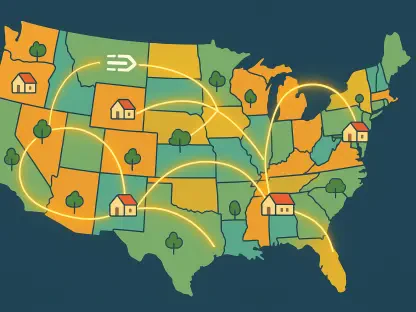
Geographic concentration further complicates the energy risk landscape, as data centers often cluster in regions with favorable taxes or existing fiber-optic networks. This clustering increases “accumulation risk,” where a single regional grid failure or a localized natural disaster could take out a significant portion of a country’s computational capacity. Insurers are noticing that the legal status of these facilities is evolving, with many governments now treating them as critical utilities. This change in status affects how insurers define coverage boundaries and how they interact with public sector risk mitigation efforts. Furthermore, the reliance on high-density battery arrays for backup power introduces long-term environmental and safety concerns. Thermal runaway events in large-scale lithium-ion battery installations can be extremely difficult to extinguish, leading to prolonged business interruptions and significant environmental cleanup costs. Consequently, insurers are demanding stricter adherence to fire safety standards and the use of physical barriers.
Future Resilience: Implementing Proactive Mitigation Strategies
The rapid expansion of AI infrastructure necessitated a major shift in how the global insurance market operated during this period of transition. Carriers that invested in specialized technical expertise and advanced modeling techniques found themselves at a distinct competitive advantage over those relying on traditional actuarial methods. Strategic site visits and continuous technical monitoring became the new standard for underwriting, allowing insurers to identify potential hazards before they resulted in catastrophic losses. By working in close partnership with technology developers and energy providers, the insurance industry moved away from being a mere payer of claims to becoming a critical partner in the design of resilient systems. Actionable improvements in risk engineering, such as the implementation of more robust liquid cooling leak-detection and the decentralization of critical hubs, provided a roadmap for sustainable growth. Ultimately, the industry learned that addressing the complexities of the boom required a collaborative approach.