
The Strategic Migration: From Centralized Training to Real-Time Execution
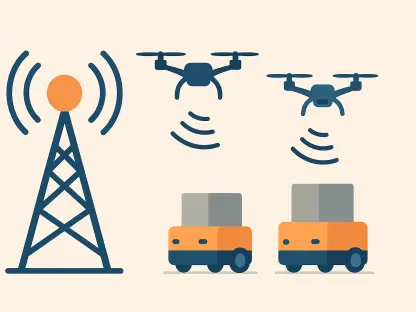
The massive migration of artificial intelligence from controlled laboratory settings to the unpredictable real-world environment is currently forcing a fundamental reconfiguration of global telecommunications infrastructure. For several years, the primary concern of the industry remained AI training, which is a computationally intensive process housed in remote, centralized facilities. However, as applications move into everyday use, the priority has pivoted toward inference—the process of running models to make instantaneous decisions. This evolution reflects a broader necessity to support voice assistants, autonomous systems, and industrial robotics with a highly distributed and responsive network edge.
From Data Silos to Dynamic Networks: The Evolution of AI Infrastructure
Historically, AI infrastructure relied on extreme concentration within massive cloud megasites situated in rural areas where power was abundant and land was cheap. In this earlier model, telecommunications providers acted as simple pipelines connecting these data silos to the broader internet via long-haul fiber. The maturation of artificial intelligence has since rendered this centralized approach insufficient for modern requirements. As the industry moves from building models to deploying them, the latency inherent in long-distance transmission has become a critical bottleneck, forcing intelligence to move from the core to the periphery of the network.
The Economic and Technical Realities of Localized Intelligence
The Financial Pivot: Toward Managed Inference Services
The most compelling evidence of this shift lies in capital allocation trends seen over the last year. Managed AI inference reached a market value of $23.1 billion in 2025, surpassing the training market for the first time. Projections suggest this segment could expand to $106.8 billion by 2030. This trend underscores a change in fundamental technical needs; while training is a periodic cost associated with development, inference is a constant operational requirement. Consequently, the financial center of gravity has moved toward metro data centers located in the heart of urban environments.
Redefining Network Reliability: The Demand for Autonomous Environments
As AI moved closer to users in factories and hospitals, the definition of network reliability was completely rewritten. Industry analysts note that connectivity has become as vital as raw processing power in the modern era. For a telecom operator, this means moving beyond simple uptime metrics to physical risk management. In an AI-driven environment, a single fiber cut could halt an autonomous assembly line or disrupt a remote healthcare tool. Therefore, designers are adopting diverse routing and high-fiber-count ribbon cables to ensure uninterrupted inference processes.
Overcoming Physical Constraints: The Geographic Reality of Edge Growth
The transition to distributed AI faces significant hurdles regarding urban geography and legacy infrastructure. Unlike sprawling rural campuses, inference sites require locations in metro areas where space is a premium and power grids are often strained. This has led to a surge in disruptive innovations, such as liquid cooling for edge servers and AI-optimized optical transport. The AI edge has emerged not as a single location, but as a spectrum ranging from regional hubs to on-premise industrial gateways, each requiring a tailored connectivity strategy.
Future Projections: Building the Foundations for 2030
Looking ahead, the AI network map will likely become increasingly fragmented and specialized. There is an expected surge in sovereign AI infrastructure, where local governments demand that inference happens within specific geographic boundaries for data privacy. From 2026 to 2030, this will drive operators to monetize last-mile fiber assets in ways previously unimagined. Technological shifts, such as 6G and advanced satellite constellations, will further blur the lines between local and remote processing, creating a seamless fabric of distributed intelligence that can scale dynamically based on demand.
Navigating the Shift: Strategic Takeaways for Industry Leaders
Stakeholders must prioritize specific pathways to navigate this shift effectively. Investing in metro fiber and optical switching became essential to handle the surge in local traffic and reduce latency. Furthermore, professionals focused on resiliency by design, ensuring that AI workloads were supported by redundant, low-latency paths. Adopting a scalable approach to edge computing, starting with high-value hubs in healthcare and manufacturing, provided the necessary ROI to fund broader network upgrades across the globe.
The Distributed Future: A Summary of Market Evolution
The pivot from centralized training to distributed inference represented more than just a technical update; it was a fundamental reconfiguration of how the world used information. As the telecom industry shifted its focus toward the edge, it successfully laid the groundwork for a future where intelligence functioned as a ubiquitous utility. The transition to a distributed AI model ensured that the transformative power of real-time applications was realized at scale. Ultimately, the long-term value of a resilient, AI-ready network proved to be the essential foundation for the digital economy.