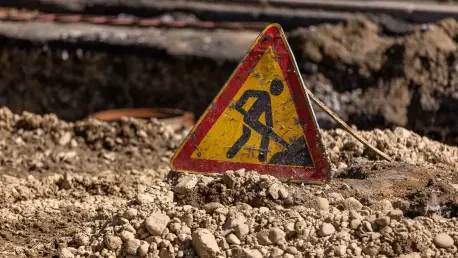

The sudden disappearance of internet connectivity across major Nigerian metropolitan areas often traces back to a single backhoe bucket slicing through buried glass fibers during routine road maintenance or expansion. This recurring disruption highlights a fundamental friction between physical infrastructure development and the digital backbone that powers modern commerce, necessitating a radical shift in how the nation manages its subterranean assets. High-level discussions recently held in Abuja signaled the end of an era where telecommunications cables were treated as secondary utilities, moving instead toward a governance model that prioritizes the integrity of broadband networks. By convening experts from the Ministry of Communications, road contractors, and regulatory bodies, the government is building a framework to prevent accidental damage before the first shovel hits the dirt. This initiative reflects a growing realization that a severed fiber line is not just a technical glitch but a direct blow to the national economy, requiring a coordinated defense strategy.
The New Standard: Elevating Digital Infrastructure to Critical Asset Status
In the current landscape of 2026, Nigeria’s digital economy is no longer a peripheral sector but the very foundation upon which the banking, healthcare, and public administration systems operate daily. When fiber optic cables are inadvertently severed, the resulting downtime ripples through the entire financial ecosystem, stalling transactions at point-of-sale terminals and preventing hospitals from accessing vital patient records. The financial losses associated with these disruptions are staggering, often totaling billions of Naira in a single day of localized outages. Recognizing this vulnerability, federal authorities are aggressively reclassifying telecommunications infrastructure as a critical national asset, granting it the same legal and physical protections afforded to power plants and oil pipelines. This shift in status ensures that any interference with these lines, whether through negligence or deliberate sabotage, carries severe consequences and triggers immediate intervention from security agencies tasked with safeguarding the nation’s connectivity.
Beyond the immediate economic ramifications, the protection of fiber networks is deeply tied to the social progress and national security of the country as it strives for broader inclusion. Public administration now relies heavily on cloud-based services for everything from biometric verification to tax collection, making consistent uptime a non-negotiable requirement for effective governance. To address this, the government is moving away from a reactive repair culture that only responds after a service failure has occurred toward a proactive planning model that integrates digital needs into the initial stages of all public works. Contractors are being educated on the specific technical requirements of fiber maintenance, while new regulations mandate the inclusion of telecom engineers in the early site surveys for road projects. By treating broadband as a priority on par with asphalt and concrete, Nigeria is ensuring that the physical expansion of its transportation network does not come at the expense of its digital reach, fostering a more resilient and interconnected society for all citizens.
Strategic Reform: Implementing the Dig Once Policy for Sustainable Growth
The primary obstacle to maintaining underground utility integrity has historically been the chaotic and uncoordinated nature of urban excavation projects where contractors lack accurate data. For years, the absence of a comprehensive national database showing the precise location of buried assets has meant that road builders often operate in the dark, leading to accidental strikes. To rectify this systemic failure, the Nigerian government is implementing the Dig Once policy, a strategic framework designed to harmonize the deployment of multiple utilities within a single construction window. This approach mandates that all new road projects must include the installation of standardized, multipurpose conduits capable of housing fiber optic cables from various providers. By creating these dedicated channels, the state eliminates the need for repeated road cutting, which not only preserves the longevity of the pavement but also provides a safe, pre-determined path for future digital infrastructure expansion without risking damage to existing networks.
Complementing the technical shift of the Dig Once policy is a significant reform in the management of Right-of-Way charges and the standardization of installation protocols across different states. Previously, fragmented regulations and varying fee structures created a hurdle for telecommunications companies, leading to inconsistent burial depths and poor marking of cable routes. The new national standards establish strict guidelines for how and where cables are laid, ensuring they are buried at depths that are safe from most routine maintenance activities. Furthermore, by streamlining the administrative process for obtaining permits, the government is incentivizing providers to use approved corridors rather than seeking shortcuts that might expose cables to future roadwork. This unified regulatory environment is crucial for attracting long-term investment in the tech sector, as it offers a predictable and protected landscape for infrastructure development. The goal is to create a seamless synergy between the ministries of works and communications, where road design and fiber deployment are viewed as a single, unified development project.
Unified Governance: Institutional Collaboration and Interagency Security
Achieving a sustainable solution for infrastructure protection requires more than just policy documents; it demands an active and continuous collaboration between diverse government departments. A newly established inter-agency committee is now leading this charge, bringing together representatives from the Ministry of Works, the Ministry of Communications, and the Office of the National Security Adviser. This high-level group is tasked with overseeing the execution of infrastructure projects to ensure that all technical standards are rigorously enforced on the ground. By involving the Nigerian Police and other security outfits, the committee also addresses the human element of infrastructure protection, providing a deterrent against theft and vandalism that often accompanies construction sites. This coordinated approach ensures that road contractors have access to real-time data and expert advice before breaking ground, significantly reducing the probability of accidental cuts. Such institutional synergy represents a departure from the siloed operations of the past, creating a more transparent and accountable system for managing the country’s most vital technological assets.
The focus transitioned toward establishing a centralized GIS-based database that mapped every kilometer of the fiber network with high precision, providing a vital tool for urban planning. This move ensured that development projects, from drainage systems to high-speed rail, proceeded with a clear understanding of the digital layer beneath the surface. Stakeholders prioritized the importance of continuous training for site engineers and the adoption of advanced sensing technologies that detected buried utilities in real-time. By fostering an environment where innovation and infrastructure safety went hand in hand, the government set the stage for a resilient digital economy that withstood the pressures of rapid physical growth. These actions provided a clear blueprint for other emerging economies facing similar challenges, proving that strategic foresight and inter-agency cooperation were the best defenses against technological disruption. The commitment to maintaining this infrastructure reflected a long-term vision where connectivity remained the cornerstone of national prosperity.