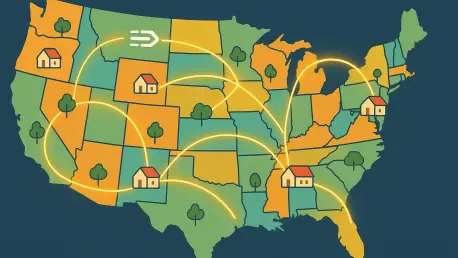

Aggressive expansion in the Pacific Northwest proves that even small communities with only a few hundred homes are now viable targets for large-scale private fiber investment. This shift represents a broader movement across the United States where the traditional reliance on aging copper and hybrid-coax infrastructure is being rapidly replaced by high-performance fiber-optic technology. The primary motivation behind this massive overhaul is the necessity of symmetrical connectivity, a feature that was once a luxury but has now become the fundamental requirement for the modern digital economy. Unlike the asymmetrical connections of the past, fiber-to-the-home ensures that upload and download speeds are identical, catering to the intensive demands of remote collaboration, cloud-based software, and real-time data processing. As of late 2026, the transition has moved beyond mere experimentation into a phase of widespread execution, as providers pour billions into regions that were once considered technologically isolated or difficult to serve.
Strategic Shifts: Broadband Deployment and Economic Impacts
Economic Survival: The Rise of Innovation Corridors
Modern fiber deployment is increasingly viewed by local officials and corporate leaders as a fundamental requirement for economic survival in an era defined by hyper-connectivity. In regions such as Florida and Kentucky, new fiber networks are being marketed as innovation corridors that allow local businesses to compete on a global scale. This infrastructure serves as the backbone for data-heavy industries, fostering a climate where technological growth and entrepreneurship can thrive without the limitations of legacy hardware. By removing the bottleneck of slow upload speeds, these networks enable small enterprises to utilize advanced cloud computing and artificial intelligence tools that were previously accessible only to large corporations in major tech hubs. The arrival of these services transforms local economies by attracting professional talent and encouraging remote workers to relocate to smaller municipalities, further diversifying the tax base and stimulating local service markets.
Industrial Growth: Supporting Data-Heavy Enterprises
The economic impact of these fiber expansions extends beyond immediate business capabilities to the long-term sustainability of the workforce. As 100% fiber technology replaces aging copper systems, the reliability of the grid increases, which is a critical factor for companies managing global logistics or financial transactions. In Titusville, Florida, and Lexington, Kentucky, the deployment of 10 Gbps speeds has directly influenced real estate valuations and commercial interest in downtown revitalization projects. Investors are increasingly prioritizing locations that offer future-proof connectivity, recognizing that a lack of high-speed fiber is now a disqualifying factor for modern site selection. Consequently, cities that proactively partner with internet service providers to streamline permitting and construction are seeing a faster return on investment through job creation and the establishment of new corporate headquarters that require multi-gigabit symmetrical bandwidth.
Educational Equity: Bridging the Digital Divide
Beyond the immediate economic advantages, providers are intensifying their focus on the social implications of high-capacity internet, specifically regarding educational equity and the closing of the digital divide. By extending fiber-to-the-home services to previously underserved areas in Oregon and California, companies are ensuring that students in rural districts have access to the same educational resources as their counterparts in major urban centers. This access is no longer just about browsing the web; it involves the ability to participate in high-definition virtual classrooms, access massive datasets for research projects, and collaborate in real-time on cloud-based assignments. In communities like Bonanza and El Centro, the introduction of fiber-optic technology represents a monumental shift in how education is delivered, allowing local schools to adopt modern curricula that rely heavily on consistent, high-speed connectivity to maintain educational standards.
Community Engagement: Philanthropy as Growth Strategy
Strategic philanthropy has emerged as a key component of the growth models utilized by major telecommunications firms as they enter new markets. Companies are pairing their technical infrastructure upgrades with direct community investments, such as funding for local STEM programs and heritage organizations. By donating thousands of dollars to provide high-tech resources for libraries and schools, these providers seek to embed themselves into the social fabric of the towns they serve, fostering long-term brand loyalty and trust. This holistic approach recognizes that infrastructure alone is not enough; the community must also have the tools and training to utilize that infrastructure effectively. Such initiatives often include public workshops on digital literacy and the provision of high-speed hotspots in public spaces, ensuring that the benefits of the fiber expansion are felt by all residents, regardless of their individual subscription status or economic background.
Regional Growth: Technical Milestones and Future Standards
Geographic Saturation: Deepening Density in the Southeast
The Southeast has transformed into a primary battleground for fiber dominance, with states like Florida, Kentucky, and Louisiana receiving massive influxes of private capital throughout the current year. In Florida, projects on the Space Coast are delivering residential speeds of up to 10 Gbps, positioning the region as a central hub for data-intensive aerospace and engineering industries. Meanwhile, in Kentucky, providers have reported significant footprint growth, adding thousands of new locations to their networks within a single twelve-month cycle. This aggressive deepening of network density indicates that providers are not merely satisfied with initial entries into these markets but are committed to total saturation. In Louisiana, the strategy has shifted toward maximizing the utility of existing fiber assets by upgrading speed tiers to 8 Gbps, ensuring that customers remain satisfied with their service as their household bandwidth demands grow through the adoption of new devices.
Logistics and Triumphs: Connecting the Rural West
Simultaneously, expansion efforts in the Western United States highlight the industry’s newfound capability to overcome the logistical and financial challenges of rural connectivity. The entry of specialized broadband providers into remote areas along the California and Oregon borders signals the end of the era where geographical isolation meant inferior internet access. These projects often involve complex engineering and coordination with local municipalities, but they serve as essential regional staging grounds for broader county-wide growth. By establishing high-capacity hubs in administrative centers like El Centro, providers are creating local hiring opportunities and building the necessary infrastructure to support regional administrative and emergency services. This model demonstrates that rural fiber is no longer a philanthropic endeavor but a viable business strategy, as smaller towns provide a dedicated customer base that is eager to adopt modern technology to enhance their lives.
High-Value Markets: Future-Proofing the Northeast
In the Northeast and mid-Atlantic regions, the pace of investment remains exceptionally high, with some of the most significant per-project capital commitments being recorded in 2026. Major cities in Massachusetts and Maine are seeing surgical deployments that target high-value markets, ensuring that both traditional residential neighborhoods and seasonal tourist hubs have access to multi-gigabit speeds. Furthermore, in Virginia, the push for symmetrical technology has reached new heights, with business-grade services offering staggering 100 Gbps capacities. This level of bandwidth is specifically designed to handle the requirements of a corporate landscape increasingly dominated by generative artificial intelligence, large-scale cloud computing, and real-time video rendering. By providing such immense capacity, providers are essentially future-proofing the business districts of smaller towns, allowing them to host data centers and specialized tech firms that would otherwise be confined to large centers.
Future Readiness: Integrating Multi-Gigabit Standards
The transition toward a ten-gigabit society fundamentally shifted the trajectory of American infrastructure, establishing a robust framework for digital innovation throughout the current year. Providers successfully moved beyond the initial rollout phases and reached a state where symmetrical, high-speed fiber became the expected utility for both urban and rural consumers. To capitalize on this progress, industry leaders prioritized the integration of advanced network management software and expanded local technical support teams to ensure maximum uptime. Decision-makers also began exploring next-generation edge computing solutions to leverage the low latency provided by these glass-fiber networks, creating opportunities for more responsive public services and immersive educational platforms. This proactive strategy effectively closed the digital divide in participating regions and gave local businesses the necessary tools to lead in a data-driven economy. The completion of these major projects proved that dedicated private investment could solve long-standing connectivity issues.