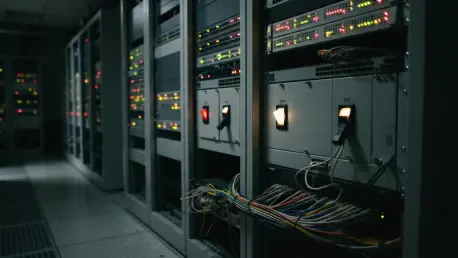

As the deadline approaches, the remaining analogue connections are increasingly likely to involve specialized equipment that requires professional maintenance and testing. With the January 31, 2027, cut-off date looming, approximately 35,000 customers across Northern Ireland must still finalize their migration from the legacy copper network. This transition represents the culmination of a multi-year effort to modernize the regional communications infrastructure. The shift is not merely a technical upgrade but a necessary evolution to ensure the telecommunications backbone can support the data-heavy demands of modern society. While the vast majority of households have already moved to digital services, the remaining holdouts often include those with mission-critical systems that have been in place for years. The transition process is generally straightforward for standard voice calls, but complexity increases when lines support non-voice services that people often overlook during routine maintenance cycles.
1. Assessing Peripheral Hardware and Safety Systems
One of the most critical aspects of this transition involves identifying equipment that operates silently in the background of a home or business. Beyond standard telephone handsets, numerous devices such as medical alert pendants, fire alarms, and emergency lift phones have historically relied on the consistent low-voltage power supplied by the traditional analogue network. These systems are vital for safety, yet they may not be natively compatible with the digital routers provided by modern internet service providers. For instance, a medical monitoring device designed for an analogue port might fail to communicate with a digital base station during an emergency if it has not been specifically updated or replaced. Furthermore, because digital lines rely on the local power supply, users must consider uninterruptible power supplies to ensure these safety devices remain functional during a power outage. Identifying these dependencies is the first step toward a safe migration.
In addition to safety hardware, commercial operations frequently utilize the copper network for various administrative functions. Retailers often have payment terminals, access-control systems, and even older fax machines connected to their primary or secondary phone lines. Security systems, including CCTV cameras that transmit data via dial-up modems and sophisticated alarm panels that signal central monitoring stations, also require careful evaluation. If these systems are not transitioned to Internet Protocol alternatives, they may cease to function once the analogue signal is deactivated. Business owners must audit their premises to identify every device plugged into a wall socket, as even legacy modems used for industrial monitoring could be affected. Engaging with manufacturers or maintenance contractors is essential to determine if existing hardware needs a firmware update or a complete replacement. Taking these steps early avoids the risk of business disruption when the old signal is eventually terminated.
2. Implementing Resilient Digital Solutions
The process of migrating to digital voice services is essentially a shift toward broadband-based communication, where voice data travels over the same fiber-optic cables as internet traffic. Most communication providers are facilitating this change by offering plug-and-play solutions, where the telephone is simply connected to the rear of the router. However, for organizations with complex Private Branch Exchange systems or multiple integrated lines, the shift requires more meticulous planning. Technical managers are advised to coordinate closely with their service providers to ensure that the bandwidth allocation is sufficient to handle both data and voice traffic without latency. Testing these new configurations before the final deactivation of the copper line is a mandatory step for any resilient operation. Simulating real-world usage scenarios allows technical teams to identify potential bottlenecks or configuration errors that might interfere with voice quality or data transmission.
Successful transitions across the region demonstrated that early intervention was the most effective strategy for mitigating service disruptions. Stakeholders who treated the migration as a strategic priority rather than a clerical task found that they could modernize their entire operational flow during the process. They moved away from fragmented analogue setups toward integrated digital platforms that offered better clarity and more robust features. These organizations utilized the transition period to conduct comprehensive audits of all connected technologies, ensuring that every piece of hardware was either upgraded or decommissioned. The shift ultimately provided a foundation for future advancements in cloud-based communications and enhanced cybersecurity protocols. By addressing the requirements of the digital switch-off well in advance, these entities secured their long-term connectivity. Moving forward, the focus was redirected toward optimizing these new digital assets to drive further efficiency.