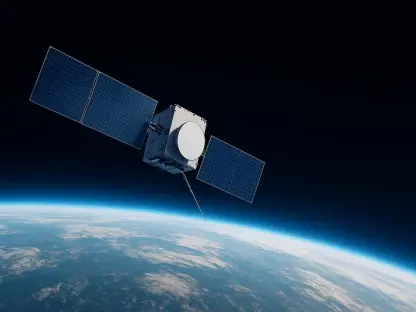

The presence of 13 spacecraft currently in orbit and 10 upcoming booked launches indicates significant progress toward a functional satellite broadband network. This technological leap signifies a departure from traditional cellular infrastructure, which has historically relied on terrestrial towers that leave vast geographical gaps. AST SpaceMobile is now moving away from its early experimental phases into a phase characterized by commercial readiness and operational scaling. The core objective remains the elimination of connectivity dead zones by allowing standard, unmodified smartphones to connect directly to satellites. While the complexity of such a feat remains high, the current momentum suggests that the barrier between concept and reality is thinning. For investors, this represents a unique moment where the speculative nature of the stock is being replaced by concrete milestones. As the company prepares for broader deployment, the focus shifts toward how these orbital assets will integrate into the existing global telecommunications ecosystem. The successful integration of these systems into the current mobile framework will likely determine the company’s long-term dominance.
Strategic Alliances: Expanding Global Market Presence
The foundational strength of the company’s business model lies in its extensive network of strategic partnerships with some of the world’s largest Mobile Network Operators. By collaborating with entities like AT&T, Verizon, and Vodafone, the firm has effectively secured a pathway to a massive global subscriber base exceeding 3 billion people. These alliances are not merely symbolic; they represent a deeply integrated approach to solving the problem of global coverage without requiring consumers to purchase specialized hardware. This strategy allows the satellite network to function as a seamless extension of existing cellular services, providing a value-added feature for roaming or emergency connectivity. From an investment perspective, these partnerships act as a significant moat, as they provide both the regulatory support and the customer acquisition channels necessary for rapid scaling. The ability to leverage the marketing power of established telecommunications giants provides a level of market validation that few competitors in the space industry can currently match.
As the network transitions toward providing beta services, the focus has shifted from technical feasibility to the conversion of memorandums of understanding into definitive, revenue-generating contracts. This transition is critical because it moves the company’s valuation away from speculative growth toward tangible financial performance. The Rakuten J-LEO selection, worth approximately $1 billion, serves as a primary example of how these international partnerships are beginning to manifest as significant capital commitments. Such deals provide the necessary liquidity to fund ongoing launch cycles while demonstrating that tier-one operators are willing to pay a premium for orbital capacity. Furthermore, the development of a joint venture with major U.S. carriers underscores the domestic importance of this technology for national security and emergency response. By securing these multi-year agreements, the company is building a predictable revenue stream that will eventually offset the high costs associated with maintaining a low-earth orbit constellation.
Financial Resilience: Path to Long-Term Profitability
Navigating the financial realities of a space-based venture requires a delicate balance between aggressive capital expenditure and maintaining a healthy liquidity position. Recent quarterly reports reflected a period of heavy spending, with significant losses attributed to one-time events and the continuous ramp-up of satellite production. Despite these GAAP losses, the company maintains a robust contracted backlog of $1.30 billion, which serves as a financial cushion as it nears full commercialization. Management has consistently reaffirmed revenue guidance for the current 2026 fiscal year, projecting figures between $150 million and $200 million. This guidance is predicated on the successful deployment of additional Bluebird satellites, which are designed to offer higher capacity and better performance than earlier test models. The high burn rate is an expected feature of this industry, but the focus for analysts is now on the narrowing gap between operational costs and incoming service revenue for the current cycle.
The journey toward achieving full operational status for the satellite network reached a critical juncture as the company navigated its most intensive development hurdles. Investors who monitored the stock’s progress observed that the transition from a technical proof-of-concept to a commercially viable platform required substantial capital and strategic patience. The alignment of major global carriers and the steady increase in orbital density provided a clearer roadmap for long-term value creation. Looking ahead, the focus for stakeholders remained on the company’s ability to hit its monthly production quotas and secure further definitive service agreements. Potential risks, such as share dilution from capital raises, were managed through strategic financing, but they necessitated a cautious approach to position sizing. Ultimately, the successful activation of the initial fleet served as the ultimate validator of the business model. For those looking to capitalize on this sector, monitoring launch frequencies and commercial activation remained the most reliable strategy.