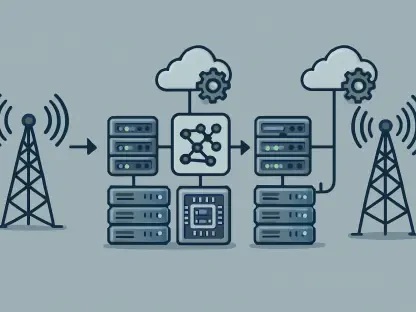

Operators must initiate complex network planning immediately to meet the transition deadline and avoid penalties under the new disincentive system. The Telecommunication Interconnection (Third Amendment) Regulations, 2026, represents the most fundamental shift in Indian digital infrastructure in over a decade. By moving away from fragmented legacy architectures, the Telecom Regulatory Authority of India is forcing a rapid evolution that aligns national networks with global standards. This is not just a minor technical adjustment; it is a structural reimagining of how data and voice traffic flow across a subcontinent with over a billion subscribers. The mandate requires that service providers navigate a high-stakes three-year window, terminating on January 1, 2027, during which all traditional interconnection models must be abandoned. Failure to adapt will not only result in heavy fines but could also lead to significant service disruptions as old protocols become unsupported nationwide.
The Transition to Service-Area-Level Interconnection
Central to this regulatory evolution is the mandatory migration from localized interconnection points to the broader Licensed Service Area level. Historically, the Indian telecom landscape was divided into granular Long Distance Charging Areas and Short Distance Charging Areas, which created a tangled web of physical connection points. This outdated structure often led to inefficient traffic routing and high operational costs for carriers managing multiple handoff sites. Under the new 2026 rules, operators are encouraged to mutually agree on optimal locations for traffic handover within a service area, moving away from rigid geographic constraints. This consolidation is designed to significantly reduce the number of required physical points of interconnection, thereby simplifying the nationwide network topology. By centralizing these exchanges at the service-area level, the authority aims to create a more resilient backbone capable of handling the massive data surges seen in modern 5G environments.
The shift toward a unified service-area interconnection model also addresses the growing complexity of numbering resource management. In the previous fragmented system, managing telephone numbers and routing instructions across hundreds of small charging areas was a logistical nightmare that frequently resulted in call failures and high latency. By broadening the scope of interconnection to the LSA level, the regulator is providing a cleaner framework for traffic management. This approach allows for more flexible routing tables and faster call setup times, which are essential for the high-definition voice and low-latency data services that consumers now expect. Furthermore, this structural change reduces the dependency on middle-mile infrastructure that was often the bottleneck in rural-to-urban communication. The focus is clearly on creating a seamless digital experience that treats the entire licensed area as a single, cohesive unit, fostering better synchronization between competing networks while lowering the technical barriers.
Mandatory Adoption of Next-Generation IP Technology
Parallel to the geographic restructuring is the non-negotiable transition to Internet Protocol technology across the entire interconnection ecosystem. For decades, legacy systems relying on Time Division Multiplexing and E1 links served as the foundation of Indian telecommunications, but these technologies have reached their physical limits. The 2026 amendment mandates that all new interconnections must utilize IP-based links, ensuring that the country’s infrastructure is synchronized with global technological trends. This migration is not merely about replacing hardware; it is about adopting a more efficient way to package and transmit information. IP technology allows for vastly superior bandwidth utilization compared to traditional circuit-switched methods, enabling operators to squeeze more capacity out of existing fiber networks. Over the three-year migration window concluding in 2027, the industry must systematically decommission TDM hardware and retrain technical staff to manage software-defined networking environments.
Implementing IP-based standards also introduces a new method for calculating and managing network capacity through simultaneous session limits. Instead of measuring capacity based on fixed physical circuits, the new framework evaluates interconnection points by their ability to handle a specific number of concurrent data or voice sessions. This shift provides a more accurate reflection of actual network usage and allows for dynamic scaling during peak traffic hours, such as major cultural events or national holidays. To maintain high performance, the regulator has integrated strict Quality of Service standards directly into the IP migration path. Service providers must now ensure that their IP links meet specific benchmarks for packet loss, jitter, and latency, which are critical for the success of real-time applications like cloud gaming and tele-medicine. By standardizing these metrics, the authority is ensuring that the transition to a more efficient technology does not come at the cost of the reliable connectivity that users depend on.
Compliance Framework and Financial Governance Rules
To ensure that the transition proceeds smoothly and without financial disputes, the 2026 rules establish a rigorous framework for financial governance and the surrender of legacy interconnection points. A primary concern for operators during large-scale upgrades is the settlement of outstanding dues and the return of financial bank guarantees. The new regulations provide a transparent, step-by-step procedure for surrendering unnecessary points of interconnection, which prevents established players from hoarding capacity or blocking competitors. Financial settlements are now linked to the State Bank of India’s Marginal Cost of Funds-based Lending Rate, ensuring that interest rates remain fair and predictable for all involved parties. This move toward financial transparency is intended to reduce the legal friction that has historically slowed down infrastructure projects in the Indian telecom sector. By clearly defining the fiscal responsibilities and timelines, the authority is creating a more stable investment climate.
Compliance is further reinforced through a graded financial disincentive system that penalizes operators based on the severity and duration of any regulatory violations. This system is designed to be a deterrent against negligence during the three-year migration period, ensuring that all carriers stay committed to the 2027 deadline. Each service provider is now required to submit comprehensive quarterly progress reports, detailing the number of points of interconnection migrated to IP and the status of legacy system decommissioning. These reports provide the regulator with a real-time map of the national transition progress and allow for early intervention if a particular region or operator falls behind. The focus on accountability ensures that no part of the country is left behind in the digital leap forward. Furthermore, the administrative protocols for requesting new interconnections have been streamlined, requiring automated responses within specified timeframes to prevent unnecessary and costly project delays.
Strategic Pathways for a Future-Proof Network
The path forward was forged through a comprehensive consultation process that involved seventeen major industry stakeholders between 2025 and 2026. This collaborative approach ensured that the new regulations were not just theoretical mandates but practical solutions that reflected the operational realities of Indian telecom giants and smaller regional players alike. The consensus reached during these discussions highlighted a shared understanding that modernization is the only way to sustain the massive growth in data consumption across the nation. As the industry moves toward the 2027 deadline, the emphasis remains on minimizing consumer impact while maximizing the efficiency of the underlying technology. Strategic planning must now focus on procurement of IP-ready hardware, the implementation of advanced cybersecurity protocols for IP-based links, and the gradual shifting of traffic to ensure no loss of connectivity. This period marks a transition from a hardware-centric network to a software-centric one.
Stakeholders successfully recognized that the shift toward IP-based interconnection was a necessary step for the survival of the digital economy. The decision to move away from antiquated switching methods allowed for the integration of more advanced services that were previously hindered by technical limitations. To move forward, operators identified the need to prioritize technical training and the rapid deployment of software-defined network controllers. The focus shifted toward ensuring that the new service-area-level points of interconnection provided the redundancy needed for a truly reliable national network. Future considerations involved the integration of automated traffic management systems and the continuous monitoring of bandwidth efficiency to adapt to changing user behaviors. By committing to these actionable steps, the industry ensured that the foundation was laid for a more robust and interconnected future. This transition period was a defining moment for the sector, proving that coordinated regulatory change could lead to tangible improvements.