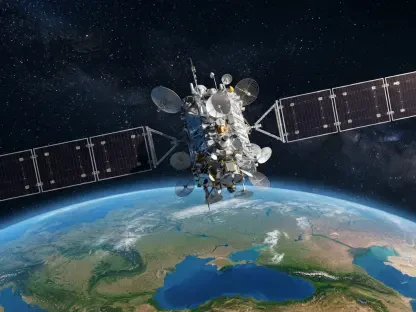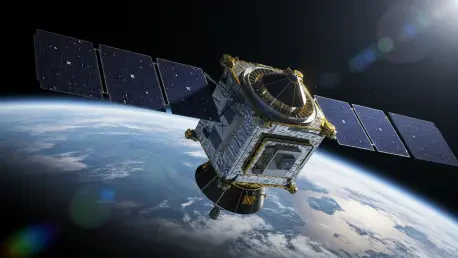

The successful liftoff of the final GPS III satellite from Cape Canaveral represents a monumental shift in how the United States military manages global positioning and timing infrastructure for billions of users worldwide. This mission, involving the tenth satellite of the third block, signifies the conclusion of a major procurement chapter while simultaneously acting as a technological bridge to an even more advanced orbital architecture. By completing this specific constellation segment, the United States Space Force has finalized a robust foundation for positioning, navigation, and timing services that are more resilient against modern electronic threats. This transition is not merely about replacing aging hardware; it is about establishing a high-performance baseline that integrates sophisticated anti-jamming capabilities and improved signal accuracy. As the aerospace industry moves beyond this milestone, the focus shifts toward maintaining a seamless stream of data that powers everything from financial markets to tactical military operations.
Refining Launch Reliability and Reusable Hardware
The mission highlights the maturing relationship between the Department of Defense and SpaceX, particularly concerning the deployment of national security payloads on flight-proven hardware. Utilizing a Falcon 9 booster that had already completed six successful missions, the Space Force demonstrated a high degree of institutional confidence in reusable rocket technology, which was once considered too risky for sensitive military assets. This specific launch utilized booster B1095, which performed a precise landing on the autonomous drone ship “Just Read the Instructions” shortly after delivery. The successful recovery of both the first-stage booster and the payload fairings illustrates a fundamental shift in space logistics toward cost-effective and frequent access to orbit. By embracing reusability, the military has significantly reduced the lead time required for launching critical infrastructure, allowing for a more responsive orbital presence that can adapt to changing geopolitical needs.
This launch also illustrates a significant evolution in strategic procurement, characterized by the Space Force’s ability to swap payloads between different launch providers to mitigate potential delays. When the original launch vehicle faced technical hurdles and developmental setbacks, the mission was seamlessly transitioned to a different provider to ensure that critical navigation assets reached orbit on time. This flexibility reflects a broader shift in defense strategy where maintaining a steady launch cadence and mission assurance takes precedence over rigid contract assignments or historical brand loyalty. By fostering a competitive environment where multiple companies are capable of handling high-priority missions, the Space Force ensures that the global positioning network remains operational despite any single point of failure in the industrial base. This teamwork between competing aerospace giants and the government reflects a consensus that the continuity of global navigation services is the highest priority.
The Technological Innovations of the Hedy Lamarr Satellite
Named in honor of inventor Hedy Lamarr, the Space Vehicle 10 integrates historical breakthroughs in signal security with modern engineering to create a more robust navigation signal. Lamarr’s co-development of frequency-hopping spread spectrum technology provides the foundational architecture for the secure, jam-resistant communications that define current GPS, Wi-Fi, and Bluetooth capabilities. The satellite carrying her name serves as a functional tribute to this legacy while pushing the boundaries of what modern navigation systems can achieve in contested environments. Beyond its standard operational duties, SV10 serves as a critical testbed for advanced technologies that will be standard in the next generation of spacecraft. By incorporating these innovations now, engineers can gather vital telemetry and performance data in a real-world environment before committing to full-scale production. This approach ensures that the transition to more advanced capabilities is based on proven results rather than theoretical models.
A primary technological leap found within SV10 is the integration of laser communication cross-links and advanced digital atomic clocks, which are designed to improve timing precision. These laser systems allow satellites to communicate directly with one another in orbit without relying solely on ground stations, significantly increasing the resilience of the network against interference or physical disruptions on Earth. Furthermore, the new digital atomic clock aims to provide even greater timing accuracy, which is a critical requirement for global financial systems, telecommunications networks, and synchronized military maneuvers. These features are specifically designed to bolster the network’s performance in environments where traditional signals might be degraded or actively blocked by adversaries. By testing these systems in the final GPS III vehicle, the Space Force is effectively de-risking the technology for the upcoming Follow-on generation. This ensures that the global user community will continue to benefit from precision.
Setting the Stage for the GPS IIIF Generation
As the final satellite in the GPS III production line, SV10 acts as the primary backbone for the transition into the GPS IIIF era. The data gathered from its performance in orbit will directly influence the development of future satellites, which are expected to offer even stronger anti-jamming capabilities and improved signal longevity for civilian and military users alike. Lockheed Martin’s focus on this transition ensures that the global network remains ahead of emerging threats while continuing to provide world-class accuracy across all signal bands. The GPS IIIF series will build upon the architectural successes of the current block but will include enhanced modularity and a more powerful mission payload. This evolution is necessary to meet the increasing demands of autonomous systems, precision agriculture, and modern logistics, all of which require unbreakable positioning data. The completion of the III-series production allows the industrial base to pivot its resources toward these more capable platforms.
Once the satellite completed its initial orbital maneuvers and entered its designated position, it underwent an intensive testing phase to validate its experimental payloads and general health. These testing procedures were vital for confirming that the new atomic clocks and optical links were ready for full-scale integration into the active constellation. Upon successful completion of this period, the Space Force assumed full operational control, officially ushering in a new chapter of global navigation that is more precise and secure. Stakeholders had to focus on the rapid deployment of receiver hardware capable of utilizing these enhanced M-code signals to maximize the benefits of the new orbital assets. Future efforts prioritized the integration of these space-based capabilities with terrestrial backups to ensure absolute continuity of service. The lessons learned from the GPS III program provided a clear roadmap for achieving a resilient positioning architecture that supported global commerce and security.