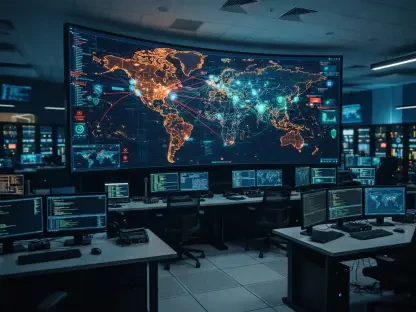

The complexity of managing modern IT infrastructure has reached a point where manual intervention is no longer sufficient to keep up with the volume of data generated by thousands of connected devices. System administrators and Managed Service Providers are frequently overwhelmed by a constant stream of alerts that require immediate attention to prevent costly downtime. The introduction of the Domotz Model Context Protocol (MCP) Server marks a definitive change in this landscape, offering a sophisticated method for bridging the gap between raw telemetry and intelligent action. By integrating generative artificial intelligence directly into the monitoring workflow, the platform transforms static dashboards into dynamic, conversational assets that can think and act alongside human operators. This transition represents a fundamental shift in how organizations perceive network health, moving away from simple observation toward a paradigm of automated resilience and predictive maintenance that scales effortlessly across vast, distributed environments.
Adopting Open Standards for AI Interoperability
The Universal Bridge: Connecting AI to Network Data
The Model Context Protocol serves as a foundational element in the new architecture of network monitoring by acting as a universal translator between diverse software systems. Historically, integrating specialized network tools with advanced artificial intelligence required extensive custom programming, which created significant barriers for smaller firms that lacked large engineering teams. The emergence of a standardized protocol removes these obstacles by providing a pre-defined language that allows various AI models to understand the structure and context of network data without tedious manual configuration. This breakthrough ensures that technical information—such as bandwidth utilization, device connectivity status, and power consumption—can be fed into an AI engine in a format that is immediately actionable. Consequently, the reliance on proprietary application programming interfaces that often restrict data flow has been replaced by a more fluid and open exchange of information.
Avoiding the limitations of a proprietary ecosystem is a strategic priority for many technology leaders who seek to maintain flexibility in their software stack. By adopting an open standard for data communication, the current infrastructure allows for a heterogeneous environment where different AI clients can interact with the same underlying network monitoring data. This approach prevents the “walled garden” scenario, where a user is forced to utilize only the built-in features of a single vendor, often at the expense of innovation or cost-effectiveness. In the current landscape, service providers can select the best AI tools for their specific needs, whether they prefer the analytical depth of Claude or the creative problem-solving capabilities of ChatGPT. This interoperability fosters a more competitive and innovative market, as it encourages the development of modular tools that can be easily swapped or upgraded as new technological advancements emerge.
Standardizing Interfaces: Standardizing the Interface for AI Agents
The integration of AI into network management environments fundamentally alters the way technical teams interact with their monitoring software by introducing a unified interface for data retrieval. Previously, a technician would need to navigate multiple menus and sub-screens to gather the necessary context for a single troubleshooting ticket. Now, through the use of standardized data exchanges, an AI agent can query the system across hundreds of parameters simultaneously to present a summarized view of the situation. This reduction in cognitive load is particularly valuable when managing large-scale networks that span multiple geographic locations and involve a mix of traditional hardware and cloud-based assets. By simplifying the data pipeline, organizations can ensure that their human resources are spending less time on data collection and more time on high-level strategic planning. This shift is essential for maintaining agility in an increasingly complex digital world.
As small and medium-sized businesses continue to digitize their operations, the need for enterprise-level tools that do not require enterprise-level budgets has become more pressing. The standardization of AI-driven interfaces makes advanced monitoring capabilities accessible to companies that were previously priced out of the high-end automation market. By leveraging existing AI platforms that many professionals already use in their daily tasks, the learning curve for sophisticated network management is significantly flattened. Technicians no longer need to become experts in every nuance of a specific monitoring tool’s proprietary language; instead, they can rely on the natural language processing of an AI agent to translate their intent into technical commands. This democratization of technology ensures that the benefits of artificial intelligence are distributed across the entire industry, rather than being concentrated within a handful of massive corporations with deep pockets.
Boosting Operational Efficiency through Automation
Mastering High-Speed Troubleshooting: Mastering High-Speed Troubleshooting and Remediation
Operational efficiency in the modern era is largely defined by the speed at which a team can identify and resolve performance issues before they impact the end-user experience. The current integration provides over fifty specialized tools that allow AI agents to conduct deep-dive investigations into network bottlenecks and signal quality fluctuations. These tools are designed to automate the repetitive aspects of diagnostics, such as checking cable health, analyzing wireless interference, or verifying the firmware versions of connected devices. By delegating these time-consuming tasks to an intelligent agent, IT departments can achieve a level of precision that is nearly impossible for a human to maintain manually. This high-speed remediation capability ensures that even intermittent issues, which were once notoriously difficult to track, can be captured and analyzed in real time. The resulting stability of the network environment contributes directly to higher productivity.
The measurable reduction in the Mean Time to Resolution is perhaps the most significant outcome of implementing automated diagnostic workflows within a managed services environment. When an incident occurs, the AI agent can immediately cross-reference the current system state with historical performance data to pinpoint the most likely root cause of the failure. This proactive approach eliminates much of the guesswork that traditionally characterized network troubleshooting sessions. For instance, if a specific switch is experiencing high packet loss, the AI can automatically test adjacent devices to determine if the fault is localized or part of a wider connectivity problem. Empowering smaller teams with these advanced capabilities allows them to compete effectively with much larger engineering departments. This efficiency gains significance as the volume of managed devices continues to grow, requiring a management solution that does not demand a proportional increase in headcount.
Conversational Logic: Replacing Code with Natural Language
The transition toward using natural language commands to manage complex IT infrastructure represents a significant milestone in the evolution of the technical workspace. Instead of manually entering long strings of code or navigating complex graphical interfaces, technicians can now issue simple verbal or written instructions to their AI co-pilots. This conversational logic allows for the rapid execution of custom scripts across thousands of devices with a single prompt, ensuring consistency and reducing the risk of human error. For example, a technician might ask the AI to update the security protocols on all managed firewalls across twenty different sites, a task that would otherwise take several hours of tedious work. The ability to manage configurations through dialogue makes the system more intuitive and responsive to the immediate needs of the business. This approach also allows for a more collaborative relationship between the human expert and the machine agent.
As the role of the network technician evolves, the emphasis is shifting from physical device maintenance to the orchestration of complex automated systems. The availability of conversational management tools allows senior engineers to delegate routine configuration tasks to junior staff members with the confidence that the AI will provide the necessary guardrails. This delegation is made possible because the AI can verify that the requested changes comply with existing network policies before they are implemented. Furthermore, the conversational interface provides a natural audit trail, as the dialogue between the user and the AI can be logged and reviewed for compliance or training purposes. This visibility is crucial for organizations that must adhere to strict regulatory standards regarding data security and system integrity. By integrating these conversational capabilities, the monitoring platform becomes a strategic partner that enhances the overall skill set of the entire IT team.
The successful implementation of the Model Context Protocol Server within the Domotz platform effectively established a new standard for intelligent infrastructure management. Organizations that integrated these capabilities early discovered that their technical teams became more productive and less prone to burnout caused by manual troubleshooting. It was found that starting with a limited pilot program allowed for the safe exploration of AI-driven commands before expanding the technology across the entire managed portfolio. Senior leadership recommended reviewing existing security policies to ensure that the access granted to AI agents aligned with organizational risk management frameworks. This proactive stance helped mitigate potential vulnerabilities while maximizing the benefits of automated diagnostics. Moving forward, the industry learned that the true value of AI lay not in replacing human expertise, but in augmenting it with high-speed data processing and conversational accessibility. This historical shift paved the way for a more resilient and scalable digital future.