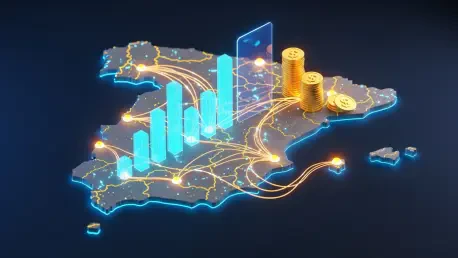

Spain has spent the last decade building a digital fortress of fiber-optic cables and 5G towers that now covers nearly every corner of its diverse and rugged landscape. While the nation stands as a continental leader in digital infrastructure, boasting some of the most extensive fiber-optic and 5G networks globally, this physical prowess is increasingly decoupled from the industry’s economic health. The current market is defined by a “private cost, public benefit” model, where massive capital expenditures by private operators have provided the public with world-class connectivity, yet have left the providers themselves facing stagnant growth and narrowing margins. This financial disconnect creates a significant sustainability risk for the future of Spanish connectivity. While consumers are currently receiving exceptional value for their money, the industry’s share of the national Gross Domestic Product has shrunk, signaling that operators are losing their ability to capture value. If these companies cannot achieve a healthy return on investment, they will struggle to compete for capital.
Infrastructural Excellence: A Model for Regional Connectivity
Evolution of Fiber-to-the-Home and 5G Deployment
Spain’s primary achievement is its aggressive and early rollout of fiber-to-the-home technology, which now reaches a remarkable 97% of households. Unlike many European neighbors that relied on legacy copper systems for longer, Spain moved directly to fiber, a move largely funded by the private sector but bolstered by the ÚNICO-Banda Ancha program. This government initiative provided necessary subsidies to facilitate expansion into less profitable, sparsely populated rural areas, resulting in a high adoption rate where approximately 93% of eligible households have transitioned to high-speed fiber services. The sheer ubiquity of this fiber network has transformed Spain into a digital powerhouse, enabling a level of connectivity that many larger economies are still struggling to achieve. This transition from copper to fiber was not just a technical upgrade but a strategic pivot that allowed the country to leapfrog several stages of digital evolution, placing it at the very forefront of the European connectivity rankings.
In the mobile sphere, the metrics for 5G coverage are equally impressive, with major providers reporting population reach between 90% and 95%. According to network data, Spanish users have access to a 5G signal more than 70% of the time, a figure that surpasses the availability found in the United Kingdom, Italy, and the Netherlands. While Spain still trails global leaders like South Korea, it remains a standout performer within the European Union, providing a robust foundation for mobile data consumption and digital literacy. The rapid adoption of 5G has been facilitated by the availability of affordable handsets and a consumer base that is increasingly reliant on mobile-first applications for everything from banking to healthcare. However, the density of this coverage is not uniform across all frequency bands, which leads to varying experiences depending on the specific location and the device being used. Despite these nuances, the overall picture is one of a nation that is deeply integrated into the modern mobile economy.
Evaluating Profitability and Market Share in a Saturated Environment
Despite these physical milestones, the financial reality for Spanish operators is sobering, as the cost of maintaining and upgrading networks is not being offset by revenue growth. Profit margins for the country’s telecom giants typically hover between 30% and 35%, which is significantly lower than the margins enjoyed by incumbent operators in France, Germany, and the Netherlands. This lack of profitability makes it increasingly difficult for the sector to maintain its economic footprint, as evidenced by the shrinking share of telecom revenue relative to Spain’s overall GDP. The aggressive price wars that have characterized the Spanish market for the last several years have benefitted the consumer but have left the operators with little capital to reinvest without taking on significant debt. As the cost of labor and energy continues to fluctuate, these thin margins are being squeezed even further, creating a precarious situation for companies that are expected to provide essential services while also managing high operational costs.
Furthermore, the investment landscape for Spanish telecommunications is becoming increasingly complicated as international investors look for more lucrative returns in other sectors or regions. When compared to the high-growth tech sectors in North America or the utility-like stability of northern European markets, Spain’s telecom environment appears overly competitive and under-monetized. The historical trend of declining average revenue per user (ARPU) shows no signs of reversing, even as the volume of data transmitted over these networks grows exponentially. This disconnect between usage and revenue is a primary concern for long-term sustainability, as it prevents the accumulation of reserves needed for unexpected network repairs or future technology transitions. To remain attractive to global capital, the Spanish market must demonstrate that it can generate sustainable profits that align with its technical leadership. Without a correction in the current pricing models, the sector risks falling into a trap where it provides world-class service on a weak balance sheet.
Technical Bottlenecks and Regulatory Considerations
Addressing Network Congestion and the Need for Standalone Systems
Technical bottlenecks also loom, as high coverage percentages do not always equate to peak performance during times of high demand. During peak evening hours, average mobile speeds in Spain can plummet by more than 60% while network latency increases significantly, suggesting that current networks are not yet deep enough to handle surging data requirements. This phenomenon, often referred to as network congestion, is a direct result of the “5G Non-Standalone” architecture, which relies on 4G core infrastructure to function. While this approach allowed for a rapid initial rollout, it lacks the efficiency and capacity required for the next phase of digital services, such as industrial automation and augmented reality. The current reliance on hybrid networks means that while the signal bar on a smartphone may indicate 5G, the actual throughput and responsiveness are often limited by the aging backend systems. This gap between consumer expectation and actual network performance is becoming a point of friction that operators must solve.
To solve these performance issues, the industry must transition to 5G Standalone technology, which uses an independent backend to provide the low-latency and high-throughput services essential for the next phase of digital evolution. This shift represents a massive technical undertaking and a significant financial burden, as it requires replacing core network components rather than just upgrading external antennas. 5G Standalone is the key to unlocking features like network slicing, which allows operators to dedicate specific portions of their network to critical services like emergency response or autonomous vehicles. However, the business case for this transition remains unclear for many operators who are already struggling with low margins. They are essentially caught in a technological arms race where the cost of entry is rising, but the potential for increased revenue remains speculative. If the transition to Standalone architecture is delayed due to financial constraints, Spain’s current lead in coverage could quickly become irrelevant.
Mitigating the Urban-Rural Divide and Planning for Resilience
Geographic disparity remains a persistent challenge, with a visible gap in service quality between urban centers and rural municipalities. While cities enjoy near-ubiquitous coverage and fierce competition, rural areas lag behind in 5G availability and often have access to only one or two competing networks. This digital divide is not merely an inconvenience; it has profound implications for economic development and social cohesion, as rural businesses and residents are excluded from the high-speed services that are now considered standard in metropolitan hubs. Bridging this gap will require a mix of continued public funding and a more favorable environment for private investment to ensure that all citizens, regardless of their location, can participate in the digital economy. The current strategy of relying on subsidies for rural deployment has achieved much, but it often stops short of providing the redundancy and competitive choice found in cities. Ensuring that the most remote parts of the country receive the same level of sophistication is a priority.
The path forward necessitated a radical rethink of how telecommunications services were managed and funded to ensure Spain did not squander its hard-earned technical advantage. Stakeholders recognized that the era of expansion had to give way to an era of optimization, where the focus shifted from simple coverage metrics to the quality and reliability of the user experience. Policy experts recommended the implementation of fiscal incentives that rewarded companies for deploying 5G Standalone technology in underserved regions, effectively aligning corporate goals with national interests. Furthermore, the government worked to streamline the bureaucratic hurdles associated with network maintenance, allowing for faster response times and lower operational costs for providers. By fostering a more collaborative relationship between the public sector and private industry, Spain sought to stabilize the financial health of its telecom giants. These actions were designed to secure the nation’s position as a digital hub, providing the necessary stability.