
The Dawn of a Sovereign Sky: Understanding the IRIS² Mandate
Maintaining an independent gateway to the stars has shifted from being a prestigious scientific ambition to becoming an absolute requirement for the preservation of modern democratic infrastructure and digital autonomy. The Infrastructure for Resilience, Interconnectivity and Security by Satellite, known as IRIS², represents the definitive move by the European Union to claim its space in the increasingly contested orbital environment. As terrestrial networks face growing threats from physical sabotage and sophisticated cyberattacks, the necessity for a space-based communication system that operates outside the influence of foreign commercial entities has never been more urgent. This initiative is designed to ensure that European governments, military forces, and emergency responders possess a redundant, high-capacity link that functions regardless of terrestrial conditions.
The significance of IRIS² lies in its role as the third major pillar of European space infrastructure, complementing the Galileo global navigation system and the Copernicus Earth observation program. By establishing a sovereign constellation, the EU is moving toward a future where critical data flows are protected by European encryption and controlled by European authorities. This effort is not merely a technical upgrade but a strategic maneuver to prevent geopolitical “encirclement” in the digital domain. This article explores how the multi-layered architecture, domestic launch capabilities, and a unique public-private financing model are coming together to redefine the concept of continental security.
Building a Fortress in Orbit: The Architecture of EU Independence
A Multi-Layered Defense Against Digital Vulnerability
The architectural core of IRIS² is a sophisticated multi-orbit network designed to provide a “fortress” effect for secure communications. Industry analysts point out that the system utilizes a fleet of 330 satellites in Low Earth Orbit (LEO) working in tandem with 18 satellites in Medium Earth Orbit (MEO). This dual-layer approach provides a unique balance between low-latency performance and wide-area coverage. Unlike consumer-focused networks that prioritize sheer volume, IRIS² focuses on resilience and military-grade encryption. The LEO component ensures high-speed data transmission for tactical operations, while the MEO backbone provides the stability required for strategic command and control across the globe.
Security experts highlight that the most critical aspect of this architecture is the “governmental” tier of service. This dedicated lane is isolated from commercial traffic, utilizing advanced anti-jamming technologies and quantum-encrypted keys to prevent interception. While some critics argue that building a bespoke system is more expensive than leasing bandwidth from existing providers, the consensus among security professionals remains that sovereign control over the physical hardware and the data protocols is the only way to ensure absolute reliability during a crisis. This architectural independence serves as a buffer against the volatility of the global commercial satellite market.
Breaking the Dependency Loop: The Ariane 6 and Sovereign Launch Capability
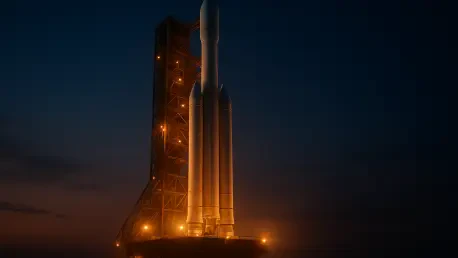
One of the most debated aspects of the IRIS² program is the unwavering commitment to using the Ariane 6 heavy-lift rocket for deployment. In a market where SpaceX’s Falcon 9 offers high flight frequency and competitive pricing, the European decision to stick with domestic launchers is a clear statement of strategic intent. Industry leaders argue that true sovereignty is impossible if the means of reaching orbit are controlled by a foreign private entity. By mandating the use of the Ariane 6, developed by ArianeGroup for the European Space Agency, the EU ensures that its security infrastructure remains insulated from external political shifts or commercial pivots by non-European companies.
The launch strategy acts as a safeguard against the “dependency loop” that often plagues international defense projects. Aerospace analysts suggest that relying on a single foreign provider for launch services creates a single point of failure for European security policy. The Ariane 6 provides the necessary lift capacity to deploy the massive LEO constellation and the heavier MEO satellites. Although this choice involves significant domestic investment, it fosters a self-sufficient ecosystem where European rockets launch European satellites to protect European interests. This closed-loop system is essential for maintaining the integrity of the constellation throughout its operational lifecycle.
Beyond Connectivity: The Low-LEO Innovation Laboratory
While the primary constellation handles heavy-duty security tasks, IRIS² includes a dedicated “low-LEO” track operating at altitudes below 750 kilometers. This layer serves as an innovation laboratory where emerging technologies are tested in real-world conditions. Researchers are currently utilizing this track to explore Direct-to-Device (D2D) connectivity, which allows standard smartphones to connect directly to satellites without specialized hardware. This innovation is expected to revolutionize emergency response by providing a safety net for citizens in remote areas or during natural disasters when cell towers are offline.
Furthermore, the low-LEO track is the testing ground for the Internet of Things (IoT) and quantum communication. By integrating nearly 80 different companies through consolidation contracts, the European Space Agency is fostering a diverse ecosystem of startups and established aerospace firms. This layer allows for the rapid iteration of hardware, ensuring that the IRIS² system remains technologically relevant as global telecommunications evolve from 2026 to 2030. It challenges the assumption that sovereign systems are inherently stagnant, proving that governmental mandates can drive disruptive innovations in maritime tracking, drone management, and encrypted aviation links.
The Industrial Engine: Financing a New Era of Aerospace Leadership
The financial structure of IRIS² is built on a massive public-private partnership (PPP) model involving a total investment of approximately €15.6 billion. This approach distributes the financial burden and the operational risk between the public sector and the SpaceRISE consortium, which includes giants like SES, Eutelsat, and Hispasat. Economists note that this model encourages industrial efficiency while ensuring that the primary mission remains focused on public security rather than quarterly profits. Individual contracts, such as the €2.4 billion mandate for Aerospacelab to manufacture hundreds of satellites, are creating a “megafactory” culture within the European aerospace sector.
This investment serves as a powerful industrial engine, strengthening the regional supply chain and creating thousands of high-tech jobs. Major players like Thales Alenia Space and OHB are responsible for the sophisticated payloads and satellite platforms, while Hispasat manages the critical ground segment infrastructure. By dividing the labor among various member states, the project ensures broad political support and technological synergy across the continent. Comparative analyses suggest that this funding model provides more stability than purely venture-backed space projects, as the long-term commitment of the European Commission guarantees a consistent pipeline of work for the aerospace industry.
Navigating the Path to Full Operational Capability
Transitioning from conceptual design to a fully operational satellite network requires a rigorous adherence to technical milestones and industrial collaboration. The current roadmap indicates that the period from 2026 to 2028 will be defined by the intensive testing of low-LEO experimental services and the finalization of the ground station network. Industry best practices suggest that a phased rollout is the most effective way to manage the complexity of a multi-orbit system. By launching the first 66 LEO satellites in 2029, the consortium can validate the governmental communication protocols before the full 330-satellite constellation is completed in 2030.
To ensure success, policymakers and industrial partners must maintain a high level of synchronization. It is recommended that the EU continues to bridge the capacity gap by utilizing existing assets, such as the additional OneWeb satellites procured through Airbus, while the sovereign system reaches full strength. Strategic focus should remain on the “security-by-design” principle, ensuring that every component of the ground and space segment is hardened against electronic warfare. Maintaining a transparent dialogue between the European Commission and the private consortium will be vital for navigating the technical hurdles of the coming years and delivering a system that meets the demanding requirements of modern defense.
Securing the High Ground: The Future of European Autonomy
The development of the IRIS² initiative marked a decisive moment in the history of European aerospace, signaling that the continent was no longer willing to be a secondary player in the orbital economy. By integrating sovereign launch capabilities with a multi-layered and highly secure satellite architecture, the program addressed the fundamental vulnerabilities of the digital age. The project synthesized the needs of defense, emergency services, and technological innovation into a single, cohesive framework that prioritized independence. The substantial financial commitment reflected a clear understanding that the cost of technological dependence far outweighed the price of building a domestic alternative.
This effort successfully fostered a new era of industrial leadership, pushing European manufacturers to adopt large-scale production techniques that rivaled global competitors. The initiative proved that public-private collaboration could deliver critical infrastructure while simultaneously driving cutting-edge research in quantum communications and satellite-to-mobile connectivity. As the constellation moved toward full operational capability, it provided a blueprint for how regional powers could protect their digital sovereignty in a multi-polar world. The strategic takeaway was clear: the high ground of space must be secured by those who seek to remain masters of their own destiny. Moving forward, the focus must shift toward expanding these secure services to a wider range of international partners and ensuring the long-term sustainability of the orbital environment.