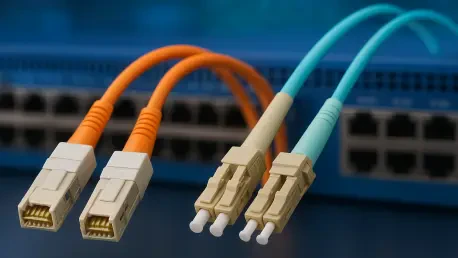

Successful scaling into the 1.6T era requires procurement frameworks that prioritize manufacturing flexibility and total sourcing efficiency over unit price alone. For decades, the acquisition of fiber optic patch cords was viewed as a routine commodity transaction, where the primary variables were simple connector types and basic fiber modes. In that era, the procurement process revolved around unit price and delivery speed, with little regard for the intricate engineering behind the components. However, as data centers push toward 400G and 800G speeds, the simplicity of that “plug-and-play” model has been rendered obsolete by the sheer technical demands of modern infrastructure. Today, the sourcing landscape has transformed into a high-stakes strategic operation, characterized by a massive increase in fiber density and a decisive move toward factory-controlled pre-termination. Decision-makers must now navigate a marketplace where the distinction between a high-quality assembly and a sub-standard one can be the difference between a seamless network rollout and weeks of troubleshooting. The focus has shifted from buying individual parts to managing complex technical integration, requiring deep partnerships with manufacturers who can handle customization at scale while maintaining rigorous quality controls. This evolution reflects a broader trend in the technology sector where physical infrastructure must keep pace with the exponential growth of artificial intelligence and high-performance computing workloads.
The Technological Drivers: High-Speed Connectivity and Standards
The implementation of ultra-high-speed Ethernet standards, such as the IEEE 802.3df-2024 specifications, acts as the primary catalyst for a fundamental overhaul in fiber sourcing strategies across the modern data center landscape. This transition signals a decisive departure from the traditional duplex-link models that dominated the industry for years, moving instead toward sophisticated eight-lane architectures. Whether an operator is implementing 800GbE as a single, massive port or partitioning it into multiple 100G or 200G lanes, the underlying physical infrastructure must now accommodate parallel optical architectures that utilize significantly more fibers than any previous generation. This architectural evolution is not merely a technical upgrade but a logistical challenge that requires a complete rethinking of how optical components are specified, purchased, and deployed. As the industry moves through the 800G cycle and prepares for the 1.6T leap, the reliance on high-count multi-fiber push-on (MPO) connectors and advanced breakout solutions has become the baseline rather than the exception. Consequently, procurement professionals are no longer just buying cables; they are securing the foundational pathways for petabytes of data that demand zero-latency connectivity across increasingly complex leaf-and-spine fabrics.
The shift toward these high-density parallel signaling standards has direct and profound implications for inventory management and technical scrutiny within the procurement cycle. Buyers who once managed a relatively small variety of duplex LC patch cords are now finding themselves responsible for a massive proliferation of specialized multi-fiber assemblies, high-density breakout harnesses, and gender-specific MPO/MTP components. This transition requires a sophisticated understanding of optical polarity—whether Type A, B, or C—and connector gender, as even a minor mismatch can lead to a complete lack of signal across a multi-million-dollar link. Furthermore, the move to 800G necessitates stricter adherence to performance metrics like return loss and insertion loss, as the margins for error shrink significantly at higher speeds. To mitigate these risks, organizations are increasingly looking for suppliers who can provide comprehensive technical documentation and advanced modeling support during the design phase. The goal is to ensure that every component in the chain is perfectly matched to the specific transceiver modules being deployed, thereby avoiding the costly delays associated with hardware incompatibility or signal degradation. This environment demands that sourcing teams act as technical gatekeepers who understand the physical nuances of the latest IEEE and MSA standards.
Operational Shift: The Migration from Field Labor to Factory Precision
In the current high-density networking environments, the traditional practice of field-splicing and terminating fibers has become economically unfeasible and technically risky. As fiber counts for modern data center interconnects reach into the thousands, the precision required for these connections is best achieved in a controlled factory setting where automated polishing and testing equipment can guarantee sub-micron accuracy. This has led to a significant trend where the vast majority of connectivity work has migrated from the installation site back to the manufacturing floor. Field labor is now primarily focused on the physical routing and plugging of pre-terminated assemblies rather than the delicate work of terminating individual glass strands. This shift not only ensures higher performance but also addresses the chronic shortage of highly skilled fiber technicians in the labor market. By moving the complexity of termination to the manufacturer, data center operators can achieve a level of consistency that is simply impossible to replicate in the field, especially when dealing with the tight tolerances required for 400G and 800G transceivers that utilize PAM4 signaling and other advanced modulation schemes.
Pre-terminated solutions offer a dramatic increase in installation velocity, often allowing for deployments up to four times faster than traditional field-based methods. This efficiency is critical in an era where speed-to-market is a primary competitive advantage for cloud service providers and enterprise data centers alike. Reducing the time spent on-site for termination and testing directly translates to lower labor costs and earlier revenue generation from new network capacity. Additionally, factory termination guarantees a higher level of quality assurance through rigorous optical testing, including end-face geometry inspections and interferometry, which are documented and provided with the product. This shifts the burden of performance and labeling accuracy from the onsite contractor to the manufacturer, creating a clear line of accountability. When thousand-fiber trunks are delivered pre-labeled and pre-tested, the risk of human error during the installation phase is minimized. This systematic approach to deployment allows for a more predictable project timeline and ensures that the network infrastructure can support the demanding requirements of high-frequency trading, AI model training, and massive-scale virtualization without the need for extensive field troubleshooting.
Spatial Constraints: Physical Challenges of Extreme Fiber Density
Fiber density is no longer just a technical metric used by engineers; it has become a significant physical hurdle for modern data center infrastructure. As facilities become more congested with high-performance hardware, the physical footprint of cabling can actually become a limiting factor for growth. In many legacy environments, cable trays and conduits are already reaching their maximum capacity, making it difficult to introduce new high-speed links without extensive and expensive structural modifications. Innovative platforms like ribbon fiber and micro-core cables now allow thousands of fibers to be housed within cables that share the same diameter as legacy, low-count cables. This technology maximizes the use of available space, allowing operators to increase their bandwidth capacity without expanding their physical footprint. Sourcing professionals must now prioritize these high-density designs, looking for cables that offer the smallest possible diameter while maintaining the mechanical strength needed for long-distance pulls. This focus on “density-per-square-inch” is essential for maintaining the scalability of the network and ensuring that the cooling systems can function efficiently without being obstructed by massive bundles of thick, traditional cabling.
For sourcing professionals, this extreme density emphasizes the importance of the entire assembly design rather than just the connector interface. Components must be engineered to facilitate airflow, navigate narrow conduits, and allow for easy maintenance within high-density patch panels where finger space is at a premium. This necessity has spurred the widespread adoption of “hydra” assemblies and specialized breakout designs that act as critical bridges between high-density trunk lines and individual transceiver ports. These assemblies must be rugged enough to withstand the stresses of installation while being flexible enough to manage within tight cabinet spaces. Furthermore, the use of pull-tabs and push-pull boots on connectors has become a standard requirement to allow technicians to engage and disengage fibers in crowded panels without disturbing adjacent links. This evolution in physical design highlights the need for procurement teams to look beyond the datasheet and consider the practical “installability” of the products they purchase. A cable that meets all optical specifications but is too rigid or bulky to fit into a standard rack environment can lead to significant operational bottlenecks and increased maintenance costs over the lifecycle of the data center.
Procurement Nuance: Complexity in Customization and Specifications
Despite the existence of rigorous international standards for connector interfaces like LC, MPO, and the newer SN or MDC connectors, the finished assemblies delivered to customers are increasingly customized to meet unique architectural needs. The gap between a standard interface and a specific project requirement has widened considerably, leading to an explosion of potential configurations and unique stock-keeping units (SKUs). Buyers must now account for a dizzying array of variables, including varying fiber types like OM4, OM5, or OS2, different jacket materials like LSZH or Plenum, and specific cable diameters optimized for density. Additionally, color-coding requirements for different network tiers and custom staggering lengths for breakout legs have become standard requests to ensure clean cable management within the rack. This complexity means that the traditional “off-the-shelf” purchasing model is no longer sufficient for large-scale deployments. Instead, procurement teams must work closely with manufacturing partners to define precise specifications that match their specific hardware environment, ensuring that every assembly is purpose-built for its intended application within the network fabric.
Further complexity arises from the intricate logistics and configuration details that are now integrated into the procurement process, such as custom labeling, unique packaging, and specific test reporting formats. Even a minor change in boot design or polarity type can create a unique SKU that must be tracked and managed throughout the supply chain. This reality requires suppliers to possess extreme manufacturing flexibility, enabling them to move from a custom sample or a prototype design to high-volume production without significant friction or delay. The ability of a manufacturer to manage thousands of custom configurations while maintaining consistent lead times has become a key differentiator in the market. Organizations are increasingly consolidating their spend with vendors who can prove their ability to handle this complexity through sophisticated enterprise resource planning (ERP) systems and agile manufacturing processes. This shift toward mass customization means that the relationship between the buyer and the manufacturer is more collaborative than ever before, with both parties working in tandem to ensure that the physical layer of the network is perfectly aligned with the logical architecture and the operational requirements of the data center.
Strategic Analysis: Reevaluating Total Cost of Ownership
In the 400G and 800G era, the “cheapest” unit price often hides significant secondary costs that can jeopardize the success of an entire infrastructure project. The total cost of ownership (TCO) is now heavily influenced by factors such as inventory obsolescence, the need for emergency logistics when a primary supplier fails, and the internal engineering time required to manage low-tier vendors who lack technical depth. A single non-compliant shipment or a batch of connectors with marginal performance can stall a multi-million-dollar data center commissioning process, leading to missed deadlines and lost revenue. When the cost of a single 800G transceiver is factored in, the risk of using a low-quality patch cord becomes clear; the savings of a few dollars on a cable are dwarfed by the potential damage to a port that costs thousands. Consequently, sophisticated organizations have moved away from simple price-based auctions toward a value-based procurement model. They recognize that a reliable, high-quality component is an insurance policy against the catastrophic costs of network downtime and the labor-intensive process of replacing failed infrastructure in a live production environment.
Efficient sourcing strategies now prioritize “total sourcing efficiency” over the lowest initial bid, focusing on the long-term reliability and adaptability of the supply chain. This approach favors manufacturers who can bundle standard products with highly complex custom configurations while guaranteeing consistent quality across all product lines. By focusing on reliable lead times and technical accuracy, organizations can avoid the ripple effects of project delays and ensure their infrastructure is ready for immediate deployment as soon as it arrives on site. This strategic view also includes the consideration of environmental and sustainability factors, as modern procurement frameworks increasingly reward suppliers who use recyclable packaging and energy-efficient manufacturing processes. Ultimately, the goal is to create a resilient and sustainable supply chain that supports the rapid scaling of network capacity while minimizing the total financial and operational burden on the organization. This reevaluation of TCO acknowledges that the physical layer is a critical asset that must be managed with the same level of strategic foresight as the active hardware and software that run upon it.
Manufacturing Depth: The Advantage of Vertically Integrated Sourcing
A manufacturer’s depth in the production chain is becoming a critical competitive advantage as the technical requirements for optical components become more stringent. The performance of an optical patch cord is fundamentally determined by the quality and consistency of its sub-components, such as the ceramic ferrules in LC connectors or the MT ferrules used in MPO assemblies. There is a distinct and measurable difference between simple “assemblers,” who buy various parts from third parties and merely put them together, and vertically integrated manufacturers who produce their own critical components. Vertically integrated companies have direct control over the raw materials and the manufacturing tolerances of every part of the assembly, which leads to superior dimensional consistency across every unit produced. This level of control is particularly important for high-speed networks where even a microscopic misalignment in the ferrule can cause significant signal loss. For the buyer, sourcing from a vertically integrated manufacturer reduces the risk of variability between batches and ensures that the final product meets the highest possible performance standards.
Beyond quality control, vertical integration provides a significant boost to supply chain resilience against global market shortages and logistical disruptions. Manufacturers who control their own production of ferrules, housings, and cable jackets are less susceptible to the “bullwhip effect” of supply chain fluctuations, allowing them to maintain more stable lead times and pricing even during periods of high market volatility. Furthermore, these manufacturers can innovate much faster than their competitors, as they can develop specialized high-density parts and proprietary connector designs for 1.6T applications before these components are available on the general commodity market. This ability to move quickly from research and development to full-scale production ensures that the buyer receives a more reliable and future-ready product that is designed to meet the challenges of next-generation networking. This depth of control ensures that the buyer is not just purchasing a finished good, but is benefiting from a sophisticated engineering ecosystem that is optimized for performance, scalability, and long-term reliability in the most demanding data center environments.
Future Readiness: Establishing a Strategic Evaluation Framework
To navigate this rapidly evolving market, buyers must move beyond simple price lists and adopt a more rigorous, technical framework for evaluating their manufacturing partners. It is essential to probe a supplier’s operational scalability and their documented ability to handle both high-volume standard runs and small-batch custom projects with the same level of precision. Technical support has become a vital component of the vendor relationship, as suppliers must now understand the intricate nuances of breakout configurations and polarity requirements for the latest generation of transceivers. A vendor that cannot provide expert guidance on how to optimize a fiber run for an 800G link is no longer a viable partner in the modern landscape. The evaluation process should include site audits or detailed reviews of quality management systems to ensure that the manufacturer is utilizing the latest automated testing and inspection technologies. By establishing a partnership based on technical competence and manufacturing transparency, organizations can ensure that their physical infrastructure is a robust foundation for their digital services rather than a weak link in the chain.
The organizations that successfully navigated the transition to the 800G era prioritized technical partnerships over transactional relationships and recognized the shift from field-based work to factory-controlled precision. They implemented evaluation frameworks that questioned in-house capabilities, lead-time predictability, and the consistency of optical performance across thousands of units. These strategic steps allowed them to avoid the common pitfalls of infrastructure scaling, such as project delays caused by incompatible components or the high costs associated with replacing sub-standard cabling. By selecting partners based on manufacturing depth and the ability to innovate at the component level, these leaders built resilient networks that are now seamlessly scaling toward 1.6T and beyond. The focus remained on the total lifecycle of the product, ensuring that the physical layer could support multiple generations of active hardware upgrades. These actionable strategies provided a roadmap for maintaining network integrity in a time of unprecedented growth, proving that the most effective procurement frameworks are those that treat the physical layer as a strategic asset. Moving forward, the industry utilized these lessons to foster a more collaborative and technically rigorous sourcing environment that remains essential for the continued expansion of global digital infrastructure.