
Reliable high-definition television delivery over 5G networks requires a shift from reactive data management to proactive signal prediction. While the current global discourse surrounding artificial intelligence is frequently dominated by anxieties regarding massive energy consumption and systemic existential risks, the practical application of the technology is becoming increasingly granular and beneficial. Researchers at Waseda University in Tokyo identified a way to utilize specialized AI to bridge the last-mile connectivity gap that has plagued high-definition television broadcasting for years. By focusing on a lightweight model rather than a resource-heavy one, the team moved toward a solution that integrates into existing telecommunications infrastructure. This development is not just about entertainment; it represents a fundamental modernization of how essential information is delivered to households that have been historically difficult to reach with fiber-optic solutions. The innovation suggests that AI is most effective when it serves as an invisible layer of quality control and network resilience.
The Infrastructure Challenge: Navigating Urban Physical Barriers
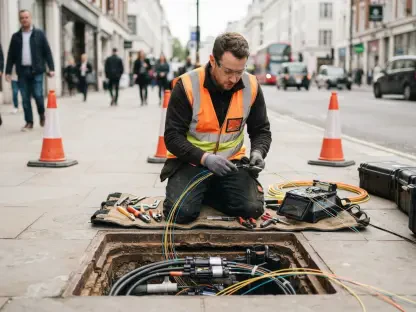
The primary hurdle in modern digital broadcasting remains the final leg of data delivery from the provider to the consumer’s home. In many densely populated urban areas, older residential buildings lack the modern internal wiring necessary to accommodate standard high-speed fiber-optic services. Retrofitting these aging structures is often physically impossible due to architectural constraints or prohibitively expensive for building owners and residents. This creates a digital divide where individuals in older housing are left with substandard access to reliable television and internet services. Despite the widespread availability of 5G infrastructure, using wireless signals as a direct replacement for cable has historically faced reliability issues in these specific environments. The research team focused on transforming 5G into a viable wireless alternative that can bypass the need for physical cables entirely, ensuring that every household can receive stable broadcasts regardless of the building’s age or current wiring status.
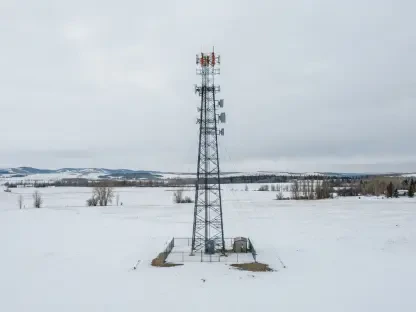
Bridging this digital accessibility gap is essential for maintaining a cohesive public information system. In many regions, cable television remains the primary medium for national broadcasts and critical emergency alerts. When physical infrastructure fails or is absent, the vulnerability of the population increases. The Waseda project sought to leverage local 5G networks to provide a redundant and reliable pathway for these essential services. By treating the wireless spectrum as a robust delivery mechanism for high-definition content, the researchers aimed to provide a level of service parity between residents with fiber-optic access and those reliant on wireless signals. This approach focuses on social utility by repurposing local 5G infrastructure, which is often reserved for corporate or industrial campuses, for the broader public good. It ensures that the digital modernization of cities does not leave behind residents living in older infrastructure, creating a more equitable landscape for information dissemination across urban environments.
Protocol Stability: Overcoming Multicast Transmission Flaws
Standard 5G connections typically utilize unicast communication, which functions as a two-way street between the network and the specific device. In this setup, if a data packet fails to reach its destination, the receiving device can communicate with the network to request an immediate retransmission. This ensures high data integrity but requires a constant feedback loop that consumes significant bandwidth. In contrast, television broadcasting uses Multicast/Broadcast Services, which send the same stream to thousands of users simultaneously. The inherent limitation of this protocol is the absence of a return channel for retransmission requests. Because the broadcast is a one-way stream, any data packets lost due to signal interference cannot be recovered or resent. This lack of a feedback mechanism often results in the frustrating stuttering or freezing of video streams, which significantly degrades the viewer experience and makes 5G multicast a less reliable option for high-definition television than wired cable.
To solve the inherent instability of one-way multicast streams, the researchers moved away from traditional reactive protocols. Conventional 5G systems prioritize raw speed and rely on retransmission to fix errors, but this logic is fundamentally incompatible with the demands of stable broadcasting. The team recognized that the only way to maintain a smooth video stream without a return channel was to anticipate signal fluctuations before they occurred. By moving the focus from error correction to error prevention, they addressed the root cause of video degradation in wireless environments. This required a deep analysis of how radio waves interact with physical obstacles and electronic interference in real time. The resulting AI model was designed to handle the unique technical demands of stable, one-way broadcasting, providing a specialized solution for a protocol that has long struggled with the volatility of the wireless spectrum. This shift represents a transition toward a more intelligent and proactive style of network management.
Predictive Modeling: Leveraging Micro-Fluctuation Data Streams
The effectiveness of the proposed AI model stems from its training on a massive dataset of approximately 26 million measurements. These data points were collected at incredibly fine intervals of 0.5 milliseconds from active commercial 5G networks. Standard human-designed algorithms usually overlook the micro-fluctuations in radio conditions that occur at this speed, treating them as insignificant noise. However, the AI learned to recognize these subtle patterns as early indicators of deteriorating signal quality. By analyzing these tiny changes in the wireless environment, the model can predict when a signal is about to weaken or fail before the interruption actually impacts the video stream. This predictive capability allows the system to make micro-adjustments to the transmission settings, ensuring that the data flow remains constant. This level of granular analysis is only possible through machine learning, as the sheer volume and speed of the data exceed the processing capabilities of traditional networking protocols.
Once the AI identifies a potential signal drop, it proactively adjusts the modulation and coding schemes of the transmission. Instead of waiting for a packet to be lost, the system changes how the data is packaged and sent to better suit the immediate radio conditions. This ensures that the video remains stable even when the user moves behind a wall or experiences external electronic interference. The predictive nature of the model effectively creates a virtual feedback loop that does not require an actual return signal from the device. This allows for high-definition video delivery that is as reliable as a physical cable connection. The system was designed to be highly responsive, making these adjustments in real time to keep the viewer experience seamless. By focusing on these micro-fluctuations, the researchers turned a volatile wireless environment into a controlled and predictable delivery channel, proving that lightweight AI can solve complex infrastructure problems through intelligent data analysis rather than brute force.
Engineering Efficiency: Optimizing AI for Mobile Hardware
A significant breakthrough of this specialized model is its lightweight design, which allows it to run efficiently on standard consumer electronics. Unlike the massive AI agents that require specialized data centers and immense power, this model was optimized to function on smartphone chipsets released as early as 2020. The researchers achieved an impressive processing time of less than 0.07 milliseconds per cycle. This ensures that the AI adds no perceptible delay or lag to the video stream, which is critical for real-time broadcasts. Because the model utilizes data already collected by mobile devices during their normal operation, it does not require additional sensors or specialized hardware upgrades. This makes the technology highly accessible and easy to deploy across existing networks. The efficiency of the model ensures that it does not drain battery life significantly, making it a practical tool for mobile users who want to stream high-definition television without sacrificing their device’s performance.
Empirical testing demonstrated that this AI-driven approach significantly outperformed conventional networking methods. In comparative studies, the AI model successfully selected error-free transmission settings for 87% of video segments. In contrast, standard speed-oriented protocols only managed to achieve error-free delivery for 32% of segments under the same conditions. These findings indicated that AI-native communication could effectively turn 5G into a reliable replacement for fixed-line cable services. The system provided a level of stability that was previously thought to be impossible for one-way wireless multicast broadcasting. By focusing on precision and efficiency, the researchers proved that high-definition content could be delivered without the interruptions that have traditionally plagued wireless television. This success provided a benchmark for future developments in wireless communication, signaling a future where networks are defined by their intelligence and resilience rather than just their raw speed or total bandwidth capacity.
Strategic Outcomes: Improving Accessibility through Intelligent Design
The study concluded that the integration of lightweight AI into 5G networks effectively resolved the most pressing technical barriers to last-mile television delivery. By implementing these predictive models, telecommunication providers established a more resilient infrastructure that reached underserved urban populations without the need for expensive physical retrofitting. The technology successfully bridged the digital divide for residents in older buildings, ensuring they had equal access to high-definition media and essential emergency services. This implementation moved beyond the theoretical realm and provided a practical roadmap for utilizing AI as a specialized tool for infrastructure modernization. The project demonstrated that social equity in the digital age depended on intelligent network management rather than just hardware expansion. Providers successfully mitigated the volatility of the wireless spectrum, creating a stable environment for the next generation of broadcast services.
Beyond the immediate scope of television delivery, the success of this model suggested broader applications for other one-way wireless communication fields. The research provided actionable insights for improving satellite communications, autonomous vehicle telemetry, and industrial automation systems where data retransmission was physically impossible or logically impractical. The transition to AI-native protocols offered a path toward more efficient use of the wireless spectrum across multiple industries. Future considerations focused on expanding this predictive logic to deep-space exploration and remote medical telemetry, where signal reliability is a matter of life and death. The work established a foundation for a more connected and resilient society by proving that targeted AI applications could solve localized infrastructure issues with global implications. This achievement served as a reminder that the most significant technological revolutions often occurred within the invisible layers of our daily communication networks.