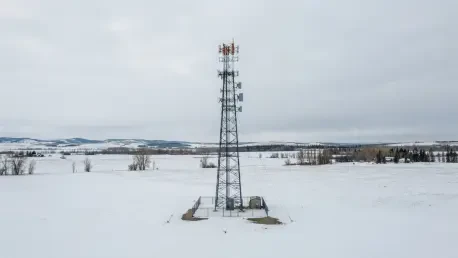

The move toward a 940 Mbps wireless standard represents a definitive shift away from compromised rural internet toward full parity with major urban centers. In November 2026, representatives from MCSnet appeared before the Cold Lake City Council to outline a comprehensive strategy for modernizing the digital infrastructure in the northern portion of the city. Led by Business Development Manager Kevin Bernhardt and Rhonda Lafrance, the presentation focused on the deployment of GigAir service, which aims to provide residential and commercial sectors with throughput capacities that rival traditional fiber optics. This project is not a mere routine hardware replacement but a calculated response to the specific geographical challenges of the Lakeland region and the evolving needs of a data-driven society. By targeting the northern sector of Cold Lake, the company intends to eliminate persistent service gaps and offer a robust alternative to national carriers, ensuring that the local population can engage with high-speed digital services without the latency issues typical of older fixed wireless systems. This initiative signals a commitment to long-term community investment, positioning the city as a leader in rural-urban technological convergence.
Constructing the Cold Lake North Tower
A critical component of this expansion is the construction of a new wireless tower near the North Branch of the Cold Lake Public Library, specifically around 8 Avenue and 13 Street. This location was strategically chosen following a detailed analysis of existing service gaps where signal quality has historically been degraded due to physical terrain and urban density. The new tower will act as a vital hub, densifying the network and providing a more reliable connection for residents who have previously struggled with inconsistent service or signal dropouts. By placing infrastructure closer to the end-user, the provider effectively reduces the distance data must travel over the air, which inherently improves the stability of the connection during peak usage hours. This targeted approach ensures that the specific needs of Cold Lake North are met with localized solutions rather than relying on distant, generalized broadcast points that may not reach into the unique topographical pockets of the neighborhood.
Logistics for the project are tied closely to the northern Alberta climate, with construction scheduled to begin as soon as the ground freezes to support the weight of heavy installation equipment. This timing is essential to ensure that machinery can operate safely without damaging the surrounding landscape while providing a stable foundation for the massive structure. Once complete, this tower will join an expansive network of over 500 towers across the province, reinforcing a commitment to localized, high-performance infrastructure that serves the community directly. The transition to this new hub represents more than just an increase in capacity; it is a fundamental shift toward a more resilient grid that can handle the growing demands of streaming, gaming, and remote work. As the ground conditions become favorable for construction, the rapid deployment of this tower will mark a turning point for local connectivity, bringing immediate improvements to the surrounding residential and commercial zones.
Utilizing Tarana Next-Generation Fixed Wireless
The technical foundation of the Cold Lake North project is Next-Generation Fixed Wireless Access (NG-FWA) powered by Tarana Wireless hardware. Unlike traditional wireless systems that require a perfectly clear line-of-sight to function properly, this technology is engineered to navigate physical obstructions such as dense foliage, buildings, and other topographical barriers. This innovation allows for high-speed data transmission even in complex urban and suburban environments where interference was previously a major hurdle for wireless providers. By utilizing sophisticated signal processing and noise cancellation techniques, the Tarana hardware maintains a high-quality link even in the presence of radio frequency noise from other devices. This capability is crucial for a community like Cold Lake North, where mature trees and varying rooflines often created “dead zones” for legacy wireless technologies, ensuring that every subscriber receives the full benefit of the high-capacity network regardless of their immediate surroundings.
This hardware offers several advantages over traditional fiber-optic cables, most notably in deployment efficiency and speed of implementation. While fiber requires extensive trenching, permitting for underground work, and significant disruption to public roads and private property, NG-FWA can be scaled rapidly to meet community demand without multi-year construction timelines. This allows the provider to activate entire neighborhoods in a fraction of the time it would take to lay physical cables to every doorstep. Furthermore, the system provides the low latency and high stability required for modern applications like high-definition video conferencing, low-lag online gaming, and the seamless operation of numerous smart-home devices simultaneously. By bypassing the physical and financial hurdles of digging, the GigAir system provides a competitive gigabit-tier service that is both agile and robust, meeting the immediate needs of a modern digital lifestyle while maintaining the flexibility to upgrade as technology continues to evolve.
Adapting to Federal Spectrum Regulations
The move to upgrade Cold Lake’s infrastructure is partly driven by a significant regulatory transition mandated by Innovation, Science and Economic Development (ISED) Canada. By March 2027, internet service providers across the country must vacate the 3.65 GHz wireless spectrum to make room for nationwide 5G mobile expansion. Because a large portion of the existing customer base historically relied on this frequency for rural and semi-urban connectivity, the company has proactively invested millions of dollars to migrate users to superior, modern hardware. This transition is a massive logistical undertaking that involves physical equipment swaps at thousands of locations, but it is necessary to comply with federal law and to ensure that users do not experience service degradation as mobile carriers begin lighting up their 5G networks in the same frequency bands. This regulatory pressure has accelerated the development of the Cold Lake North project, pushing for a faster rollout of the next-generation systems.
Rather than viewing these federal changes as a hurdle, the transition has been used as a catalyst for significant technological growth and network modernization. By replacing legacy systems with next-generation equipment, the provider is delivering a tenfold increase in speed for many users who were previously capped by the limitations of the older spectrum. This proactive approach ensures that service remains uninterrupted while moving customers toward a future-proof network that exceeds current federal requirements and consumer expectations. The multimillion-dollar investment into the GigAir platform means that Cold Lake North residents are not just getting a replacement for what they had, but are being moved onto a platform that offers performance metrics previously only available in major metropolitan cores. This alignment with federal standards ensures long-term operational stability, as the new equipment operates on frequencies that are secured for fixed wireless use, protecting the community’s digital future from further regulatory shifts.
Supporting Regional Growth and Stability
Founded in 1995 and headquartered in St. Paul, MCSnet remains a family-owned entity with a deep focus on the Lakeland region and its unique economic needs. The company manages over 2,500 kilometers of fiber-optic lines and serves more than 25,000 residential clients, providing a level of local expertise that larger national carriers often lack. Their local roots allow them to remain responsive to the specific needs of communities like Cold Lake, Bonnyville, and Lac La Biche, offering a personalized alternative to the generalized service models of major telecommunications giants. By employing over 80 staff members within the region, the company contributes significantly to the local professional economy, ensuring that the revenue generated from these services stays within the community. This regional focus translates to a better understanding of local topography and customer needs, resulting in a more reliable and community-centric service model that prioritizes northern Alberta’s development over high-density urban markets.
The expansion into Cold Lake North carries significant economic weight, as high-speed internet is now viewed as a fundamental utility essential for modern commerce and social cohesion. Reliable gigabit wireless speeds empower the local workforce, including military families at CFB Cold Lake and energy sector professionals, to participate fully in the global digital economy from the comfort of their homes. By eliminating “digital deserts” and providing a high-speed alternative to fiber, this initiative fosters a competitive marketplace that benefits all residents through better service quality and more aggressive pricing structures. The availability of 940 Mbps speeds attracts remote professionals and encourages local entrepreneurs to launch cloud-based businesses, effectively broadening the economic base of the city. As digital connectivity becomes a deciding factor for families and businesses looking to relocate, this infrastructure investment ensures that Cold Lake North remains a premier destination for growth and innovation in the Lakeland area.
Understanding Common Questions: The GigAir Advantage
One of the most frequent inquiries regarding the new service involves how GigAir differs from traditional satellite or older wireless internet options. Unlike satellite service, which often suffers from high latency due to the immense distance signals must travel to space and back, GigAir utilizes local towers and Tarana’s NG-FWA technology to provide near-instantaneous response times. This makes it ideal for real-time applications like video calls and gaming where even a half-second delay can be disruptive. Additionally, the new hardware is significantly more stable than older wireless options, using advanced beamforming technology to maintain a strong connection even during heavy rain or snow. By providing speeds up to 940 Mbps, it effectively bridges the performance gap that once separated rural wireless from urban fiber, offering a fiber-like experience without the need for intrusive underground cables or the high costs associated with satellite data caps.
Another common concern relates to the implementation timeline and whether this project requires municipal funding from the City of Cold Lake. The current construction schedule is set to begin once the ground is sufficiently frozen to support heavy equipment, with service availability following shortly after the tower near 8 Avenue and 13 Street is integrated into the grid. Residents in the surrounding area can expect to see new service options become available as the network densification process concludes. Regarding financial responsibility, the expansion is entirely self-funded by the provider, meaning no municipal tax dollars are required for the construction or operation of the new tower. While the company continues to work closely with the city to streamline permitting processes and ensure development aligns with local urban planning goals, the investment remains a private contribution to the public infrastructure, providing a significant boost to the city’s technological capabilities at no cost to the local government.
Strengthening the Digital Foundation: Final Insights
The successful planning and initial implementation of the GigAir network in Cold Lake North established a definitive blueprint for regional technological advancement. This project effectively navigated the complex intersection of federal regulatory compliance and the immediate local demand for robust bandwidth, proving that regional providers could outpace larger competitors through agility and a specialized geographical focus. The shift to the next-generation platform provided residents and local enterprises with the tools necessary to thrive in an increasingly cloud-dependent environment, future-proofing the region against subsequent technological shifts in the 3.65 GHz band. By focusing on the deployment of Tarana hardware and the strategic placement of local hubs, the city observed a measurable improvement in digital equity across previously underserved pockets, ensuring that no neighborhood was left behind in the transition to gigabit speeds.
As the project moved forward, the focus transitioned toward maintaining this high-performance standard and expanding service to adjacent areas. Residents were encouraged to verify their address for the new 940 Mbps service tier as the North Branch tower became fully operational, marking the end of the legacy wireless era. The collaboration between the service provider and municipal authorities served as a model for how infrastructure can be modernized through private investment and clear communication. For those looking to maximize their home or business connectivity, the primary recommendation was to audit current hardware to ensure it could handle the massive influx of data provided by the new GigAir system. Ultimately, the initiative fostered a landscape where connectivity became a pillar of economic stability and lifestyle flexibility, cementing Cold Lake’s position as a technologically resilient community ready for the challenges of the coming decade.