
The silence of a remote mountain peak used to mean total isolation from the digital world, but today, the very smartphone in your pocket is beginning to bypass traditional towers to whisper directly to the stars. This transition represents the Direct-to-Device (D2D) revolution, a sophisticated leap in telecommunications that seeks to eliminate the concept of a cellular dead zone. By turning low Earth orbit (LEO) satellites into orbiting cell towers, the industry is moving beyond the need for bulky, specialized hardware once required for satellite communication. This review examines how this technology functions, its current performance hurdles, and its trajectory as a mainstream connectivity bridge.
The Evolution of Direct-to-Device Connectivity
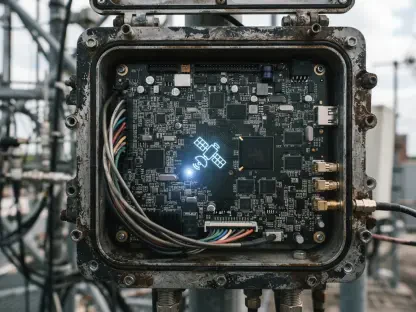
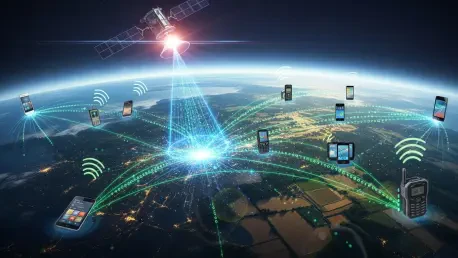
The fundamental principle of D2D technology lies in its ability to facilitate communication between a standard, off-the-shelf smartphone and a satellite constellation. Unlike previous generations of satellite phones that required thick external antennas and high-power transmitters, D2D utilizes the existing LTE and 5G modems found in modern devices. This is achieved by deploying massive phased-array antennas on satellites that can detect the relatively weak signals emitted by terrestrial handsets.
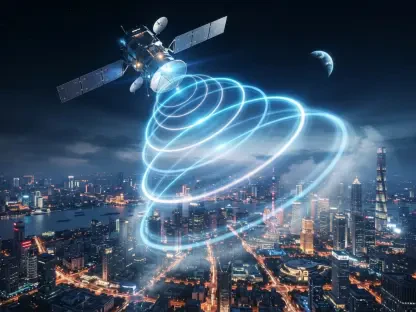
This ecosystem relies heavily on LEO constellations, which orbit at altitudes of approximately 300 to 1,200 miles. Because these satellites are significantly closer to Earth than traditional geostationary models, signal latency is drastically reduced, making real-time text and low-bandwidth data transfers feasible. The relevance of this technology in the current landscape is its role as a universal safety net, ensuring that connectivity is a constant presence regardless of geographical isolation.
Core Components and Market Architecture
Satellite-to-Smartphone Integration: Bridging the Gap
Modern smartphones do not require hardware modifications to access these networks; instead, the innovation occurs within the satellite and the software layers. Companies like Starlink, Lynk Global, and Skylo have developed sophisticated signal processing capabilities that compensate for the Doppler shift and high velocity of satellites moving overhead. This differentiation is critical because it allows for immediate mass adoption without forcing consumers to upgrade their hardware, a barrier that previously hindered satellite-based mobile services.
Infrastructure and Spectrum Management: The Hybrid Approach
The technical backbone of D2D involves a complex partnership between satellite operators and traditional mobile carriers. By utilizing terrestrial spectrum—the same frequencies used by ground towers—satellites can “masquerade” as standard cell sites. This integration ensures compatibility with global cellular protocols, allowing a phone to switch to a satellite link when terrestrial signals drop below a certain threshold. This hybrid model avoids the interference issues that typically plague cross-border frequency usage.
Current Market Dynamics and Global Adoption Trends
As of early 2026, the D2D market has transitioned from a conceptual pilot phase into a period of tangible expansion, with global connections growing by 24.5% over the past year. This surge is largely credited to the rapid deployment of satellite clusters capable of supporting cellular frequencies. While early adopters primarily used these services for free as part of premium mobile plans, the introduction of dedicated service fees by major carriers signals the technology’s move toward a sustainable, revenue-generating business model.
While the United States remains a primary hub for D2D activity, the focus has shifted toward international markets with vast, underserved terrains. Countries like Chile, the United Kingdom, and Ukraine have seen increased adoption as terrestrial infrastructure proves either too expensive to deploy or vulnerable to disruption. However, despite the growth, the technology remains a secondary option for the vast majority of users, as traditional networks still provide the bandwidth and speed required for data-intensive modern applications.
Real-World Applications and Service Deployment
The primary value proposition of D2D currently centers on life-saving utilities such as emergency SOS messaging and precise location sharing. In remote environments where terrestrial signals fail, the ability to send a distress signal or a simple text message can be the difference between safety and catastrophe. Notable field testing by RootMetrics has demonstrated that these systems are increasingly reliable, even in challenging conditions such as moving vehicles where the signal path is frequently obstructed by terrain or vegetation.
Beyond personal safety, D2D is carving a niche in the maritime and rural industrial sectors. Small fishing vessels and remote agricultural sites that cannot justify the cost of high-bandwidth VSAT terminals use D2D for basic logistics and weather updates. This deployment provides a reliable alternative to high-cost industrial satellite solutions, democratizing access to orbital connectivity for small-scale operators who were previously priced out of the market.
Technical Limitations and Market Obstacles
Despite the impressive engineering, D2D technology faces significant physical and operational constraints. Field tests reveal a success rate of roughly 60% for message delivery in non-stationary environments, highlighting the difficulty of maintaining a stable link with a satellite moving at thousands of miles per hour. Furthermore, the latency involved in message delivery—often exceeding one minute—renders it unsuitable for the instantaneous communication consumers have come to expect from 5G networks.
A significant gap also exists between availability and adoption, primarily because terrestrial networks already cover 96% of the global population. This high coverage rate makes D2D a “long-tail” solution, serving the final 4% of the population or the nomadic few who venture into the wild. Regulatory hurdles regarding spectrum rights and the high cost of launching and maintaining massive LEO constellations continue to be a barrier that could slow the transition from a niche service to a standard feature.
The Future of Satellite Broadband and 5G Integration
The trajectory of D2D is moving toward a future where “next-gen” constellations will support high-speed data and broadband capabilities. Initiatives like Amazon’s Project Kuiper and AT&T’s collaboration with satellite providers aim to push the boundaries of what orbital connectivity can offer, potentially allowing for voice calls and video streaming. If these breakthroughs materialize, the reliance on expensive rural cell tower deployments could diminish, fundamentally altering the economics of the wireless industry.
As 5G standards continue to evolve, the integration of Non-Terrestrial Networks (NTN) into the global telecommunications framework will likely become seamless. This would mean that a device could switch between a 5G tower and a 5G-capable satellite without the user ever noticing a drop in service quality. Such a shift would not only enhance global connectivity but also provide a resilient backup for critical infrastructure in the event of terrestrial network failures.
Conclusion: Assessing the D2D Landscape
The emergence of Direct-to-Device technology proved that the mobile industry was capable of transcending the physical limits of ground-based infrastructure. While the system offered a vital safety net for those in the world’s most isolated regions, it remained a specialized segment of the broader market. Success depended on the delicate balance between technical reliability and consumer cost, as early adopters navigated the transition from free emergency services to paid connectivity tiers. Ultimately, the D2D sector established a foundation for a truly global network, though the goal of providing high-speed broadband from orbit was still in its early stages of realization. The technological groundwork laid the path for a future where the sky was no longer a barrier but a bridge to universal connection.