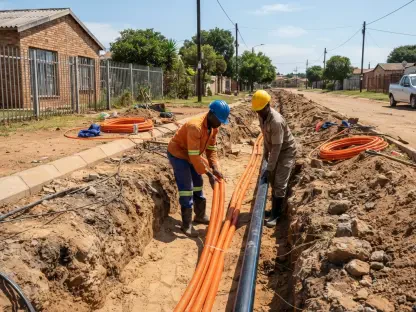

The investment case for traditional physical infrastructure in the Australian outback is becoming increasingly thin as satellite technology provides a more cost-effective alternative. This technological evolution, known as Direct-to-Device or D2D, allows standard, unmodified smartphones to communicate directly with Low Earth Orbit satellites. By eliminating the need for specialized handsets or bulky ground terminals, D2D is effectively dissolving the boundaries between urban and remote digital environments. For a continent defined by its vast, uninhabited spaces, this shift represents more than just a convenience; it is a fundamental restructuring of how connectivity is delivered to the most isolated regions. While these services initially focused on low-bandwidth applications like text messaging, the rapid deployment of LEO constellations suggests a transition toward a seamless global network that transcends the physical and economic limitations of ground-based mobile towers.
Legislative Mandates and the Push for Universal Coverage
A significant catalyst for the recent acceleration of D2D adoption is the “Universal Outdoor Mobile Obligation” (UOMO), which was recently enshrined into Australian law. This legislative mandate essentially forces mobile carriers to provide reliable outdoor coverage across the continent, prompting a strategic pivot toward satellite partnerships. The mandate recognizes that terrestrial infrastructure—mobile base stations and towers—is often economically unfeasible in sparsely populated areas. Consequently, the UOMO has acted as a regulatory bridge, encouraging domestic carriers to collaborate with satellite giants to fulfill their legal obligations and satisfy the growing public demand for universal connectivity. Carriers can no longer ignore the geographic gaps that have historically defined the regional experience. By prioritizing satellite integration, the government has ensured that private investment aligns with the public need for safety and constant communication in the wild.
The implementation of the UOMO has fundamentally changed the risk assessment for telecommunications providers operating within the country. Previously, the high cost of maintenance and the lack of a sufficient customer base in the deep outback deterred companies from expanding their reach. Now, the shift from terrestrial to orbital solutions allows these firms to meet stringent regulatory standards without the catastrophic capital expenditure required to install fiber optics and steel towers in the desert. This legislative pressure has created an environment where satellite technology is not merely an optional upgrade but a core requirement for commercial survival. As the Australian Communications and Media Authority continues to refine these standards, the synergy between local carriers and global satellite operators is expected to deepen, ensuring that the digital divide is permanently bridged through a combination of policy and technological innovation.
Commercial Adoption and Market Expansion Strategies
The commercial landscape for D2D in Australia is rapidly evolving as major telecommunications providers race to secure satellite partnerships and capture market share. Telstra and Optus have led the charge, with early initiatives proving that consumer appetite for remote connectivity far exceeded initial industry estimates. Recent data indicates that millions of subscribers have already engaged with satellite-enabled messaging services, facilitating a massive volume of traffic in areas previously deemed “dead zones.” This surge in usage demonstrates that there is a deep, pre-existing demand for reliable communication among travelers, agricultural workers, and regional residents. The success of these early deployments has validated the business model for D2D, proving that users are willing to adopt satellite-linked services when they are integrated seamlessly into their existing mobile plans and hardware.
Beyond the domestic incumbents, global technology firms like Amazon, through its Project Kuiper, and AST SpaceMobile are positioning themselves as critical pillars of the future telecommunications ecosystem. These international players bring massive capital and advanced LEO constellations that offer the promise of higher bandwidth and lower latency. As the market transitions from 2026 to 2028, the competition is expected to move beyond simple text alerts toward more robust data services and voice capabilities. This influx of global competition is transforming the Australian telecommunications sector into a global service model, where the location of a user becomes irrelevant to the quality of their connection. The arrival of these giants is forcing local providers to innovate more rapidly, leading to a diversified environment where orbital connectivity serves as a constant backdrop to traditional cellular networks, ensuring total national coverage.
Mapping the Connectivity Gap: Insights from Ground-Truth Data
The recent introduction of the OpenSignal D2D Satellite Map has provided an unprecedented level of transparency regarding the actual performance of satellite-to-mobile connections. This tool offers a “ground-truth” visualization of where these links are occurring in real-time, effectively serving as an inverse map of terrestrial mobile coverage. Because D2D services are designed to activate only when a phone loses contact with a traditional tower, the map identifies exactly where the gaps in the existing network are most severe. Data from this mapping initiative shows active connections in every Australian state and territory, with significant clusters appearing around popular tourist destinations, remote highways, and industrial sites. By documenting thousands of successful connections in areas like the Snowy Mountains and the remote coastlines of Western Australia, the map provides a factual baseline that contradicts the often optimistic coverage claims of the industry.
This newfound transparency has reignited a critical debate regarding the accuracy of the coverage maps traditionally supplied by major telecommunications companies. For years, regional advocates and academic researchers have argued that industry maps were overly generous, failing to account for terrain, foliage, and the specific limitations of terrestrial signals. In response to these discrepancies, the Australian Communications and Media Authority has mandated more rigorous reporting standards, forcing carriers to redraw their coverage boundaries. The D2D connection data serves as a vital corrective measure in this process, highlighting the “serious flaws” in legacy reporting and pinpointing the exact locations where terrestrial infrastructure fails to deliver. This objective evidence is proving essential for both regulators and consumers, as it identifies the regions most in need of satellite intervention and ensures that future infrastructure investments are targeted toward areas with the greatest connectivity deficits.
Economic Realities and the Future of Spectrum Competition
The economic argument for D2D is firmly rooted in the geographical challenges of the Australian continent, where the ROI for traditional towers in remote regions is virtually non-existent. In the deep outback, the prohibitive costs of installation, power supply, and ongoing maintenance make terrestrial solutions a financial impossibility for most commercial operators. Satellite technology has emerged as the only viable “game-changer” for achieving total national coverage, acting as a specialized tool for the “last mile” where ground-based infrastructure will never realistically be built. Rather than directly competing with high-capacity urban towers, D2D is carving out a niche as a safety net for the most isolated parts of the country. This model allows telecommunications firms to provide comprehensive service across millions of square kilometers without the need for a single additional piece of physical hardware on the ground, fundamentally altering the economics of regional connectivity.
Looking toward the immediate horizon, the industry is bracing for a potential “spectrum apocalypse” as the competition for essential frequency bands intensifies. The upcoming auction of the 2GHz Mobile Satellite Services (MSS) spectrum is expected to be a major battleground between domestic incumbents and well-funded global entities. If companies like SpaceX or Amazon successfully outbid local carriers, the traditional power dynamic of the Australian telecommunications market could be completely inverted. Satellite operators might gain the leverage to bypass domestic providers entirely or dictate the terms of future partnerships. This struggle for spectral dominance will be a defining feature of the market from 2026 to 2028, determining which organizations will control the future of orbital communications. As LEO technology continues to improve, the gap between terrestrial and satellite performance is closing, making the control of these frequencies a matter of national strategic and economic importance.
Adapting to an Orbital Future: Strategic Directions for Australia
The shift toward satellite-integrated mobile networks provided a clear path forward for addressing Australia’s unique geographic challenges. Industry leaders recognized that the era of relying solely on physical towers had ended, and the focus moved toward creating a hybrid infrastructure that blended terrestrial and orbital assets. For telecommunications providers, the successful navigation of this transition required a commitment to transparency and a willingness to collaborate with global satellite firms. Regulators played a crucial role by enforcing stricter coverage standards and ensuring that the 2GHz spectrum auctions promoted competition rather than monopoly. As the nation moved through the middle of the decade, the priority shifted toward expanding bandwidth to support full voice and data services via satellite. Stakeholders were encouraged to prioritize the security and resilience of these orbital links, ensuring that Australia remained at the forefront of the global digital economy.