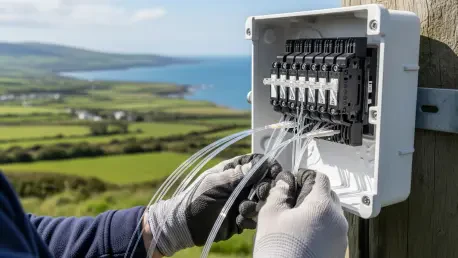

The recent completion of the primary rural fiber-optic network across County Waterford marks a definitive turning point in the long-standing effort to eliminate digital inequality within the region. This monumental achievement is the result of a coordinated initiative under the National Broadband Plan, bringing together the technical expertise of National Broadband Ireland and the local administrative support of the Waterford City and County Council. By successfully deploying advanced telecommunications infrastructure in previously underserved rural corridors, the project has addressed historical imbalances that once hindered residents from participating fully in the modern digital economy. The focus on high-speed connectivity ensures that physical location no longer dictates the quality of access to essential online services or economic opportunities. This expansion is not merely a technical upgrade but a foundational shift that aligns rural life with the fast-paced requirements of the contemporary world. It establishes a robust framework for long-term growth and digital equity for every citizen in the county.
Strategic Investment and Local Infrastructure: Scaling Digital Access
The financial commitment required to realize this vision has been substantial, with an investment of approximately $62 million dedicated specifically to the Waterford rollout. These funds have facilitated the installation of fiber-optic cabling to the boundaries of more than 15,500 premises that were once considered difficult to reach by traditional commercial internet providers. To date, the project has already transitioned from a construction phase into an active utility service, with over 6,000 homes and businesses currently utilizing high-speed connections. This rapid adoption demonstrates a clear appetite for reliable bandwidth among rural populations who have spent years managing subpar internet speeds. The shift from laying cables to activating services represents a critical phase in the project lifecycle, as the infrastructure is now a functional asset ready for immediate use. This investment ensures that the county possesses a resilient network capable of supporting the evolving data needs of its residents for many years to come.
Engineers and technical crews worked through diverse terrain to ensure that the fiber network reached the most isolated corners of the county, effectively future-proofing the region against technological obsolescence. The deployment involved significant logistical planning, including the utilization of existing utility poles and the excavation of new underground conduits to protect the delicate fiber lines from environmental hazards. By establishing these connections, the network provides a backbone for various digital services that extend far beyond simple web browsing. High-capacity data transfer is now possible for every registered premise, allowing for high-definition video conferencing, seamless cloud storage access, and the operation of sophisticated industrial software. This physical infrastructure serves as the essential hardware layer upon which a more connected and technologically advanced society can be built. The successful completion of this phase signifies that the most labor-intensive portion of the digital rollout is finished, leaving a legacy of connectivity.
Workforce Evolution and Market Competition: Next Steps for Growth
Reliable high-speed internet is now viewed as an essential utility, much like electricity or water, particularly in its role as a driver for remote and hybrid work. By enabling professionals to work from home, the network helps revitalize small towns and reduces the burden of long commutes to urban centers. This shift allows rural families to maintain a high quality of life without sacrificing career progression. Additionally, the agricultural sector can now leverage data-driven farming techniques, such as real-time livestock monitoring and precision crop management, which require consistent and fast internet speeds. Tourism and education also benefit from improved digital accessibility, as students can access online learning platforms and visitors can enjoy seamless connectivity during their stay. This economic transformation is vital for maintaining the vibrancy of rural communities, ensuring they remain attractive places to live and work. The integration of technology into these traditional sectors fosters a more diverse and resilient local economy.
The project success stems from a high level of coordination between National Broadband Ireland and the Waterford City and County Council, operating under a specialized wholesale model. NBI maintains the physical fiber-optic lines but allows various retail providers to sell internet packages to the public, fostering a competitive market environment. This structure is designed to give consumers multiple options for service levels and pricing, ensuring that the infrastructure remains robust and well-maintained through commercial pressure. Waterford joins a growing list of counties that have successfully completed their primary fiber rollouts, signaling that the national project is nearing its final phase. The scope of the plan has expanded to a goal of 566,000 premises nationwide to ensure no home or business is left behind. Public demand remains high, with take-up rates exceeding 60% in areas where the network has been active. As the country moves toward finishing the main national build by the end of the year, the focus shifts to maximizing the utility of the network.
The completion of the Waterford network demonstrated that high-speed fiber could be successfully deployed even in the most challenging rural environments. By exceeding early adoption targets, the region proved that the digital divide was a matter of infrastructure availability rather than a lack of interest from the community. Residents and local business owners took the necessary steps to transition their legacy systems to the new fiber network, thereby securing their place in the 2026 digital landscape. Looking forward, it is recommended that stakeholders in other regions prioritize the integration of digital literacy programs to maximize the utility of this new infrastructure. Communities should also explore local digital hubs to foster innovation and collaborative workspaces that capitalize on the high-speed connectivity now at their disposal. The focus must now shift toward utilizing this powerful tool to its full potential, ensuring that the initial investment translates into long-term prosperity and sustainable development for all citizens across the entire county.