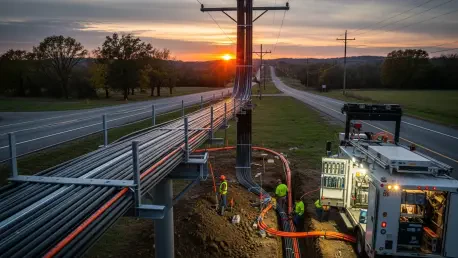

The realization of a digitally inclusive California has moved from a distant aspiration to an immediate reality as the state significantly expands its high-speed internet backbone to reach underserved regions. Recent developments indicate that the Middle-Mile Broadband Network has tripled its operational capacity, increasing from a modest 423 miles to a robust 1,250 miles. This transition marks a pivotal shift in how the state manages public infrastructure, treating high-speed connectivity as a fundamental utility rather than a luxury reserved for urban centers. Governor Gavin Newsom emphasized that this growth is part of a broader strategy to eliminate the digital divide that has long hampered economic progress in rural and low-income areas. By establishing a state-owned data highway, California is effectively dismantling the geographical barriers that previously prevented local internet service providers from reaching isolated communities. This foundational infrastructure acts as the primary conduit for data, ensuring that every citizen has the chance to participate in the modern economy.
Scaling the Network Infrastructure
Expansion Milestones and Construction Progress
The newly activated 1,250-mile segment provides a continuous data corridor that stretches across the heart of the state, linking diverse economic and geographic regions. This operational backbone now connects the technological hub of San Jose through the Central Coast into the heart of Los Angeles, subsequently extending eastward to Barstow before reaching the northernmost stretches of Modoc County. Such an extensive reach ensures that even the most remote residents are no longer isolated from the broader digital landscape, offering a vital link to the state’s evolving economy. This expansion specifically targets regions that private telecommunications companies have historically overlooked due to the high costs of infrastructure deployment in low-density areas. By bridging these gaps, the state is facilitating a more integrated social structure where location does not dictate the quality of available services. This physical network is the essential hardware that makes modern participation in civic life possible for all.
Strategic Advancements in Infrastructure Access
Construction activities across the state continue at an aggressive pace, with approximately 70 percent of the planned 8,100-mile network currently completed or in various stages of active development. This progress is underpinned by an open-access model, which purposefully invites commercial internet service providers, local municipal governments, and Tribal nations to utilize the state-owned infrastructure. By providing a shared platform for connectivity, the state is fostering a competitive market environment that encourages private sector innovation while simultaneously driving down subscription costs for the average consumer. This model represents a departure from traditional proprietary networks, ensuring that the public investment benefits the widest possible range of stakeholders. As more segments of the 8,100-mile goal come online, the focus remains on maintaining high standards of reliability and security, ensuring that the network can handle the increasing data demands of future technological applications.
Strategic Investment and Social Equity
Financial Frameworks for Universal Connectivity
The financial stability of this massive public works project is anchored in the passage of Senate Bill 156, which dedicated $3.25 billion specifically to the development of middle-mile infrastructure. By assuming the responsibility for funding the most capital-intensive portion of network construction—the long-haul fiber lines—the state has significantly lowered the barriers for entry for smaller, local internet providers. This legislative action ensures that the expansion of broadband remains a consistent priority, insulated from the immediate fluctuations of the commercial market. The investment focuses on creating a durable asset that will serve Californians for decades, providing the necessary bandwidth for advanced industrial and educational needs. Furthermore, this funding allows for the implementation of high-quality materials and redundant systems that might be deemed too expensive for a profit-driven enterprise. The state’s commitment effectively subsidizes the digital future of millions.
Bridging the Final Gap to Local Doorsteps
To complement the robust middle-mile backbone, the state utilizes a $2 billion Federal Funding Account to manage essential last-mile grants that bring service directly to doorsteps. These funds are administered through the California Public Utilities Commission, bridging the final distance between the main high-speed lines and individual homes or small businesses. To date, over $1.2 billion in these grants have been allocated to support diverse connectivity projects across all 58 counties, reaching a population of more than two million residents. This dual-funding strategy ensures that the infrastructure does not simply sit idle in underground conduits but is actively utilized to provide tangible benefits to households. By coordinating middle-mile and last-mile investments, the state creates a seamless pipeline of connectivity that supports both local economic growth and individual empowerment. This approach addresses the complexities of rural geography and urban density with precision.
Empowering Tribal Nations through Digital Access
Beyond technical achievements, this network serves as a powerful instrument for social and economic equity, particularly for historically marginalized groups such as California’s Tribal nations. The Bishop Paiute Tribe recently made history by becoming the network’s first official customer, highlighting a strategic focus on including communities that have been consistently bypassed by private market forces. This integration allowed Tribal governments to exercise greater sovereignty over their digital infrastructure, facilitating better governance and community services. The network’s design prioritized access for these underserved areas, ensuring that the benefits of high-speed internet were shared equitably across the state’s diverse demographic landscape. By focusing on these often-overlooked regions, the state actively repaired decades of digital exclusion and provided the tools necessary for self-sufficiency and growth. This commitment to equity ensured that technological progress was a collective achievement.
Socioeconomic Benefits of High-Speed Connectivity
The impact of this expanded connectivity was immediately visible in the enhanced availability of vital services like telehealth, modern digital education, and remote work opportunities. For residents in remote areas, high-speed access meant that a consultation with a medical specialist no longer required hours of travel, and students could access the same educational resources as their urban peers. These improvements contributed to a more inclusive environment where the ability to work or learn was not limited by one’s physical address. Furthermore, the presence of reliable broadband attracted new businesses to rural communities, diversifying local economies and creating sustainable jobs that did not require relocation. This connectivity fostered a more resilient workforce that was capable of adapting to the rapid changes of the modern world. By treating internet access as an essential service, the state laid the groundwork for a future where every Californian had the opportunity to thrive, regardless of their location.
Future Considerations for Sustained Digital Growth
The strategic expansion of this network established a precedent for how public-private partnerships effectively addressed systemic infrastructure deficiencies across the state. Moving forward, the focus shifted toward maintaining this infrastructure while ensuring that affordable service plans remained accessible to low-income households. Legislative bodies and local governments prioritized the development of digital literacy programs to ensure that newly connected citizens could fully utilize the resources available to them. Technical support and ongoing maintenance became critical as the network neared its full 8,100-mile capacity, requiring a dedicated workforce trained in advanced fiber-optic systems. Additionally, continuous monitoring of network performance was necessary to ensure that it met the evolving data demands of emerging technologies. By securing this digital foundation, the state provided a roadmap for other regions to follow. This monumental effort proved that high-speed internet was a right for all citizens.