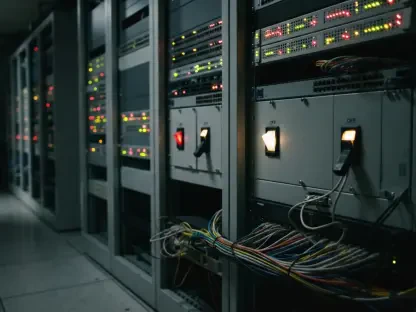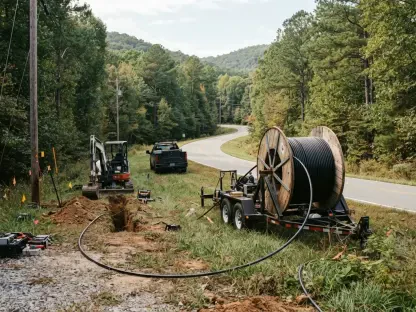

Deep beneath the bustling streets of American cities and tucked away in the silent, rolling hills of the rural countryside, a massive digital skeleton is being rapidly assembled to support the weight of a new artificial intelligence age. As the United States moves deeper into this transformative period, the Broadband Nation Expo in New Orleans stands as the definitive forum where the raw potential of federal funding meets the concrete realities of engineering and deployment. This event arrives as a pivotal moment for a nation that has transitioned from simply seeking internet access to demanding a sophisticated, high-capacity utility capable of powering every facet of modern life.
The significance of this gathering lies in its ability to unify a fragmented industry at a time when the stakes have never been higher. With the explosion of artificial intelligence and the cloud-centric nature of modern business, broadband is no longer viewed as a luxury or even a standard service; it is the fundamental architecture of the economy. The shift toward a fully connected America requires more than just capital—it demands a total rethinking of how data moves from the massive server farms of the coast to the most remote farmhouse in the interior.
The High-Stakes Race for a Fully Connected America
The current environment of the telecommunications sector is characterized by an intense urgency, where record-breaking levels of private investment and federal subsidies are flowing into the ground. However, the true challenge of this race is found in the physical and technical complexities of the deployment itself. In New Orleans, the conversation is moving away from the abstract “digital divide” toward the granular details of “getting the job done.” The industry is currently focused on architecting an end-to-end digital utility that can handle the massive data loads expected in the coming decade.
This transition is largely fueled by an insatiable appetite for bandwidth that traditional networks were never designed to accommodate. The rise of sophisticated artificial intelligence platforms has created a scenario where latency and capacity are the new currency of progress. Consequently, the industry is shifting its mandate toward total connectivity, ensuring that every node in the national network is capable of supporting high-frequency data exchanges without bottlenecking the progress of technological innovation.
Navigating the Most Significant Infrastructure Shift in a Generation
America is currently navigating a critical juncture where historic infrastructure investments are colliding with unprecedented technological requirements. This era represents the most significant shift in domestic connectivity since the original rollout of the interstate highway system. The objective has expanded from the traditional “last mile” focus to a comprehensive ecosystem strategy. This approach integrates data centers, edge computing, and cloud services into a seamless national network that eliminates the distinction between rural and urban digital capabilities.
Achieving this level of integration requires overcoming a variety of logistical and environmental hurdles that vary significantly across different regions of the country. Understanding the intricacies of this transformation is essential for stakeholders who must balance the immediate need for deployment with the long-term goal of creating a resilient digital backbone. The current strategy prioritizes a universal standard of performance, ensuring that geographic location no longer dictates the speed or reliability of a user’s connection to the global marketplace.
Building the Foundations of a Hybrid and Sustainable Digital Landscape
To manage the immense data throughput required by modern enterprise applications, the industry is adopting a model known as Hybrid Horizons. This strategy acknowledges that no single technology is a silver bullet for the entire country. Instead, it leverages the unique strengths of fiber-optic cables, high-speed wireless, and satellite solutions to create a redundant and universal coverage map. This multi-technology approach ensures that even the most difficult terrains are brought into the fold of the modern economy.
Sustainability and longevity have become the primary benchmarks for current engineering projects. Infrastructure is now “Built to Last,” with a focus on materials and designs that remain viable for decades rather than just a few years. Furthermore, the integration of AI-driven infrastructure allows for smarter network management, prioritizing low-latency paths for critical data and automatically adjusting capacity based on real-time demand. This ensures that the entire data journey—from the remote server to the end-user—is optimized for maximum efficiency and minimal waste.
Fostering Synergy Between Public Policy and Private Innovation
The successful rollout of a national broadband network relies heavily on an all-hands-on-deck approach that bridges the gap between government regulation and private sector agility. Regional leadership has emerged as a cornerstone of this effort, with state broadband offices in Michigan, Minnesota, Louisiana, and Maryland providing the necessary oversight to manage complex federal rollouts. These offices serve as the vital link between high-level policy goals and the local contractors responsible for digging the trenches and stringing the fiber.
Collaboration extends beyond government and corporate boardrooms to the actual workforce that builds the infrastructure. Organizations like the Communications Workers of America emphasize that the future of broadband is fundamentally tied to the development of a highly skilled labor pool. Through initiatives like Broadband Nation Connect, the industry is facilitating curated one-to-one meetings that align the needs of Tier 2 and Tier 3 carriers with the innovators providing the latest tools. This synergy ensures that every dollar invested is supported by a technician trained to maintain the integrity of the network.
Frameworks for Turning Historic Investment into Practical Results
To successfully transition from the planning phase to the optimization of the national broadband rollout, stakeholders are implementing specific frameworks designed for long-term success. A primary focus is placed on relationship capital, where curated networking events allow regional carriers to find vendors who can meet their unique topographical and demographic needs. By aligning these interests early in the deployment cycle, the industry avoids the costly delays associated with mismatched technology and local requirements.
The implementation of innovation benchmarks and industry awards further drives this progress by identifying the most efficient technological breakthroughs in network engineering. These standards encourage a culture of excellence where providers are rewarded for finding new ways to lower costs and increase deployment speed. By focusing on workforce development and multimodal strategies that adapt to regional reality, the sector is ensuring that the current wave of investment creates a permanent and reliable utility for all citizens.
The discussions in New Orleans provided the necessary clarity for the next phase of national growth. Leaders concluded that the integration of AI-managed infrastructure was the only viable path to maintaining network health under heavy loads. Participants successfully identified the specific workforce gaps that required immediate regional investment to prevent project stagnation. The strategic partnerships formed during these sessions prioritized the creation of localized maintenance hubs to ensure long-term network reliability. Moving forward, the focus shifted toward establishing standardized metrics for network performance that could be applied across all technology types. Success depended on the ability of state offices to maintain transparent communication with private contractors. These actionable steps ensured that the dream of a fully connected nation remained a tangible reality.