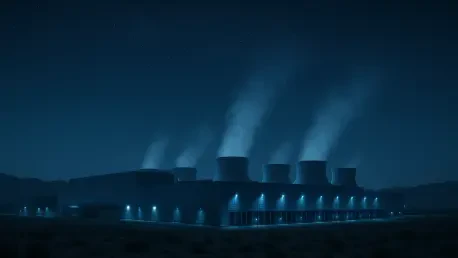

Researchers at Arizona State University have found that ambient temperatures can rise by up to two degrees within a quarter-mile of data center facilities. This observation comes at a critical juncture as the Southwestern United States continues to experience an unprecedented surge in industrial technological expansion, with the Phoenix metro area serving as a primary hub. Unlike traditional office buildings or retail centers, data facilities operate continuously at high intensities, requiring massive cooling systems that essentially pump internal heat directly into the local atmosphere. This process contributes significantly to the urban heat island effect, a condition where metropolitan regions remain trapped in high-temperature cycles even during the evening hours. As the digital economy grows, the physical reality of its infrastructure is becoming an unavoidable factor in municipal climate planning. For residents living near these sprawling complexes, the thermal footprint of the internet is not a theoretical concern but a tangible increase in their daily environmental exposure and cooling costs.
The Magnitude of Industrial Heat Waste
Urban Metabolism: Comparing City Heat to Server Exhaust
The intensity of heat generated by data centers is staggering when compared to the typical energy output of a standard urban environment. In most metropolitan areas, the average energy density produced by human activities, such as driving vehicles or heating and cooling traditional homes, ranges between 10 and 20 watts per square meter. In contrast, a modern data center can concentrate hundreds of megawatts of electricity usage into a relatively small geographic footprint, with nearly all that energy being converted into waste heat. This concentration creates a thermal anomaly that rivals the heat output of an entire downtown core, yet it is often localized within a single industrial park. This disparity in energy density means that the surrounding microclimate is subjected to a constant thermal burden that the natural environment cannot easily dissipate. Consequently, the presence of such facilities necessitates a complete reassessment of how industrial heat contributions are measured against the background noise of the city’s general metabolic energy consumption.
Energy Conversion: The Physics of Thermal Rejection
At the heart of the issue is the physical law of energy conservation, where every kilowatt-hour of electricity consumed by a server rack must eventually be expelled as heat. Current cooling technologies, ranging from traditional air-cooled chillers to more advanced liquid cooling loops, are designed to move this thermal energy away from sensitive components as quickly as possible. This efficiency in internal cooling comes at the price of external environmental warming, as the exhaust fans and cooling towers act as massive radiators for the surrounding neighborhood. In 2026, as high-performance computing for artificial intelligence becomes the standard, the heat density of these facilities has increased even further, pushing the limits of atmospheric absorption. This continuous rejection of heat into the air creates a plume that can linger over nearby streets and residential clusters, especially during the stagnant air conditions common in desert valleys. Managing this exhaust is no longer just an engineering challenge for the facility operators, but a public health priority.
Measuring Thermal Footprints in Real Time
Field Observations: Tracking Warming with Mobile Sensors
To accurately quantify these impacts, the research team employed a sophisticated fleet of electric vehicles equipped with meteorological grade sensors to traverse the streets surrounding major data hubs. By collecting real-time temperature and humidity data at varying distances, they were able to map the exact shape and reach of the thermal plumes emanating from these buildings. The data revealed a consistent halo of elevated temperatures, which was most intense within a quarter-mile radius of the exhaust points. These field measurements provided empirical evidence that countered previous industry assertions that heat would dissipate rapidly without affecting the local community. The use of mobile sensing technology allowed the researchers to account for variables such as asphalt heat retention and natural wind patterns, ensuring that the two-degree increase was directly attributable to industrial activity. This granular level of detail is essential for developing the next generation of urban climate models, as it provides a baseline for how future developments will influence their immediate surroundings.
Strategic Simulations: Utilizing Digital Twins for Zoning
The integration of digital twin technology became a cornerstone for translating these findings into actionable municipal policy. By creating high-fidelity 3D simulations of the Phoenix urban landscape, planners visualized how heat moved through specific corridors and tested the efficacy of various mitigation strategies. These models suggested that implementing mandatory setbacks and creating physical buffers with green or blue infrastructure could significantly reduce the impact on nearby residents. Planners moved to incorporate strategic vegetation and reflective surfaces into the design phase of new developments to break up thermal plumes. In the final phase of the study, researchers emphasized the need to balance water-intensive cooling with energy-intensive air cooling to avoid straining local resources. Officials utilized these insights to update zoning requirements, ensuring that industrial permits now include comprehensive thermal impact assessments. This proactive approach established a new standard for sustainable development, where the growth of the digital economy was successfully balanced against the fundamental environmental health of the desert communities it calls home.