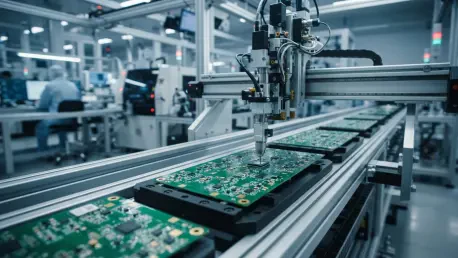

Late binding technology enables OEMs to assign specific network connectivity to their devices based on actual orders just moments before the hardware is shipped. This innovative approach is the centerpiece of a strategic partnership between Orange, IDEMIA Secure Transactions, and Acceleronix, aiming to overhaul the global Internet of Things manufacturing landscape. By shifting the critical decision of network connectivity from the initial design phase to the final stage of production, the In-Factory Profile Provisioning program effectively decouples hardware assembly from regional telecommunications constraints. This allows manufacturers to treat connectivity as a software component, significantly increasing their agility in a rapidly evolving digital market. As industrial ecosystems grow increasingly complex, the ability to streamline the path from the factory floor to the end user becomes a vital differentiator for global brands looking to scale their connected device offerings without the traditional burdens of fragmented supply chains. This initiative not only simplifies the supply chain but also ensures that devices are ready for immediate use upon arrival at their destination, fostering a more responsive and efficient manufacturing environment for global brands.
Streamlining Global Supply Chains: The Single SKU Revolution
Historically, the logistical burden of managing multiple hardware variants for different geographical regions created significant overhead for manufacturers, often leading to excess inventory and wasted capital. The move toward a Single SKU manufacturing strategy addresses these challenges by allowing a single, unified hardware configuration to be produced for the entire global market. Because the specific operator profile is only loaded onto the eSIM at the very end of the production line, manufacturers no longer need to predict which carrier will be required months in advance. This flexibility allows for a more efficient use of resources and a drastic reduction in the amount of stock held in regional warehouses. By utilizing Orange’s extensive roaming capabilities, a device manufactured in one part of the world can be provisioned with a profile that ensures immediate, high-quality connectivity upon arrival at its final destination, regardless of the local network environment or regional specifications. This methodology empowers companies to enter new markets with speed and precision, transforming cellular connectivity from a rigid hardware requirement into a versatile digital asset.
To implement this streamlined approach, the program utilizes sophisticated industrial orchestration tools that integrate directly into existing production environments. These tools, developed by Acceleronix, allow for the seamless loading of eSIM profiles even within highly secure or air-gapped facilities, maintaining the integrity of the manufacturing process while adding a layer of digital customization. This factory-level integration ensures that every device is fully tested and verified before it leaves the plant, reducing the risk of connectivity failures in the field. Furthermore, the ability to manage connectivity at the unit level provides manufacturers with unprecedented traceability throughout the lifecycle of the product. As companies look to optimize their operations, the ability to transform cellular connectivity into a simple production setting simplifies the assembly line and allows for greater scalability. This transformation essentially turns a complex telecommunications hurdle into a predictable and manageable step in the standard manufacturing workflow, enabling brands to focus on product innovation rather than logistical hurdles.
Protecting the Digital Thread: Global Standards and Quantum Security
Technical integrity is maintained through a rigorous adherence to the GSMA SGP.41 framework, which establishes the necessary international standards for in-factory profile provisioning. By following these global requirements, the partnership ensures that their solution remains fully interoperable across the broader mobile ecosystem, preventing the kind of vendor lock-in that can stifle innovation. This commitment to standardization provides a reliable foundation for manufacturers who require their devices to operate seamlessly across various cellular networks without being restricted to proprietary systems. Additionally, the program is designed to be forward-compatible, currently supporting existing eSIM IoT infrastructure while offering a clear and efficient upgrade path to upcoming technical specifications. This ensures that long-life industrial devices remain functional and connected as the underlying network technologies continue to evolve, providing a future-proof solution that protects the long-term investments of original equipment manufacturers. This structural reliability is essential for sectors like utilities and automotive, where devices are expected to perform for decades.
A standout security feature of this collaborative effort is the integration of quantum-safe binding to protect against the sophisticated cyber threats of the coming years. As quantum computing technology becomes more accessible, traditional cryptographic methods used to secure mobile network credentials may become susceptible to advanced hacking techniques. IDEMIA Secure Transactions addresses this vulnerability by implementing quantum-resistant algorithms that safeguard operator profiles during both the manufacturing and delivery processes. This high level of protection ensures that sensitive data remains secure even when managed outside the traditional, high-security environments of telecommunications providers. By building this resilience into the device at the point of manufacture, the partnership provides a security layer that is specifically designed to withstand the challenges of a post-quantum world. This proactive strategy not only protects individual assets but also enhances the overall security posture of the global IoT network, instilling confidence in both manufacturers and end users that their data remains shielded against the next generation of digital intrusions.
Scaling the Industrial Ecosystem: Implementation and Future Insights
The successful deployment of the IFPP program demonstrated a clear shift in the industry toward more agile and secure manufacturing practices. Manufacturers who adopted these early trial kits effectively reduced their time-to-market and minimized the complexities associated with regional inventory management. It was essential for organizations to evaluate their existing production lines and identify opportunities for integrating digital provisioning to stay competitive in the global landscape. The transition toward quantum-safe standards and standardized GSMA frameworks proved to be a necessary step in securing long-term operational viability. Leaders in the sector prioritized the alignment of their hardware roadmaps with these emerging connectivity standards to ensure seamless international expansion. By leveraging the combined expertise of specialized telecommunications and security partners, companies successfully navigated the transition to a software-defined connectivity model. This strategic move allowed for a more resilient and scalable IoT ecosystem that continued to adapt to the evolving needs of the global digital economy.
Industry participants took decisive action by incorporating miniaturized form factors like the MFF4 eSIM into their product designs to meet the growing demand for compact, power-efficient devices. This transition was supported by the factory-based provisioning model, which resolved the energy consumption issues typically associated with over-the-air profile downloads. By ensuring that devices were fully provisioned and tested before leaving the factory floor, manufacturers improved the out-of-the-box experience for end users and enhanced overall product reliability. The collaboration between Orange, IDEMIA, and Acceleronix provided the necessary framework for this evolution, offering a cohesive solution that addressed technical, logistical, and security challenges simultaneously. As a result, the industry moved toward a more integrated approach where connectivity was no longer a separate consideration but a fundamental part of the manufacturing process. Organizations focused on maintaining these partnerships to foster continuous innovation and ensure that their connected hardware remained secure and functional throughout its entire operational lifecycle in an increasingly interconnected world.