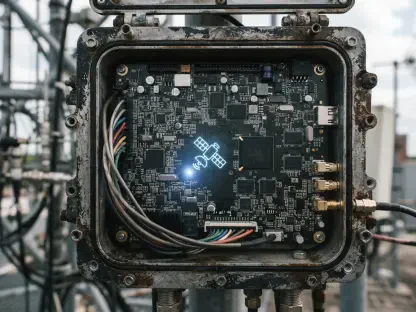

Industrial controllers designed decades ago for mechanical longevity lack modern security features like multi-factor authentication or communication encryption. This reality has prompted the National Security Agency to issue an urgent mandate for the defense industrial base and critical infrastructure operators to rethink their fundamental defensive postures. The central focus is a comprehensive shift toward Zero Trust principles within Operational Technology (OT) environments, where the failure of a single sensor or valve can lead to real-world catastrophes. Unlike Information Technology systems that primarily handle digital data, OT systems manage physical processes, overseeing everything from power distribution to chemical treatment and large-scale manufacturing. The traditional reliance on a robust perimeter—often described as the “castle and moat” strategy—is no longer sufficient in an era of hyper-connectivity and sophisticated supply chain attacks. Modern threats frequently bypass these traditional boundaries, necessitating a model that assumes every actor, whether internal or external, is a potential risk until proven otherwise. This transition represents a fundamental rethink of industrial safety, moving security from the edge of the network directly into the granular interactions between devices and users. By acknowledging that a breach is a constant possibility, organizations can build systems that are inherently resilient, ensuring that even if one component is compromised, the larger physical process remains safe and under human control.
Modernizing Industrial Security
Overcoming the Challenges: The Legacy Infrastructure Problem
The primary obstacle to modernizing critical infrastructure is the sheer age and specific design goals of the existing hardware. Many programmable logic controllers and human-machine interfaces currently operating in factories and utilities were installed with the expectation that they would remain in service for twenty or thirty years. At the time of their creation, the primary engineering goals were mechanical reliability, physical safety, and continuous availability. Digital connectivity was an afterthought or entirely non-existent, meaning these devices were never intended to communicate over the public internet or defend themselves against malicious code. Consequently, these legacy systems often run on outdated operating systems that cannot be easily patched and lack the processing power to handle modern encryption algorithms or multi-factor authentication requests. Replacing this hardware is not just a matter of cost; it is a matter of operational stability. In an industrial setting, a single hour of unplanned downtime can result in millions of dollars in lost revenue, and the delicate calibration of physical processes means that swapping out a controller might require months of testing to ensure that the new equipment does not introduce safety hazards.
To address these vulnerabilities without demanding an immediate and prohibitively expensive overhaul of physical assets, the focus has shifted toward the implementation of compensating controls. These measures involve creating a sophisticated security “wrapper” around vulnerable devices, effectively isolating them from the broader network while still allowing for necessary communication. This strategy utilizes specialized industrial firewalls and protocol converters that can inspect traffic for malicious patterns before it ever reaches the legacy controller. By placing these guards at the network level, operators can implement modern security logic—such as restricting access to specific times of day or requiring secondary approval for configuration changes—without ever touching the firmware of the old hardware. This pragmatic approach allows organizations to achieve immediate and significant risk reduction. It bridges the gap between the vulnerabilities of the past and the requirements of the present, providing a stable foundation for the eventual, phased rollout of modern, secure-by-design hardware that will define the next generation of industrial control systems.
The Strategic Roadmap: High-Impact Security Priorities
Recognizing the overwhelming complexity of modernizing a vast industrial estate, the National Security Agency has distilled dozens of potential security activities into twenty-six high-impact priorities. This targeted list is designed to help operators navigate the dense landscape of Zero Trust without becoming paralyzed by the scale of the task. The first pillar of this strategy involves the establishment of a robust identity infrastructure, which ensures that every human user and every machine on the network has a unique, verifiable identity. In the past, it was common for multiple technicians to share a single administrative password or for machines to communicate using generic credentials. Under a Zero Trust framework, this practice is eliminated. By ensuring that every action can be traced back to a specific entity, organizations can implement the principle of least privilege, granting users and devices only the minimum level of access required to perform their specific tasks. This granular control is essential for preventing unauthorized changes to critical process parameters that could lead to equipment damage or environmental hazards.
In addition to identity management, the high-impact priorities emphasize the critical role of network segmentation as a primary defensive mechanism. Traditional industrial networks were often “flat,” meaning that once a person gained access to the network, they could communicate with almost any device across the entire facility. This lack of internal boundaries allowed malware to spread rapidly from a non-critical system, such as a localized cooling monitor, to a critical safety system. Modern segmentation involves dividing the network into smaller, isolated zones or “micro-segments” based on the function and risk profile of the equipment. For instance, the systems controlling a high-pressure boiler are kept entirely separate from the systems managing building lighting or administrative logging. By enforcing strict communication policies between these zones, operators can effectively contain a potential breach within a single, non-essential area. This strategy of “limiting the blast radius” ensures that even if an attacker gains a foothold, they are unable to move laterally through the network to reach the core systems that govern the most dangerous or valuable physical processes.
Managing Access and Visibility
Remote Connections: Strengthening Authorization Protocols
In the modern industrial landscape, remote access has transitioned from an occasional convenience to a functional necessity. Global equipment manufacturers often require remote connections to perform specialized maintenance, while internal engineers must be able to monitor facility performance from decentralized control rooms or home offices. However, these external pathways are frequently identified as the primary vectors for sophisticated cyberattacks. To mitigate this risk, Zero Trust guidance emphasizes that standard technical encryption, such as a basic Virtual Private Network, is no longer a sufficient defense. True security requires a layer of operational authorization that confirms the context and necessity of the connection. This is often achieved through the use of “jump hosts” and Privileged Access Management (PAM) systems. These tools act as tightly controlled gateways that require a user to authenticate not just to the network, but to the specific gateway itself. Once inside, the user’s session is recorded and monitored in real-time, and their access is limited to the specific machine or interface required for their assigned work order.
Furthermore, a critical component of securing remote access is the concept of session ownership and temporal limitation. In a Zero Trust environment, access is never “always on.” Instead, it is granted on a per-task basis and must be explicitly approved by an internal authority who understands the operational context of the request. For example, a third-party vendor might be granted access to a specific turbine controller for a scheduled two-hour maintenance window. Once that window expires, the access is automatically revoked by the system. This approach eliminates the risk of “orphaned” accounts or forgotten credentials that could be exploited by adversaries months after a project has concluded. By treating every remote connection as a high-risk event that requires active validation and constant oversight, industrial operators can enjoy the benefits of global connectivity without exposing their most sensitive physical assets to the predatory scanning of the open internet. This shift from static to dynamic access control is a hallmark of a mature, resilient security posture that prioritizes the safety of the physical process above all else.
Situational Awareness: Contextual Visibility and Asset Management
The foundation of any defensive strategy is a comprehensive understanding of exactly what exists on the network, yet in many industrial environments, complete asset visibility remains a significant challenge. A simple list of IP addresses or serial numbers is no longer sufficient to provide real-world security. Instead, operators must achieve “contextual visibility,” which involves mapping the digital presence of a device to its physical function and its criticality to the overall operation. This means that security teams must be able to identify not only that a specific programmable logic controller is active, but also that it is responsible for managing the emergency cooling system of a nuclear reactor or the mixing ratios of a pharmaceutical production line. By enriching asset data with this operational context, organizations can make informed decisions about where to deploy their most stringent security controls. A device that manages a critical life-safety system requires far more rigorous monitoring and stricter access policies than a sensor that merely tracks ambient humidity in a storage warehouse.
This deep level of visibility also enables the detection of anomalous behavior that might otherwise go unnoticed. When a security system understands the normal communication patterns and operational rhythms of a specific industrial process, it can quickly identify deviations that suggest a compromise. For instance, if a controller that normally only sends small bursts of data to a local monitoring station suddenly begins attempting to communicate with an external server in a different country, the system can automatically flag this as a potential threat. This “behavioral baselining” is only possible when an organization has a complete and accurate inventory of its hardware and software components. Furthermore, maintaining a detailed asset inventory is crucial for rapid incident response. If a new vulnerability is discovered in a specific piece of firmware, a well-documented system allows the security team to immediately identify every affected device across the entire organization. This allows for a prioritized response, ensuring that the most critical systems are shielded first, thereby maximizing the efficiency of the available resources and minimizing the potential for a physical disaster.
Building for the Future
Sustainable Growth: Adopting a Secure by Demand Procurement Model
To effectively break the cycle of integrating vulnerable hardware into critical infrastructure, there is an increasing movement toward a “Secure by Demand” procurement strategy. This approach shifts the burden of security from the end-user back to the manufacturer, requiring that new products meet a set of baseline security standards before they are even considered for purchase. Industrial operators are now being encouraged to use their significant collective buying power to demand features that were once considered optional extras. These requirements include secure-by-default configurations, where devices arrive with all unnecessary services disabled and a requirement for a unique, strong password upon initial setup. Additionally, manufacturers are being pushed to provide “Software Bills of Materials” (SBOMs), which offer a transparent list of all software components and third-party libraries used in a device. This transparency is vital for managing supply chain risks, as it allows operators to quickly determine if a newly discovered vulnerability in a common software library affects their critical hardware.
As organizations look toward the 2026-2028 investment cycle, the economic rationale for secure procurement is becoming undeniable. While a “secure-by-design” controller may have a higher initial purchase price compared to a legacy-style alternative, the long-term total cost of ownership is significantly lower. Insecure devices require constant monitoring, the implementation of expensive compensating controls, and the perpetual risk of a costly security breach. By contrast, hardware that natively supports encryption, authenticated backups, and tampering detection is much simpler and cheaper to manage over its multi-decade lifespan. This strategic shift in purchasing behavior is also driving innovation in the manufacturing sector, as vendors who prioritize security gain a competitive advantage in a market that is increasingly sensitive to cyber risk. By embedding security into the very beginning of the equipment lifecycle, industrial operators can ensure that their infrastructure is not just functional for today, but resilient enough to face the evolving threats of the coming decades without requiring a complete architectural overhaul.
Strategic Integration: Achieving Long-Term Operational Resilience
The transition to a Zero Trust architecture in the industrial sector was ultimately about more than just technology; it represented a fundamental shift toward operational resilience. Leadership teams moved away from viewing cybersecurity as a static compliance requirement and instead embraced it as a dynamic governance framework. By the mid-2020s, the most successful organizations integrated security into every aspect of their operations, from the initial design of a new facility to the daily routines of their maintenance staff. This holistic approach ensured that the protection of physical processes was not dependent on a single piece of software or a specific firewall, but was instead woven into the organizational culture and technical architecture. The goal was to create a system that could remain safe and functional even if parts of it were actively under attack. This was achieved by focusing on the “crown jewels” of the operation—those safety and control systems whose failure would have the most catastrophic consequences—and surrounding them with the most robust, redundant layers of defense.
In the final assessment, the path to securing critical technology was paved with a commitment to pragmatism and continuous verification. Organizations that thrived were those that realized security was a journey rather than a destination, requiring constant adaptation to new threats and technologies. They adopted a “verify then trust” mentality for every user, device, and connection, ensuring that no action went unmonitored. This evolution successfully bridged the historical gap between the mechanical reliability of the past and the digital requirements of the present. By implementing the high-impact priorities identified by national security agencies, and by demanding better standards from their suppliers, industrial operators built a defensive depth that protected not just their data, but the very systems that underpin modern society. The focus on operational resilience ensured that power grids remained stable, water stayed clean, and manufacturing continued, regardless of the challenges posed by the digital landscape. This strategic success provided a blueprint for a more secure and interconnected world, where the physical and digital realms operated in a safe, verified harmony.