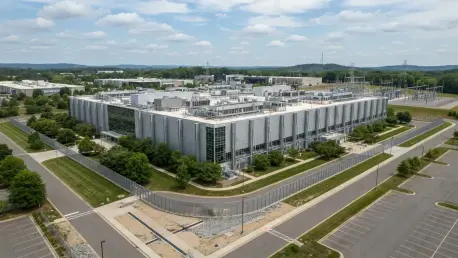

Voter turnover in Festus demonstrates the high political cost for local representatives who approve large-scale industrial projects despite significant community opposition. This phenomenon has become a hallmark of the 2026 political landscape, where the initial excitement surrounding digital infrastructure often clashes with the grounded realities of neighborhood preservation and local resource management. As tech giants scramble to secure acreage for massive server farms, they are meeting a more organized and vocal electorate that refuses to accept industrial expansion without a clear, localized benefit. The resulting friction has created a complex environment where developers must navigate not just the engineering challenges of power and cooling, but also the volatile waters of suburban sentiment. While federal directives might favor a rapid expansion to ensure technological dominance, the reality at the municipal level is much more nuanced, often leading to stalemates that can delay critical infrastructure for years and cost officials their seats.
The Intersection of National Security and Economic Vitality
Infrastructure as a Critical National Utility
The transition of data centers from controversial real estate investments into critical national utilities has fundamentally altered the legislative approach to digital infrastructure. In the current environment, these facilities are no longer viewed simply as massive warehouses for servers; they are the literal engines of a modern economy driven by generative artificial intelligence. This shift has elevated the industry to a level of strategic importance comparable to the power grid or the national highway system. Because AI dominance is now a cornerstone of federal policy, the buildout of high-capacity data halls is increasingly framed as a matter of national security rather than local zoning. Consequently, a slowdown in the development pipeline does not just threaten the bottom line of private equity firms; it potentially compromises the country’s technological lead over international rivals. This realization has forced a new level of pragmatism among policymakers who might otherwise be inclined to side with local anti-industrial sentiment.
The Sustainability of High-Tech Renovation Cycles
Beyond the initial economic infusion provided by large-scale construction, data centers offer a unique form of long-term vitality through a process characterized as a constant renovation cycle. Unlike traditional industrial sites that remain static for decades, the rapid evolution of chip technology requires these facilities to undergo significant hardware retrofitting every few years. Looking at the projected progress from 2026 to 2028, the demand for specialized high-performance computing components will likely necessitate a permanent workforce of high-tech engineers and specialized electrical contractors. This constant need for upgrades effectively debunks the persistent myth that these buildings become dormant shells once the ribbon-cutting ceremony concludes. Instead, they operate as living technological organisms that require ongoing investment and highly skilled labor to function effectively. This cyclical nature ensures that the local economic benefits, particularly in terms of high-wage jobs and tax contributions, remain consistent over the building’s entire operational lifespan.
Navigating Public Trust and Localized Resistance
Transparency as a Survival Strategy
A major obstacle to the seamless expansion of the industry has been its historical reliance on a secrecy model that utilized nondisclosure agreements to shield negotiations from public view. This strategy, while common in corporate acquisitions, has frequently backfired by creating an information vacuum that local residents fill with suspicion and fear. When a tech giant enters a small community under a pseudonym, it often creates a sense of betrayal once the true nature of the project is revealed. Industry leaders are now acknowledging that this approach is fundamentally broken and turns potential neighbors into permanent enemies. To ensure a social license to operate, developers are finding that they must pivot toward a radical model of transparency from day one. This involves hosting open town halls, providing clear data on water and power usage, and engaging with community concerns regarding noise and land use. By treating the public as a stakeholder rather than a hurdle, the industry can avoid the toxic relations that have stalled dozens of projects.
Regional Realities: Case Studies in Public Backlash
The regional case studies in Missouri provide a stark illustration of how transparency, or the lack thereof, can determine the fate of a billion-dollar investment. In St. Charles, Google’s Project Cumulus met a swift end after a well-organized local opposition campaign successfully pushed for a total ban on such developments, citing concerns over resource consumption and a lack of public input. This defeat was characterized by industry analysts as a tragedy of lost opportunity for the area’s financial future. Conversely, in Festus, a significantly larger project moved forward, but the political cost was devastating for the local representatives who supported it. The subsequent turnover of the entire city council highlights that even a successful permit process does not guarantee long-term political stability. These instances prove that winning a legal permit is only half the battle; the more difficult task is maintaining a social license to operate. Developers must now weigh the immediate goal of project approval against the long-term necessity of being a welcome member of the local ecosystem.
Legislative Challenges and the Global Competitive Edge
Regulatory Risks in Modern Jurisdictions
New legislative challenges are emerging in urban centers as officials seek to extract more value from the booming digital sector through specialized taxation and increased license fees. In St. Louis, Aldermanic President Megan Green has proposed regulatory frameworks that introduce heavier burdens on data center operators, signaling a shift toward a more extractive relationship between the city and tech developers. While these measures are often framed as a way to ensure the public benefits from technological growth, industry experts warn that they may lead to a dark path of diminishing returns. Jurisdictions that opt for heavy-handed taxation risk alienating the very investors who drive the AI-fueled blitz currently benefiting more permissive regions. This creates a competitive environment where capital flows toward states and municipalities that offer a stable and predictable regulatory framework. The challenge for modern lawmakers is to find a balance that provides the city with necessary revenue without stifling the innovation that makes the region a destination for high-tech industrial growth.
Strategic Conclusions: Balancing Growth and Community Trust
Industry leaders ultimately concluded that the survival of the national data center expansion depended on a fundamental shift from aggressive acquisition to collaborative partnership. They recognized that the previous methods of closed-door negotiation and minimal public engagement were no longer viable in an era of heightened civic awareness. The solution involved implementing a strategy of radical transparency that prioritized the local environment and community needs alongside technological requirements. This transition allowed the sector to maintain its global competitive edge while neutralizing much of the grassroots resistance that threatened the pipeline of AI development. Actionable steps were taken to integrate data centers into the local fabric through sustainable cooling technologies and community-funded initiatives that provided tangible benefits to residents. By the end of this transformative period, stakeholders successfully established a new standard for industrial development that balanced national security with local governance. The strategy ensured that the inescapable demands for data processing power were met without sacrificing the trust of the citizens who lived alongside these facilities.