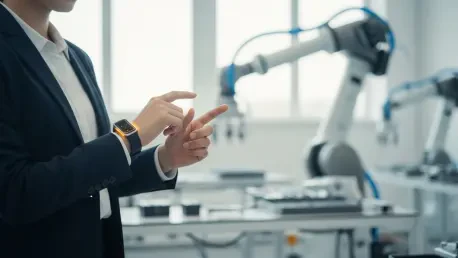

The boundary between biological intent and mechanical execution is rapidly dissolving as Wetour Robotics Limited formalizes its entry into the Qualcomm Partner Network to pioneer new frontiers in Physical AI. By aligning with the Industrial and Embedded Internet of Things track, the company is positioning itself to revolutionize how human workers interact with robotic systems in high-stakes environments. This alliance signifies more than just a vendor relationship; it represents a convergence of wearable sensor technology and high-performance semiconductor architecture. As industrial settings become increasingly complex, the need for seamless collaboration between man and machine has never been more pressing. Wetour aims to utilize this partnership to validate its hardware-software ecosystems against the most rigorous standards of modern computing. This move places the organization at the center of a technological shift where intelligence is no longer confined to digital screens but is deeply embedded in the physical movements of the workforce. Through this effort, the vision of a responsive, AI-augmented labor force moves one step closer to universal reality.
Advancing the Capabilities of Edge Computing
The Architectural Framework: Designing the Orchestra Platform
At the heart of this technological evolution lies the proprietary Orchestra platform, which functions as a sophisticated operating system for wearable robotics. This system is meticulously engineered to synthesize massive streams of data originating from various sensors attached to a user’s body, transforming raw physical motion into actionable robotic commands. Unlike traditional cloud-based architectures that suffer from latency, Orchestra is built specifically for local, on-device processing. This design philosophy ensures that every gesture or physiological signal is interpreted within milliseconds, which is an absolute necessity in industrial scenarios where timing is critical for safety. By managing these complex data flows at the edge, the platform provides a stable foundation for the next generation of smart exoskeletons and assistive devices. The integration with Qualcomm’s infrastructure will likely enhance this capability, allowing for even more fluid interactions between human users and the robotic hardware they operate in the field.
To achieve its goal of intuitive control, the Orchestra platform utilizes several specialized modules, including VisionLink and Spatial Intent Fusion, which work in tandem to map the user’s environment. However, the most transformative element is the Conductor module, which interprets neuromuscular signals to allow for control through subtle hand gestures. This technology bypasses the need for voice commands or physical control panels, which are often impractical in noisy or hazardous factory environments. By reading the electrical impulses from the wearer’s muscles, the Conductor module can predict intended movements before they are even fully executed by the human limb. This level of responsiveness creates a symbiotic relationship where the machine feels like a natural extension of the body. The ongoing collaboration with Qualcomm is specifically focused on optimizing these modules to run on advanced silicon, ensuring that the heavy computational load required for neural signal processing does not compromise the device’s battery life or thermal efficiency during long shifts.
Hardware Integration: Testing the Dragonwing Silicon
The strategic partnership allows Wetour to gain unprecedented access to the Qualcomm Dragonwing technology suite, a series of processors designed for the most demanding industrial IoT applications. Engineers are currently conducting a comprehensive evaluation of these chips to determine how well they can support the intensive AI algorithms within the Orchestra platform. The goal is to identify a hardware configuration that provides the necessary throughput for real-time spatial mapping while maintaining a small enough footprint for wearable integration. This technical exploration is critical because the success of Physical AI depends entirely on the reliability of the underlying hardware. By leveraging Qualcomm’s specialized technical support and developmental tools, Wetour can accelerate its prototyping phase and refine the integration of its proprietary software with world-class semiconductor logic. This synergy is expected to yield a new class of wearable hubs that are both incredibly powerful and energy-efficient, setting a new benchmark for the industry.
Shifting data processing away from centralized servers and onto the edge is a cornerstone of this collaboration, as it addresses the persistent issue of signal delay in robotic control. In a modern smart factory, workers often operate in proximity to heavy automated machinery where a lag of even a few dozen milliseconds can result in a catastrophic accident. By utilizing the Dragonwing series, Wetour can process complex sensor fusion tasks directly on the wearable device, effectively eliminating the round-trip time required for cloud communication. This localized intelligence not only enhances safety but also increases the precision of the robotic assistance being provided. Furthermore, edge processing offers superior data security, as sensitive behavioral and physiological information remains on the user’s person rather than being transmitted over potentially vulnerable networks. This approach aligns with the broader industry trend toward decentralized intelligence, where the Physical AI paradigm ensures that smart systems are as responsive and autonomous as the humans they are designed to assist.
Evaluating Market Viability and Financial Support
Institutional Momentum: Measuring Investor Confidence
As global industries face labor shortages and an aging workforce, the demand for technologies that can augment human physical capabilities has reached an all-time high. The market for Physical AI and wearable robotics is expanding rapidly, with sectors ranging from logistics to heavy manufacturing looking for ways to improve worker productivity and safety. This growing demand creates a fertile environment for the partnership between Wetour and Qualcomm to flourish, as companies seek out integrated solutions that are ready for immediate deployment. The ability to control heavy equipment through gesture or to receive power assistance during repetitive tasks is no longer a futuristic concept but a tangible requirement for modern industrial competitiveness. By positioning its Orchestra platform within the Qualcomm ecosystem, Wetour is essentially tapping into a global distribution and support network that can help scale these technologies across various international markets. This expansion is supported by a clear trend of industrial modernization that prioritizes the health and efficiency of human laborers.
Professional investment firms have taken notice of this strategic alignment, as evidenced by a notable increase in institutional holdings in Wetour over the past several quarters. Major financial players are betting on the company’s ability to bridge the gap between sophisticated AI software and the ruggedized hardware required for industrial use. This influx of capital provides the necessary runway for the organization to pursue ambitious research and development goals without the immediate pressure of short-term profitability. Market analysts suggest that the combination of Qualcomm’s hardware dominance and Wetour’s innovative software creates a formidable competitive advantage that is difficult for smaller startups to replicate. This financial stability is crucial for navigating the long certification cycles often required for safety-critical industrial equipment. As the company continues to hit its technical milestones, this institutional backing is likely to grow, further cementing Wetour’s position as a leader in the rapidly maturing field of wearable robotics and edge-based intelligence.
Strategic Challenges: Navigating Technical and Adoption Risks
Despite the significant progress made through this partnership, the path to full-scale commercialization is fraught with technical complexities that require careful navigation. Integrating a new generation of processors into an existing software stack like Orchestra is a massive undertaking that involves rewriting low-level drivers and optimizing neural networks for specific silicon architectures. There is also the challenge of ensuring that the wearable sensors maintain their accuracy and calibration over thousands of hours of use in harsh industrial environments. Dust, moisture, and electromagnetic interference can all degrade signal quality, potentially leading to errors in the Conductor module’s neuromuscular interpretation. Engineers must develop robust error-correction algorithms and redundant systems to ensure that the Physical AI remains reliable even when individual sensors fail. These hurdles represent a significant engineering risk that must be addressed before the technology can be widely adopted in mission-critical applications where failure is not an option.
Beyond the technical requirements, the success of wearable robotics depends heavily on industry-wide acceptance and the willingness of workers to adopt new ways of interacting with machinery. There is often a cultural resistance to wearing intrusive technology, especially in traditional manufacturing sectors where comfort and ease of movement are prioritized. Wetour must demonstrate that its devices are not only powerful but also ergonomic and unobtrusive enough for eight-hour shifts. Furthermore, establishing standardized protocols for Physical AI is essential for ensuring that different robotic systems can communicate with one another effectively. The lack of universal standards for gesture-based control could lead to a fragmented market, making it difficult for companies to invest in these technologies with long-term confidence. Navigating these socioeconomic factors will be just as important as the underlying engineering work. The collaboration with Qualcomm provides a framework for addressing these issues, but the ultimate test will be how well the technology performs in the hands of real-world operators on the factory floor.
The partnership between Wetour and Qualcomm established a clear trajectory for the integration of high-performance computing with human-centric robotics. By prioritizing edge-based processing and neuromuscular control, the collaboration successfully addressed several primary bottlenecks that previously limited the utility of wearable technology. Moving forward, industrial leaders should consider the implementation of these edge-computing platforms as a means to enhance both safety and operational efficiency within their facilities. Organizations that adopted these Physical AI solutions early found themselves better equipped to handle the demands of a high-precision manufacturing environment. It was determined that the most effective strategy involved a gradual integration process, starting with non-critical tasks to build worker trust before expanding to heavy machinery control. This approach allowed for the refinement of gesture libraries and the optimization of power management protocols. The technical foundation laid by this alliance provided a scalable blueprint for the future of human-machine synergy across the global industrial landscape.