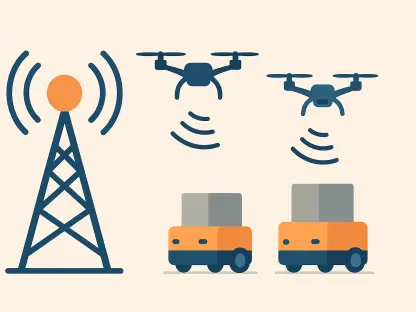

The traditional boundaries between the digital and physical domains are dissolving rapidly as 6G moves from the abstract phase of white papers into the concrete reality of live infrastructure trials. This next-generation network technology represents a significant advancement in the telecommunications industry, moving far beyond the incremental speed increases seen in previous cycles. This review explores the evolution of the technology, its key features, and the impact it has had on various industrial applications. By synthesizing the architectural foundations and current performance metrics, the analysis provides a thorough understanding of current capabilities and the potential for long-term development.
The Dawn of the 6G ErCore Principles and Context
6G technology is emerging as the definitive successor to 5G, specifically designed to bridge the gap between digital and physical realities. While 5G focused primarily on enhanced mobile broadband and low latency for consumer devices, 6G is built on the principles of hyper-connectivity, ubiquitous intelligence, and precision sensing. It has emerged in a landscape where data demands are outstripping current capacity, necessitating a shift toward higher frequency bands and more efficient network architectures. This evolution is driven by the need for a network that is not just a pipe for data, but a smart infrastructure capable of supporting autonomous systems and immersive digital twins.
The current transition demonstrates that 6G is not merely a faster version of its predecessor but a complete overhaul of how signals interact with the environment. Unlike previous generations that treated the physical world as an obstacle to overcome, 6G integrates environmental awareness into its core logic. This shift enables a level of synchronization between virtual models and physical assets that was previously impossible. Consequently, the network becomes a foundational layer for a fully automated society, facilitating a transition from simple connectivity to deep, intelligent integration across all sectors of the economy.
Architectural Foundations and Technical Innovations
AI-Native and Cloud-Native Network Design
One of the primary features of 6G is its AI-native architecture, which distinguishes it from any prior telecommunications standard. In earlier generations, artificial intelligence functioned as an external tool used for post-hoc optimization or data analysis. In contrast, 6G integrates AI into every layer of the network, from the physical layer to the application interface. This design enables self-healing protocols, automated radio resource management, and predictive maintenance that can anticipate congestion before it occurs. By embedding intelligence at the edge, the network minimizes the need for centralized processing, thereby reducing latency and improving responsiveness.
The shift toward a cloud-native framework further enhances this intelligence by providing the flexibility to scale resources dynamically. Traditional hardware-centric models are being replaced by virtualized functions that can be deployed or retracted based on real-time demand. This transition significantly reduces operational costs while ensuring peak performance for high-demand applications like remote industrial control. Moreover, the cloud-native approach allows for faster updates and seamless integration of new features, ensuring the network remains adaptable to the rapidly changing technological landscape between 2026 and 2030.
Integrated Sensing and Communication (ISAC)
Integrated Sensing and Communication (ISAC) represents a transformative component of the 6G ecosystem that redefines the purpose of radio waves. This technology allows the network to function as a radar-like sensor, using radio signals to detect the movement, position, and shape of physical objects. By converging communication and sensing into a single hardware framework, 6G provides high-resolution environmental awareness without the need for additional sensor deployments. This dual-use capability is significant for logistics, industrial automation, and urban management, as it removes the reliance on external cameras or infrared sensors that often face privacy or environmental limitations.
The practical implementation of ISAC allows for the creation of real-time spatial maps, enabling the network to “see” its surroundings. For instance, in a smart city environment, the network can track pedestrian traffic and vehicle flow with centimeter-level precision. This high-fidelity data is used to optimize traffic signals and enhance the safety of autonomous navigation systems. Furthermore, by utilizing the existing communication infrastructure for sensing, operators can maximize the utility of their spectrum holdings, creating a more efficient and cost-effective method for gathering environmental intelligence.
Massive MIMO and Advanced Antenna Architectures
To achieve the performance metrics required for 6G, hardware innovation has shifted toward advanced antenna systems that far exceed current standards. The transition from 64-transmitter/receiver (64TR) configurations toward 256TR architectures allows for ultra-precise beamforming. This massive increase in radiating elements enables the network to steer data beams directly toward users with minimal interference and higher energy efficiency. Such hardware upgrades are essential for maximizing spectrum efficiency and supporting the massive device density expected in the coming decade.
These advanced architectures also address the challenges of signal degradation in higher frequency bands. By utilizing a larger number of antenna elements, the network can compensate for atmospheric absorption and physical obstructions through constructive interference. This level of control allows for the creation of “personal cells” where the network follows the user, providing a consistent high-speed experience even in crowded urban centers. Consequently, the move to 256TR systems represents a critical hardware milestone that makes the high-bandwidth promises of 6G physically possible.
Emerging Trends and Industry Shifts
The current trajectory of 6G is influenced by a strategic shift from theoretical research to live-environment trials. A major trend is the global race to establish pre-standard products, with a target milestone centered around the current 2026 Summer Olympics. Furthermore, there is a growing emphasis on “Open RAN” and vendor interoperability, as operators seek to avoid the high costs and risks of proprietary hardware. This movement toward an open ecosystem encourages innovation from smaller software players and reduces the barrier to entry for new infrastructure providers.
The move toward sustainable, energy-efficient networking is also a dominant trend, as industry leaders prioritize reducing the carbon footprint of the massive infrastructure required for 6G. Engineers are now focusing on “zero-energy” devices that harvest power from the ambient radio frequency environment, eliminating the need for batteries in billions of IoT sensors. This focus on sustainability is not just an environmental goal but a financial necessity, as the energy costs of running hyper-dense 6G networks would otherwise be prohibitive for global operators.
Real-World Applications and Sector Deployment
6G technology is being deployed in trial environments across several key sectors, proving its practical utility in high-stakes scenarios. In smart cities, the network utilizes ISAC for real-time traffic management and the coordination of autonomous vehicle fleets. In the industrial IoT sector, manufacturing plants are implementing digital twins to monitor equipment health and optimize supply chains through precision sensing. This allows for predictive maintenance schedules that prevent costly downtime and maximize factory output.
The healthcare sector is seeing a shift toward remote robotic surgery and real-time holographic consultations, which demand the ultra-low latency and high reliability that only 6G can provide. Additionally, immersive entertainment is evolving through extended reality (XR) and metaverse applications that require massive bandwidth for seamless, high-fidelity digital experiences. These applications demonstrate that 6G is not just about communication; it is about providing the low-latency backbone for a new generation of interactive and automated services.
Technical Hurdles and Market Obstacles
Despite its immense potential, 6G faces several significant challenges that could slow its widespread adoption. The industry is currently negotiating the use of the 6GHz “Goldilocks” band, which is vital for balancing coverage and capacity. Without clear global spectrum allocation, the risk of fragmentation remains high, potentially leading to incompatible regional standards. Furthermore, the transition requires a substantial investment in the Radio Access Network (RAN), posing a financial challenge for operators who are still recovering the costs associated with the 5G rollout.
Regulatory issues also complicate the landscape, as global standardization involves complex geopolitical negotiations that can delay technical implementation. On a technical level, signal propagation in higher frequency bands remains a hurdle, as these signals are easily blocked by walls or even rain. Innovative solutions in signal relay and reflection technology, such as reconfigurable intelligent surfaces, are being developed to address these issues. However, the cost and complexity of deploying these auxiliary technologies remain a point of contention for many network providers.
Future Outlook and Breakthrough Potential
The long-term impact of 6G will likely be defined by the total convergence of the physical and digital worlds. Future developments are expected to push the boundaries of terahertz frequencies, offering speeds that could eventually reach 1 terabit per second. This level of throughput will enable real-time spatial computing where every object in an environment is digitally represented and interacted with in real time. We may also see breakthroughs in sub-terahertz imaging, allowing the network to perform high-resolution non-destructive testing of materials.
Looking ahead from 2026 to 2030, the network will likely serve as the primary nervous system for a fully automated society. This will involve the deployment of “zero-energy” devices that operate indefinitely without maintenance, creating a truly ubiquitous sensor web. Ultimately, 6G will transform how humans interact with their environment and each other, turning the physical world into a searchable, programmable, and intelligent interface that responds to human needs with unprecedented speed and accuracy.
Review Assessment and Key Takeaways
The evaluation of early 6G frameworks demonstrated that the shift toward an AI-native architecture was not merely a technical upgrade but a fundamental requirement for managing future network complexity. Stakeholders realized that the success of these deployments depended heavily on the 6GHz spectrum, which provided the necessary balance for urban densification. It became clear that the industry needed to prioritize energy-autonomous nodes to ensure that the massive growth in device density remained environmentally sustainable. The successful integration of sensing and communication showcased that the network could serve as a foundational layer for public safety and autonomous logistics.
Moving forward, the focus must shift toward establishing a global “social contract” regarding the privacy implications of a network that can perceive physical movements. While the technical trials proved the viability of 256TR antenna systems, the financial reality necessitated a move toward shared infrastructure and Open RAN models. Ultimately, the transition to 6G moved beyond simple connectivity metrics to address the broader demand for a network that senses, thinks, and adapts. This evolution laid the groundwork for a decade of transformation, ensuring that the telecommunications sector remained the central pillar of the global digital economy.