
The definition of high-end residential property has evolved from mere square footage and gold-plated fixtures to a sophisticated ecosystem where invisible intelligence anticipates human needs before they are consciously articulated. In the current landscape of 2026, the value of a home is no longer measured solely by its zip code or the quality of its marble flooring, but by the seamlessness of its digital infrastructure. Modern affluent homeowners increasingly demand environments that act as an extension of their cognitive processes, managing everything from light temperature to air purification without manual intervention. This shift represents a fundamental move away from reactive gadgets toward proactive, holistic systems that learn from behavioral patterns. As technology becomes more embedded into the architectural fabric, the traditional boundaries between hardware and physical space have blurred significantly. The result is a living experience where luxury is defined by the absence of friction, allowing residents to focus on their personal and professional pursuits while the house handles the complexities of optimization.
Adaptive Intelligence: The New Architecture of Living
Contextual Awareness and Ambient Response
Building on this foundation of connectivity, the latest advancements in home automation rely on ambient intelligence that operates without the need for traditional user interfaces like touchscreens or remote controls. These systems utilize a network of high-fidelity sensors—ranging from ultrasonic presence detection to thermal imaging—to understand exactly how a room is being used at any given moment. For instance, if the system detects multiple occupants in a library, it can automatically adjust the directional lighting to focus on seating areas while simultaneously balancing the HVAC system to maintain a constant temperature despite the increase in body heat. This predictive capability is further enhanced by machine learning algorithms that study the residents’ historical preferences, allowing the home to simulate natural environments that promote focus or relaxation. The technology has reached a point where the house essentially “knows” its owners, preparing the perfect atmosphere for a return from travel or a morning routine before a single command is ever issued.
Invisible Infrastructure and Integrated Materials
This level of sophistication is only possible because the underlying infrastructure has moved from being an afterthought to a core component of the architectural design process. Modern luxury builds now incorporate “smart skins” where the walls themselves are embedded with haptic feedback sensors and transparent photovoltaic cells that double as windows. By integrating these components into the structural materials, designers can maintain the clean lines and minimalist aesthetics that define contemporary luxury without sacrificing the power of a fully automated environment. This approach naturally leads to the use of solid-state technology which replaces mechanical components with digital equivalents, significantly reducing the noise and maintenance associated with older smart home setups. Audio systems are now frequently hidden behind plasterboard, using the wall surface as a giant diaphragm to create an immersive soundscape that follows the resident from room to room. Such material innovation ensures that the home remains a serene sanctuary.
Security Protocols: Protecting the Digital Sanctuary
Biometric Authentication and Data Sovereignty
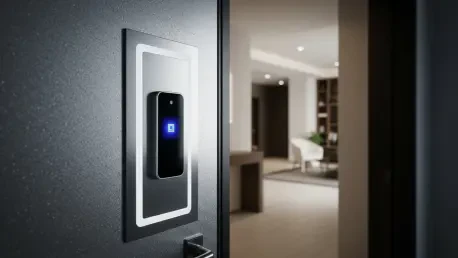
In addition to physical comfort, the modern luxury residence must provide an uncompromising level of security that blends seamlessly into the daily life of the occupants. High-end estates have moved beyond traditional cameras and keypad entries, adopting multi-modal biometric authentication systems that recognize residents by their gait, facial structure, or even heart rate signatures. These systems provide a high degree of protection while eliminating the friction of carrying keys or remembering access codes, allowing for a truly “keyless” lifestyle that maintains the highest safety standards. However, with this level of surveillance comes the necessity for absolute data sovereignty, leading many owners to invest in localized, edge-computing servers that keep all personal information within the property’s physical boundary. This decentralized approach to data management ensures that while the home is deeply intelligent and connected, the intimate details of the residents’ lives remain private and protected from external cloud vulnerabilities.
Holistic Wellness and Longevity Ecosystems
The transition toward fully autonomous luxury environments fundamentally changed the way homeowners interacted with their physical surroundings, moving from control-based systems to relationship-based ones. It became clear that the most successful implementations were those that prioritized human-centric design over technical complexity, ensuring that automation served to enhance rather than dictate the daily routine. To maximize the benefits of these advancements, property owners should focus on selecting platforms that offer high levels of interoperability, avoiding closed ecosystems that restrict future upgrades or cross-brand communication. Developers must also prioritize the installation of high-capacity fiber and local processing units to support the massive bandwidth requirements of real-time environmental monitoring. The final goal achieved was the creation of spaces that felt intuitive and alive, setting a new standard for what it means to live in a high-end environment that actively manages its own wellness.