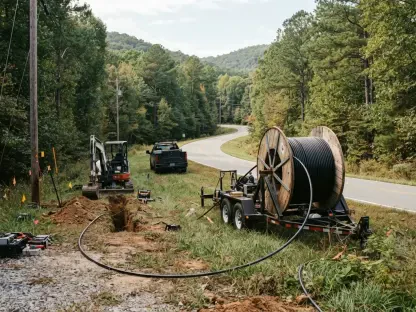

Across the rolling hills of rural landscapes and the sun-drenched plains of the global south, a quiet but profound transformation is rewriting the physical geography of the modern world as digital titans claim territory for their massive server farms. This rapid rise of artificial intelligence has transitioned from a purely digital phenomenon into an aggressive global land grab, with tech giants currently engaged in a relentless drive for territory, energy, and water. These corporations are building the massive data centers required to train and maintain increasingly complex models, effectively turning once-quiet regions into heavy industrial hubs dedicated to the compute economy. This transformation has ignited a new era of global class conflict, pitting powerful tech conglomerates against local communities and the global working class who find themselves on the front lines of this industrial revolution. As these companies monopolize essential resources to feed an insatiable demand for computational power, they often leave residents to manage the environmental and economic fallout. The result is a growing international movement of people who view the expansion of AI infrastructure not as progress, but as a direct threat to their livelihoods, local ecosystems, and regional stability.
The Unprecedented Surge of Hyperscale Infrastructure
Mapping the Global Data Center Footprint
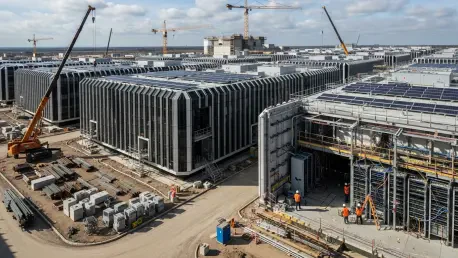
The scale of the current construction boom is entirely unprecedented in industrial history, featuring hyperscale data centers that are significantly larger and more energy-intensive than any digital infrastructure seen in previous decades. In North America and China, vast facilities are being erected in arid regions where land is plentiful, while Southeast Asia is rapidly emerging as a primary destination for massive tech investment and infrastructure development. These projects are far from modest additions to the local economy; they are gargantuan industrial sites that can cost upwards of $100 billion to construct and require energy inputs comparable to those of a large-scale nuclear power plant. The sheer physical footprint of these sites is altering local climates and tax bases, creating a new form of industrial geography where the proximity to high-voltage power lines and fiber-optic trunk lines dictates the value of land over traditional agricultural or residential utility.
This expansion is also sweeping through Latin America, Africa, and the Middle East as global tech leaders aggressively seek out cheap land and abundant fossil fuels to power their server arrays. Countries like Brazil and Mexico are being integrated into the global grid through massive submarine cables that provide the high-speed connectivity necessary for real-time AI processing. Meanwhile, Saudi Arabia and the United Arab Emirates are investing hundreds of billions of dollars to secure their place in the AI future, building massive compute clusters in the desert that rely on sophisticated cooling and power management. This rapid development is turning remote areas into critical nodes for the global data machine, often proceeding at a pace that bypasses traditional environmental reviews and community consultation. The speed of this rollout reflects a desperate race among tech giants to secure the physical foundations of AI before regulatory hurdles or resource scarcity can slow their momentum.
Ecological Strain and Resource Depletion
The environmental consequences of this massive infrastructure build-out are becoming a primary point of contention, especially regarding the staggering energy and land requirements of modern compute clusters. By the end of this decade, AI is expected to consume an unprecedented percentage of the total global electricity supply, a trend that is already driving up utility prices for residential consumers in many parts of the world. This spike in demand often forces national grids to maintain or even expand their reliance on fossil fuels, making it increasingly difficult for nations to meet their climate goals while simultaneously keeping the lights on for their citizens. In many jurisdictions, the arrival of a new data center cluster has necessitated the reopening of shuttered coal plants or the construction of new natural gas facilities, directly contradicting the green energy narratives often promoted by the tech industry in its corporate communications.
Water consumption represents another critical issue that is fueling local resentment, as AI cooling systems require billions of liters of water annually to prevent massive server arrays from overheating during intensive training cycles. This demand is particularly concerning in regions that are already prone to drought or water scarcity, where tech facilities must compete with local farmers and residents for access to limited aquifers and municipal supplies. The sheer scale of these resource requirements is transforming the cloud from a vague digital concept into a heavy industrial burden on the most precious resources of the planet. In many cases, the evaporative cooling processes used by these centers release massive amounts of humidity into local microclimates, while the discharge of treated water can alter local ecosystems. The environmental footprint of AI is thus becoming a visible, tangible reality for communities that once thought of digital technology as a clean and weightless industry.
The Power Dynamics of Pax Silica
Structural Dependency and the New Ruling Class
The rise of Pax Silica describes a new world order where Big Tech, global finance, and military interests work in a tight alliance to exert control over critical global infrastructure. This power bloc holds significant sway over both individuals and sovereign governments because essential public services—including education, healthcare, and financial transactions—have become completely dependent on their proprietary digital platforms. This structural dependency allows a small elite of tech executives and investors to dictate the terms of the modern economy, often prioritizing corporate growth and computational expansion over the public interest or local autonomy. The infrastructure that supports AI is not merely a tool for business; it is the new foundation of state power, where the ability to process information at scale determines a nation’s standing in the international hierarchy.
Economic investment in AI has reached levels that rival the entire gross domestic product of some mid-sized nations, cementing its status as the foundational technology of the current century. Because AI is a general-purpose technology, it is becoming as essential to modern life as electricity or telecommunications once were, making it nearly impossible for any organization or government to opt out of the system. This inescapable presence ensures that the interests of the tech-finance-military complex remain at the very center of global political and economic decision-making. As public infrastructure is increasingly outsourced to these private entities, the traditional social contract between the state and its citizens is being rewritten. Governments often find themselves in a position where they must cater to the needs of data center operators to ensure their own administrative functions remain operational, leading to a significant shift in where true political authority resides.
Socio-Economic Shifts and Digital Militarization
On a social level, the AI revolution is acting as a potent tool for labor devaluation, leading to what many analysts describe as a jobs apocalypse across a variety of traditional industries. Automation is replacing roles in sectors ranging from logistics to creative services, while simultaneously creating a new class of precarious work where laborers perform repetitive tasks like data labeling for minimal pay. These workers often operate under harsh conditions in the global south, providing the human intelligence necessary to train algorithms that will eventually automate their own regions out of the global market. This shift allows corporations to maximize profits by drastically reducing their reliance on a stable, well-compensated workforce, further widening the gap between the ultra-wealthy owners of compute power and the global working class who provide the raw data and labor.
Furthermore, the AI state is increasingly focused on digital militarization and automated surveillance to maintain social control in an era of growing inequality. The same technologies used for consumer convenience and industrial efficiency are being repurposed for algorithmic policing and the efficient management of populations through automated data analysis. This transition to an automated surveillance state suggests that the AI boom is not just about economic expansion, but also about creating more effective ways to monitor and restrict the movement and activities of people. In many urban centers, AI-driven cameras and sensors now track everything from traffic patterns to social gatherings, creating a persistent digital record of public life. This convergence of corporate profit-seeking and state security interests creates a formidable apparatus that can be used to suppress dissent and manage the social tensions arising from the very economic disruptions caused by AI expansion.
Global Mobilization and the Path Forward
Grassroots Defiance and Legislative Intervention
In response to these developments, a diverse wave of grassroots resistance has emerged across the globe to challenge the unchecked expansion of data centers and the extraction of local resources. In countries like Ireland, citizens have taken to the streets to protest the massive energy drain from server farms that is driving up household utility bills and threatening the stability of the national grid. Similar movements have gained traction in Chile and Mexico, where local residents and environmental activists are fighting to protect their water supplies from being diverted to massive tech facilities. These protests are not just about environmental conservation; they are about the fundamental right of communities to determine how their local resources are used and who ultimately benefits from the industrialization of their land.
Public sentiment is also shifting significantly in the United States, where a growing majority of people now oppose the construction of new data centers in their immediate communities due to concerns over noise, light pollution, and resource consumption. This has led to the implementation of dozens of local moratoriums and the introduction of national legislative proposals aimed at pausing development until the long-term environmental and social impacts can be properly assessed. As the resistance grows, the fight against these facilities has become a defining struggle of the era, as people work to reclaim their resources from the grasp of a new digital oligarchy. This mobilization suggests that the future of AI will not be determined solely by the boardrooms of Silicon Valley, but also by the persistence of local communities demanding a say in the physical manifestation of the digital age.
A Strategic Framework: Moving Beyond the Compute Crisis
The rapid expansion of AI infrastructure was a period defined by an intense struggle over the physical foundations of the digital world, where the needs of global corporations often clashed with the survival of local ecosystems. Communities across the globe realized that the unchecked consumption of energy and water for the sake of computational growth was unsustainable and required a fundamental shift in how technology was integrated into society. This period of resistance demonstrated that the social and environmental costs of AI could no longer be ignored or offloaded onto the most vulnerable populations. Governments eventually responded by establishing stricter regulatory frameworks that prioritized the stability of the public grid and the protection of local water rights over the rapid build-out of server farms. These actions were essential in preventing a complete monopolization of resources by a few tech conglomerates and ensured that digital development did not come at the expense of human well-being.
The next phase of global technological development must prioritize the creation of localized, energy-efficient AI systems that do not require the massive industrial footprint of today’s hyperscale centers. Moving forward, the focus should shift toward decentralized compute models and the implementation of mandatory resource-sharing agreements between tech companies and the communities they occupy. Policy makers should investigate the feasibility of “compute taxes” that fund local infrastructure and environmental restoration, ensuring that the wealth generated by AI is reinvested in the regions that host its physical infrastructure. Additionally, fostering transparency in how data centers use water and electricity is crucial for building public trust and allowing for informed democratic oversight. By shifting from a model of extraction to one of mutual benefit, it is possible to build a digital future that respects the physical limits of the planet and the rights of the people who inhabit it. Past lessons showed that technology only serves the public good when its physical requirements are balanced against the basic needs of the global population.