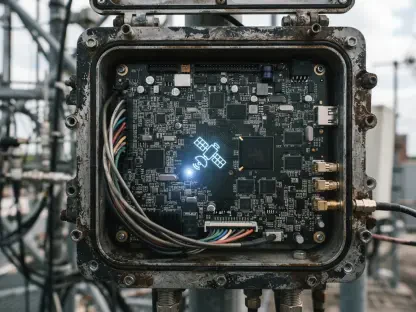

The silent revolution occurring beneath city streets and across ocean floors has officially reached a tipping point as optical fibers now carry the overwhelming majority of the planet’s digital communications. This transition from legacy copper-based systems to high-capacity optical networks is not merely a technical upgrade but a fundamental structural change in global infrastructure that requires a sophisticated new suite of diagnostic tools to maintain operational integrity. Industry data suggests that the market for fiber optic cable testers, which was valued at approximately $1.14 billion in 2025, is currently navigating a steady upward trajectory. Projections indicate a climb to $1.25 billion by the end of 2026, eventually reaching a significant milestone of $2.74 billion by 2035, representing a healthy compound annual growth rate of over nine percent. The sheer sensitivity of optical fibers to physical disturbances, such as macro-bends or connector contamination, makes precise testing equipment an absolute necessity for modern connectivity. Even minor signal losses, often invisible to the naked eye, can lead to catastrophic network failures or massive data packets drops, which is why diagnostic accuracy has become the top priority for field technicians and network engineers alike.
Core Drivers of Global Infrastructure
The Impact: 5G and Broadband Rollouts
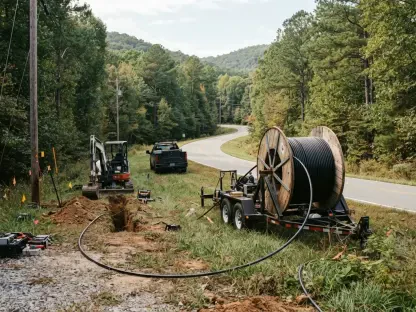
The aggressive expansion of Fiber-to-the-Home and Fiber-to-the-Premises initiatives serves as the primary engine driving this market growth across both urban and rural landscapes. As high-speed broadband transitions from being a luxury service to a standard utility, modernization programs worldwide are prioritizing fiber optics as the backbone of residential and commercial connectivity. This shift necessitates a massive volume of specialized testing to ensure that every new connection meets stringent performance standards before a single byte of data is transmitted. For service providers, the cost of sending a technician back to a site to fix a poorly installed connector far outweighs the initial investment in high-quality testing hardware. Consequently, the deployment of residential fiber has created a sustained demand for portable, user-friendly testers that can be utilized by a broad range of technicians with varying levels of experience. These tools must provide instant feedback on light levels and link integrity to keep pace with the rapid rate of installation required to meet government connectivity targets.
Building on the residential surge, the deployment of 5G networks represents perhaps the most significant tailwind for the testing equipment industry in the current market environment. Unlike previous generations of cellular technology, 5G requires an incredibly dense web of optical backhaul and fronthaul connections to support the high bandwidth and low latency promised to consumers and industrial users. Every 5G small cell and macro site must be linked via fiber, necessitating rigorous testing at every stage of the installation process to prevent latency issues that could cripple network performance. Technicians are now required to perform complex tests, such as latency verification and jitter analysis, which were previously reserved for high-end laboratory environments. As mobile operators continue to densify their networks to provide seamless coverage, the reliance on high-accuracy optical testers will only intensify. This technical requirement ensures that the physical infrastructure is robust enough to handle the massive data loads characteristic of the modern digital era, where a single failure in the backhaul can affect thousands of concurrent users.
Data Center Proliferation: Cloud Services
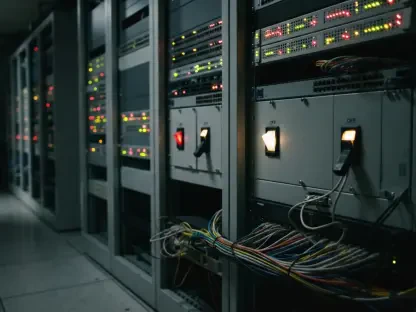
As the global economy continues its relentless migration to the cloud, hyperscale data centers have emerged as the central nerve centers of all digital activity, housing the world’s most sensitive data. These massive facilities rely on an internal architecture consisting of miles of fiber optic cabling, where even a few minutes of unexpected downtime can result in substantial financial losses and reputational damage. To maintain nearly perfect uptime, data center operators are increasingly moving away from reactive repairs and toward proactive, periodic fiber inspections using advanced diagnostic hardware. The scale of these facilities means that automated testing solutions are no longer optional; they are a critical component of daily operations. High-density environments within data centers often use multi-fiber push-on connectors, which require specialized testing equipment capable of analyzing multiple fibers simultaneously. This complexity further drives the market for high-end testers that can provide comprehensive reporting and quick pass-fail results in a crowded server room environment.
To maintain the high standards required by modern Service Level Agreements, data center operators are increasingly conducting periodic fiber inspections to identify degrading components before they fail completely. The constant need for facility expansion, driven by the rise of artificial intelligence and high-performance computing, creates a consistent and growing demand for high-accuracy testing hardware that can handle the latest optical standards. These facilities often operate on the cutting edge of technology, adopting 400G and 800G optical links that are far more sensitive to signal attenuation and reflection than previous generations. This sensitivity means that even a microscopic speck of dust on a connector can disrupt a high-speed link, making inspection microscopes and automated cleaning tools as vital as the cables themselves. Furthermore, the high stakes of network reliability in the financial and healthcare sectors mean that data center managers are willing to invest heavily in top-tier diagnostic equipment to ensure that their infrastructure remains resilient against physical degradation and environmental factors.
Smart Cities: Industrial Digitalization
The rise of smart cities, which integrate thousands of IoT sensors, intelligent transportation systems, and public safety cameras, depends heavily on a reliable and pervasive fiber backbone. These large-scale infrastructure projects require certified testing during the initial commissioning phase to ensure long-term operational success across diverse and often harsh outdoor environments. Unlike controlled indoor settings, smart city fiber networks are exposed to temperature fluctuations, moisture, and mechanical stress, all of which can affect signal quality over time. Specialized testers equipped with ruggedized housings and long-range diagnostic capabilities are essential for city planners and contractors who must certify thousands of connection points across a metropolitan area. This surge in public infrastructure projects has introduced a new segment of users who require testers that are not only accurate but also capable of integrating with geographic information systems to map network health across a physical landscape. This spatial awareness in testing helps maintenance crews quickly locate physical breaks caused by construction or natural disasters.
In the industrial sector, the shift toward Industry 4.0 is driving the rapid adoption of fiber optics to avoid the electromagnetic interference that is common in heavy factory environments. Traditional copper wiring often fails in settings with high-voltage machinery, making fiber the only viable solution for connecting automated assembly lines and robotic systems that require real-time data synchronization. Consequently, industrial transformation projects are increasingly incorporating optical cable inspection into their standard installation protocols to ensure that high-speed communication remains uninterrupted. The demand for testers in this sector often focuses on durability and ease of use, as maintenance staff may not be dedicated fiber specialists but must still perform routine checks on network health. By identifying potential issues early, manufacturers can avoid costly production halts, reinforcing the value proposition of fiber testing as an insurance policy for industrial productivity. This trend toward industrial fiberization is expected to expand as more factories move toward fully autonomous operations that rely on low-latency optical links for safety and coordination.
Technological Shifts in Testing Equipment
Integration: Smart Diagnostics
The testing equipment industry is currently moving away from single-purpose tools in favor of highly integrated testing platforms that offer a more holistic view of network health. Field engineers now prefer portable units that combine power measurement, fault location, and connector inspection into a single device, which significantly streamlines on-site workflows and improves overall productivity. This consolidation reduces the amount of gear a technician must carry and ensures that all relevant data for a specific link is stored in one unified file. Moreover, these integrated platforms often feature modular designs, allowing users to swap out testing cards as they transition between different types of networks, such as long-haul links or local access loops. This flexibility is essential in a rapidly evolving market where technology standards change every few years, protecting the long-term investment of the service provider. By reducing the complexity of the hardware stack, manufacturers are making sophisticated fiber diagnostics accessible to a wider range of field personnel.
To combat human error and reduce the time spent troubleshooting complex network issues, manufacturers are embedding intelligent diagnostics directly into their modern testing devices. Automated fault detection systems can now identify the exact nature and location of signal loss, removing the need for manual calculations or subjective interpretation of complex graphs by the technician. For instance, an Optical Time Domain Reflectometer can now provide a simplified visual map of the fiber link, labeling specific events such as splices, connectors, and macro-bends with clear icons. This “smart” approach allows even relatively inexperienced technicians to perform high-level diagnostics that once required a decade of specialized training. By automating the analysis process, these tools significantly reduce the “mean time to repair,” which is a critical metric for telecommunications companies striving to meet customer expectations. As the industry moves toward 2035, the role of the technician will likely shift from being a manual data interpreter to being a strategic supervisor of automated diagnostic systems.
Cloud Connectivity: Remote Management
The widespread adoption of cloud-enabled reporting systems is a major trend that allows field technicians to sync testing data instantly with a central office from any location. This connectivity enables real-time project management and ensures that documentation is accurate, standardized, and easily accessible for future maintenance or auditing purposes. In the past, technicians would often have to return to a central hub to upload results manually, leading to delays and potential data loss; today, results are pushed to the cloud the moment a test is completed. This immediate feedback loop allows supervisors to verify the quality of work in real-time, catching errors before a technician leaves the job site and reducing the need for costly return visits. Additionally, centralized data storage makes it possible to track the long-term health of a network by comparing current test results with baseline data collected during the initial installation phase. This historical perspective is invaluable for identifying gradual degradation in fiber performance before it causes a service outage.
Cloud integration is particularly vital for large-scale deployments where thousands of fiber links must be certified and logged within a very tight timeframe across multiple regions. This shift toward digital data management helps service providers maintain high standards of quality control across geographically dispersed teams, ensuring that every contractor adheres to the same rigorous testing protocols. Furthermore, cloud platforms can provide advanced analytics that identify systemic issues, such as a batch of faulty connectors or a recurring installation error common among specific crews. By aggregating data from thousands of tests, companies can gain insights into the overall reliability of their physical infrastructure and make more informed decisions about future hardware purchases and maintenance schedules. The move toward cloud-managed testing also simplifies the process of generating compliance reports for regulatory bodies or clients, as all data is stored in a secure, searchable, and tamper-proof digital environment. This transparency is becoming a requirement in many high-security sectors, such as defense and finance, where network integrity is a matter of national or economic security.
Detailed Market Segmentation
Analysis: Device Category
Optical Time Domain Reflectometers remain the most critical components of the market, accounting for a large portion of total revenue due to their indispensable role in network characterization. These devices are essential for long-haul networks because they can pinpoint faults over vast distances with extreme precision by analyzing the backscattered light from an optical pulse. Without an OTDR, identifying a break in a subsea cable or a cross-country terrestrial link would be nearly impossible, often requiring days of manual searching. Modern OTDRs have become significantly more compact and affordable, allowing them to be used in access networks and even within large office buildings. The ability to “see” inside the fiber and identify specific sources of loss or reflection makes these tools the gold standard for troubleshooting and certification. As the industry pushes toward higher data rates, the precision of OTDR measurements becomes even more critical for identifying subtle anomalies that could disrupt high-frequency optical signals.
Optical light sources and power meters are fundamental tools used to verify signal transmission quality and measure insertion loss across a wide variety of optical links. These instruments are standard issue for installation teams and represent a significant, steady segment of the overall market because every fiber link must have its power levels verified at the point of termination. While perhaps less complex than an OTDR, the power meter is the primary tool for determining whether a link is functional and within its designed power budget. Other essential tools include fiber identifiers, visual fault locators, and inspection microscopes, which have seen a surge in demand as network operators realize that contaminated connectors are a leading cause of network failure. The mantra of “inspect before you connect” has become an industry standard, leading to a robust sub-market for high-magnification digital probes that can automatically detect scratches or debris on a fiber end-face. These tools are often bundled together in comprehensive kits, providing technicians with everything they need to ensure a clean and efficient optical connection.
Analysis: End-User Industry
Communication Service Providers are the largest end-users of fiber testing equipment, driven by the global race to upgrade aging networks and deploy 5G and fiber-to-the-home services. Their need for constant maintenance and infrastructure expansion makes them the primary anchor for market demand, as they must maintain high levels of service reliability for millions of subscribers. For these companies, testing is not just a one-time event but a continuous process that spans the entire lifecycle of the network, from construction to daily operations and eventual decommissioning. As competition among telecom giants intensifies, the ability to maintain a superior network with minimal downtime becomes a key differentiator in the market. Consequently, these providers are the early adopters of the most advanced testing technologies, such as automated cloud-synced platforms that allow them to manage massive workforces efficiently. Their investment in high-quality testers is directly linked to their ability to scale their services and meet the ever-increasing bandwidth demands of their customer base.
Government and utility sectors also represent a substantial market share, utilizing advanced testers for secure defense communications, smart grid management, and public safety networks. These organizations often have specialized requirements for data security and equipment durability, as their networks are frequently located in remote or high-security environments. Additionally, sectors like healthcare and education are increasingly adopting fiber for medical imaging, telemedicine, and digital learning environments that require high-capacity, low-latency links. In a hospital setting, for example, the reliable transmission of high-resolution surgical video depends on a flawless fiber connection, making regular testing a matter of patient safety. Similarly, research universities and laboratories use fiber to transmit massive datasets, requiring high-end diagnostic tools to ensure that their specialized networks operate at peak performance. This diversification of the end-user base ensures that the market for fiber testers remains resilient, as different sectors experience growth and modernization at different times, providing a stable foundation for the industry’s long-term expansion.
Regional Dynamics and Competitive Landscape
Global Geographic Trends
North America currently leads the market for fiber optic cable testers, fueled by a mature telecommunications sector and the presence of the world’s major cloud and content providers. In this region, there is a very high adoption rate for automated and cloud-enabled equipment to manage complex hyperscale infrastructure that spans the entire continent. The drive toward 5G densification and the replacement of legacy copper networks in suburban and rural areas continue to provide a steady stream of projects for contractors and service providers. Furthermore, the presence of major manufacturers and a highly skilled workforce allows for the rapid integration of new testing standards and technologies. The regulatory environment in North America also places a strong emphasis on network reliability and public safety, which encourages investment in high-end diagnostic tools. As companies in the region continue to push the boundaries of data transmission speeds, the demand for precision testing equipment that can handle next-generation optical links is expected to remain robust.
The Asia-Pacific region is the fastest-growing market in the world, with massive fiber rollouts occurring across China, Japan, South Korea, and increasingly in India and Southeast Asia. Governments in these nations are investing heavily in national broadband plans and 5G infrastructure to support their rapidly growing digital economies and urbanizing populations. This large-scale construction activity creates an enormous demand for basic and mid-range testing tools to support the thousands of technicians working on these projects. Meanwhile, Europe is focusing on the modernization of public utilities and the expansion of high-speed connectivity to underserved regions to meet the goals of the Digital Decade initiative. The Middle East is also seeing significant growth through ambitious smart city developments and the diversification of economies beyond oil and gas, with fiber optics serving as the foundation for new tech hubs. These regional dynamics highlight a global shift toward optical connectivity, with each geographic area presenting unique opportunities and challenges for manufacturers of testing hardware and software.
Key Players: Industry Leaders
The competitive landscape of the fiber testing market is defined by established firms like EXFO and Viavi Solutions, both of which focus heavily on cloud integration and automated testing platforms. These companies are constantly innovating to reduce testing time and improve the accuracy of field diagnostics, recognizing that efficiency is the primary concern for their large-scale service provider clients. By offering end-to-end solutions that combine hardware with sophisticated data management software, they provide a compelling value proposition for organizations looking to optimize their field operations. These leaders also invest significantly in research and development to ensure their products support the latest optical standards, such as Coherent Optics and high-speed multi-fiber connections. Their global reach and extensive support networks allow them to maintain a dominant position in the market, although they face increasing competition from niche players and regional manufacturers. The ability to offer a seamless user experience across a wide range of testing applications remains their strongest competitive advantage.
Other significant contributors to the market, such as Anritsu, Keysight Technologies, and Yokogawa, are focusing on measurement precision and hardware durability for high-end laboratory and field applications. Their efforts to improve battery life, signal analysis accuracy, and ruggedness are helping technicians work more efficiently in remote or harsh environments where equipment failure is not an option. These companies often cater to the research, development, and manufacturing sectors, where the requirements for accuracy are far more stringent than in standard field installations. For instance, a technician working on a transcontinental submarine cable requires a level of precision and dynamic range that only a top-tier instrument can provide. By pushing the technical boundaries of what is possible in optical measurement, these firms drive the entire industry forward, with their innovations eventually trickling down to more affordable field-grade devices. The presence of multiple strong competitors ensures a healthy rate of innovation, benefiting end-users through better performance, lower costs, and more diverse product choices.
Strategic Outlook and Market Restraints
Addressing Current Market Challenges
Despite a very strong growth outlook, the high initial cost of advanced multifunction testers remains a significant barrier for smaller contractors and regional service providers. These organizations often operate on thin margins and may find it difficult to justify the purchase of a top-tier OTDR or integrated platform, leading them to rely on older or less accurate equipment. Additionally, the recurring need for professional calibration to ensure that these sensitive instruments remain accurate adds to the total cost of ownership, making long-term budget management a constant challenge for some users. Manufacturers are attempting to address this issue by offering flexible leasing models and modular hardware that can be upgraded over time rather than replaced. However, the financial hurdle remains a reality in developing markets where the cost of labor is low but the cost of imported high-tech hardware is relatively high. Balancing the need for precision with the reality of project budgets is a persistent theme in the current market environment.
The industry also faces a significant shortage of skilled labor, as the complexity of modern optical networks requires specialized expertise that is currently in high demand worldwide. Many organizations struggle to find technicians who can accurately interpret complex diagnostic data and perform high-quality fiber terminations, leading to a greater need for technical training programs and certifications. This skills gap is one of the primary reasons manufacturers are focusing so heavily on automation and “smart” features that simplify the testing process. If a device can automatically interpret a trace and provide a clear pass-fail result, the level of training required for the operator is significantly reduced. Nevertheless, there will always be a need for expert-level engineers who can handle the most difficult troubleshooting scenarios and design the network architectures of the future. The industry must continue to invest in both technology and human capital to ensure that the global transition to fiber optics remains on track and that the resulting networks are as reliable as possible.
The Roadmap: Looking Toward 2035
The comprehensive analysis of the fiber optic cable tester market revealed a sector that has matured into an essential pillar of global communication infrastructure. By examining the transition from copper to optical networks, it became clear that the growth from $1.14 billion in 2025 to a projected $2.74 billion by 2035 was supported by the relentless demand for 5G, hyperscale data centers, and the digital transformation of industries. The integration of smart diagnostics and cloud connectivity emerged as a defining technological shift, moving the industry toward a future where data is managed centrally and human error is minimized. Stakeholders must now prioritize the adoption of automated testing workflows and invest in modular equipment that can adapt to evolving optical standards to avoid premature hardware obsolescence. This strategic approach will be necessary to manage the increasing complexity of links as data rates push beyond the current limits of 800G and into the realm of multi-terabit transmission.
As the industry moves forward, the focus will likely shift from reactive troubleshooting to predictive maintenance powered by artificial intelligence and machine learning. By analyzing subtle changes in signal quality and physical link characteristics over several years, these future systems will identify potential failures before they occur, ensuring that global networks remain more resilient than ever before. Organizations should begin building comprehensive digital databases of their fiber assets now to provide the training data necessary for these future AI-driven diagnostic tools. Furthermore, the collaboration between hardware manufacturers and network operators will be vital in developing standards for real-time, built-in monitoring that could eventually reduce the reliance on external portable testers for routine checks. The path to 2035 is defined by a move toward self-healing and self-diagnosing networks, where the physical layer is as intelligent and visible as the software that runs on top of it, securing the backbone of the digital world for decades to come.