
Transitioning from Legacy Systems to a Data-Centric Defense Era
The silent hum of high-speed data transmission is quickly replacing the crackle of legacy analog radios as the British Armed Forces overhaul their entire operational communication infrastructure. This monumental shift represents a departure from the aging “Bowman” tactical radio systems, which have served as the cornerstone of field communications for decades but now struggle to meet the demands of a digitized theater of war. The Ministry of Defence is currently steering this evolution through the £8 billion RM6393 framework, a strategic procurement initiative designed to fortify the UK against the emerging threats anticipated in the 2030 window. In this high-stakes environment, the integration of commercial telecommunications technology into the military sphere is being viewed not merely as a convenient upgrade, but as a prerequisite for survival and operational dominance.
Strategic planners emphasize that the modern battlefield has evolved into an information-dense environment where the speed of data processing often determines the outcome of physical engagements. By moving toward a unified, high-speed digital backbone, the Army, Royal Navy, and Royal Air Force are seeking to dissolve the silos that previously hindered real-time intelligence sharing. This transformation is anchored by the selection of global technology leaders like Ericsson, whose expertise in 5G and mission-critical networking is being repurposed to create a “civilian-military fusion.” This synergy allows the military to leverage the rapid innovation cycles of the private sector while maintaining the rigorous security standards necessary for national defense.
Observers of British defense policy note that the RM6393 framework is more than just a hardware replacement program; it is a fundamental reimagining of the military’s digital DNA. As the UK faces a volatile global security landscape, the ability to deploy resilient, AI-ready networks at the tactical edge has become the primary metric of combat effectiveness. The following sections explore how this multi-billion-pound investment is being distributed across different technological layers and how the competition between global tech giants is shaping the future of the British digital front line.
Decoding the RM6393 Framework and Ericsson’s Strategic Positioning
The Blueprint of Modernization: Modular Layers and Mission-Critical Architecture
The RM6393 framework, which operates as a pillar of the larger “Project Morpheus,” intentionally dismantles the traditional defense procurement model that relied on single, monolithic contracts. By dividing the massive project into three distinct “lots”—Services, Systems, and Components—the Ministry of Defence has created a modular ecosystem where specialized companies can contribute their unique strengths. Ericsson’s success in securing a presence in both Lot One and Lot Three is particularly significant, as it positions the Swedish firm as both a high-level architect and a primary equipment provider. This dual role is seen by industry analysts as a vital safeguard against technical fragmentation, ensuring that the software services and the physical hardware work in perfect harmony.
Technical experts suggest that this structural approach prevents the emergence of “Frankenstein systems,” which occur when incompatible components from various vendors are forced together, leading to catastrophic failures during high-stress operations. By maintaining a cohesive technical vision across the Ministry of Defence’s digital estate, Ericsson is able to provide a stable foundation for the next generation of military IT. However, this level of influence also places a significant burden of responsibility on the company to balance the agility of commercial development with the uncompromising security certifications required for handling top-secret data. The modularity of the framework allows for a “best-of-breed” selection process, yet it is the integration layer where the true battle for network reliability is won or lost.
Furthermore, the focus on mission-critical architecture signifies a move toward “software-defined” everything. In this new paradigm, the capabilities of a radio or a sensor can be updated in the field via software patches, much like a smartphone, rather than requiring expensive hardware overhauls. This adaptability is central to the UK’s strategy of staying ahead of peer adversaries who are also investing heavily in electronic warfare. As Ericsson deploys its core networking technologies, the emphasis remains on creating a system that is robust enough to withstand interference while being flexible enough to adopt new algorithms as soon as they are developed.
Battle-Hardened 5G: From Tactical Bubbles to Mobile Ad-hoc Networks
A cornerstone of the current modernization effort is the deployment of private 5G Standalone (SA) networks, often referred to by defense experts as “tactical bubbles.” These systems are designed to be established in under 30 minutes using “Network-in-a-Box” solutions, providing a localized area of ultra-high-speed connectivity for soldiers and autonomous systems. Such low-latency networks are essential for the coordination of drone swarms and the real-time processing of artificial intelligence at the tactical edge, where every millisecond of delay can have life-or-death consequences. Unlike public 5G, these military-grade bubbles operate independently of civilian infrastructure, ensuring that communication remains possible even in remote or devastated areas.
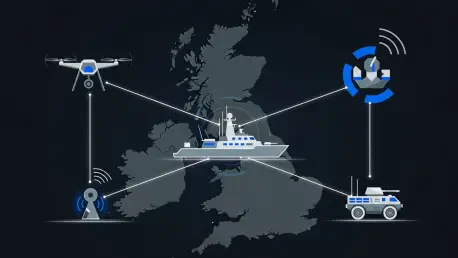
Beyond static bubbles, the shift toward Mobile Ad-hoc Networks (MANET) represents a radical change in how signals are routed across the battlefield. In a MANET configuration, every vehicle, soldier, and uncrewed aerial vehicle acts as a router, creating a self-healing mesh that can dynamically redirect traffic if a primary node is destroyed or jammed. This decentralized approach ensures that the command structure remains intact even when facing a sophisticated adversary. Industry observers point out that this “mesh” philosophy mirrors the resilience of the early internet, adapted for the high-intensity electronic warfare environments of the late 2020s.
However, the proliferation of high-density 5G signals on the battlefield is not without its risks. The very bandwidth that enables high-definition video feeds and AI analytics also creates a significant electronic signature that can be detected by enemy sensors. To counter this, Ericsson and its partners are developing sophisticated electronic camouflage and encryption techniques to minimize the “visibility” of these networks to adversary reconnaissance. The goal is to create a digital environment that is invisible to the enemy but provides a transparent and seamless flow of information for friendly forces, turning connectivity into a hidden advantage rather than a detectable liability.
The Great Vendor Divide: Comparing Ericsson’s Direct Model with Nokia’s Ecosystem Approach
A fascinating dynamic has emerged in the UK defense market regarding the differing business strategies of the world’s leading 5G vendors. Ericsson has notably pursued a “direct channel” strategy, maintaining a direct relationship with the Ministry of Defence to ensure end-user accountability and control over its intellectual property. This approach allows for deeper integration between the military’s specific needs and Ericsson’s research and development pipeline. Proponents of this model argue that it simplifies the supply chain and provides the government with “one throat to choke” if systems fail to perform, a factor that is highly valued in high-stakes national security contracts.
In contrast, Nokia has largely adopted an ecosystem-led approach, often stepping back from direct bidding to partner with established “defense primes” like Lockheed Martin or BAE Systems. This strategy suggests a preference for leveraging the existing military expertise of these giants while providing the underlying 5G technology as a sub-component. While this model may offer higher profit margins by avoiding the administrative complexities of managing massive government frameworks, it potentially limits Nokia’s influence over the final network architecture. This divergence highlights a fundamental debate in the industry: whether a telecommunications giant should act as a lead contractor or a specialized technology supplier within a larger defense consortium.
Strategic analysts suggest that Ericsson’s direct model offers more long-term contract stability and the ability to influence the “digital DNA” of the British Armed Forces more directly. By being embedded within the RM6393 framework as a primary lead, Ericsson can ensure that its roadmap for 5G and 6G development is perfectly aligned with the UK’s defense goals. Conversely, the partner-led model favored by other vendors might allow for more rapid scaling across different global markets, but it lacks the bespoke integration that the Ministry of Defence increasingly demands for its mission-critical projects.
Hybrid Resilience: Balancing High-Tech 5G with Low-Tech Failovers
Despite the immense capabilities of 5G, the UK’s communication strategy recognizes that high-tech systems can be vulnerable to terrain interference or high-end jamming equipment. To address this, a unique synergy is being developed between cutting-edge cellular technology and legacy-style high-frequency (HF) radio. Systems provided by specialized vendors like KNL utilize “ionospheric refraction,” a process where signals are bounced off the Earth’s atmosphere to travel over the horizon without the need for satellites. This hybrid approach provides a vital failover mechanism, ensuring that if a 5G core is compromised or a satellite link is severed, the command structure can still transmit essential orders.
This layering of technologies is often described as “digital sovereignty,” as it reduces the military’s reliance on any single point of failure, including space-based assets that are increasingly targeted in modern conflicts. By combining the massive bandwidth of Ericsson’s 5G with the unbreakable, low-bandwidth reliability of HF radio, the Ministry of Defence is building a communications stack that is as versatile as it is rugged. Technical analysts suggest that the future of military communication is not about finding one “silver bullet” technology, but about managing a complex portfolio of signals that can adapt to the specific constraints of any given environment.
Moreover, the integration of these hybrid systems requires a sophisticated software layer capable of managing “automated failovers.” In practice, this means that a soldier’s device could seamlessly switch from a 5G signal to an HF or satellite link without the user even noticing a disruption in the flow of data. This level of resilience is essential for maintaining the “operational tempo” required to outmaneuver an adversary. By treating communication as an unbreakable ecosystem rather than a series of isolated devices, the UK is positioning its forces to remain connected in even the most contested and degraded environments imaginable.
Strategic Imperatives for Implementing Next-Generation Battlefield Connectivity
For the Ministry of Defence to fully realize the benefits of Ericsson’s technological contributions, it must prioritize the “composable” nature of its digital infrastructure. This involves the widespread adoption of “network slicing,” a technique that allows a single physical 5G network to be divided into multiple virtual lanes. In permanent installations like naval bases or sprawling logistics hubs, these slices can be used to separate routine administrative traffic from highly sensitive combat data, ensuring that critical mission packets are never delayed by lower-priority transmissions. This virtualization of the network provides an additional layer of security, as a breach in one virtual slice does not necessarily grant access to the others.
Furthermore, the implementation of the Procurement Act 2023 introduces a new level of agility into the UK’s defense acquisition process through “dynamic reopening” clauses. These legal mechanisms allow the military to periodically refresh its roster of technologies, swapping in new innovations such as quantum-resistant encryption or advanced drone control protocols without waiting for a decades-long contract to expire. This approach marks a shift from viewing communication hardware as a static purchase to treating it as an evolving software-defined asset. By fostering a competitive environment where both global giants and domestic small-to-medium enterprises can thrive, the MoD ensures that it always has access to the cutting edge of technological development.
Success in this era also requires a significant cultural shift within the Armed Forces, where data literacy becomes as important as traditional combat skills. Commanders at all levels must understand how to leverage the real-time insights provided by these high-speed networks to make faster, more accurate decisions. The ultimate goal is to create a “connected force” where every sensor and every shooter are part of a single, coherent digital organism. By prioritizing interoperability and open standards, the UK is building a foundation that not only serves its current needs but is also ready to integrate with the systems of NATO allies, ensuring a unified front in any multi-national operation.
The Future of Digital Sovereignty in British Defense
The comprehensive reshaping of UK military communications through the integration of Ericsson’s 5G technology marked a decisive end to the era of isolated and hardware-heavy radio systems. The successful implementation of the RM6393 framework demonstrated that data-driven capabilities had become the primary currency of the modern battlefield, shifting the focus from physical platforms to the digital networks that connected them. By fostering a diverse and modular supply chain, the Ministry of Defence avoided the pitfalls of vendor lock-in and created a resilient defense base that was capable of adapting to the rapid technological shifts of the late 2020s. This transformation ensured that the British Armed Forces were equipped not just with better equipment, but with a fundamental information advantage over potential peer adversaries.
The strategy pursued by the government successfully balanced the need for high-bandwidth commercial innovation with the rugged reliability required for frontline combat. The inclusion of specialized technologies like high-frequency radio and mesh networking alongside 5G provided a level of hybrid resilience that became the envy of international partners. This multi-layered approach to connectivity ensured that command and control remained functional even in the face of intense electronic warfare and cyberattacks. As the “2030 threat window” approached, the UK found itself in a position of digital strength, with a sovereign communication infrastructure that was both secure and infinitely scalable.
Ultimately, the move toward a fully integrated digital ecosystem redefined the very nature of military readiness in the British context. The ability to process vast amounts of data at the tactical edge allowed for unprecedented levels of coordination and precision, turning information into a decisive weapon. The lessons learned during this period of modernization provided a blueprint for future defense initiatives, highlighting the importance of agility, modularity, and strategic partnerships. By treating the battlefield as a unified digital environment, the UK established a sustainable and sovereign defense posture that was well-prepared to navigate the complex geopolitical challenges of the decade.