
The residents of California’s rugged West County are currently witnessing a dramatic clash between the necessity of modern connectivity and the abandonment of traditional communication systems. This confrontation centers on the state’s fight to prevent telecommunications giants from walking away from the aging copper networks that have served as a literal lifeline for decades. While major urban centers across the Pacific coast benefit from the rapid expansion of fiber optics and fifth-generation wireless technology, rural communities are facing a precarious transition period that could leave them entirely isolated. The struggle is not merely about achieving faster internet speeds for entertainment or remote work; it is fundamentally about maintaining a reliable link to emergency services in a region where geography often creates natural barriers to signal transmission. As the state government battles to preserve these essential connections, the outcome will likely define the regulatory framework for rural infrastructure management for the rest of the decade.
The Regulatory Debate: Challenging the Carrier of Last Resort
AT&T is aggressively pursuing a legal strategy to be relieved of its long-standing obligations as a “carrier of last resort,” a designation that currently mandates the provision of landline service to every residence within its designated territory. The company argues that these requirements are obsolete remnants of a previous era, claiming that maintaining the decaying copper infrastructure is an inefficient use of resources that could otherwise be invested in advanced digital networks. However, state officials and consumer advocates maintain that abandoning these lines before a comprehensive and reliable alternative exists is a direct violation of the public trust and a threat to communal safety. While federal regulators have offered some flexibility regarding legacy systems, California’s stringent state-level mandates continue to serve as a formidable barrier to the company’s desired pivot away from wireline service. This conflict highlights a growing tension between corporate profitability and the public service duties expected of utility providers.
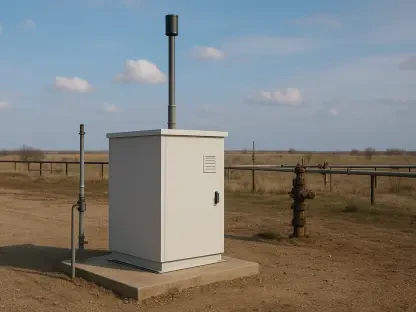
The primary concern among public safety advocates involves the inherent reliability of traditional copper wiring compared to the newer wireless or fiber-optic alternatives during extreme weather events. In Sonoma County, where wildfires and severe storms frequently disrupt the electrical grid, the fact that copper lines carry their own low-voltage power makes them a resilient option when all other systems fail. Conversely, the wireless equipment that AT&T proposes as a replacement is heavily dependent on battery backups that are often designed to last for only a few hours or, at most, a single day. In the event of a prolonged power outage lasting for a week or more, residents in remote areas would be left without any means of contacting emergency personnel or receiving critical evacuation alerts. This disparity in hardware resilience forms the core of the state’s argument that the legacy network must remain operational until the new systems can guarantee the same level of dependability during a crisis.
Local Initiatives: Funding the Path to Rural Connectivity
In response to the perceived hesitation of major telecommunications corporations, local nonprofit organizations such as WiConduit have begun spearheading ambitious efforts to establish community-owned fiber networks. These initiatives have recently received a significant boost from nearly $50 million in grants provided by the California Public Utilities Commission, reflecting a historic state investment in bridging the digital divide. By targeting underserved locations in areas like Forestville and along the rugged Sonoma Coast, these projects aim to bypass the traditional profit-motivated model that has historically ignored low-density rural markets. The goal is to create a sustainable infrastructure that is controlled by the community rather than a distant corporation, ensuring that service quality and accessibility remain the primary objectives. This shift toward localized control represents a broader trend in California where municipalities are increasingly taking infrastructure development into their own hands to secure their economic and social futures.
Despite the substantial financial support provided by the state, these localized projects are currently encountering significant logistical hurdles that have slowed the pace of deployment across the region. The difficult terrain of West County, characterized by dense forests and steep canyons, presents a physical challenge that makes the installation of fiber-optic cables both time-consuming and expensive. While initial plans aimed for the completion of these networks by the middle of the current year, various technical setbacks and budgetary constraints have forced coordinators to extend their timelines toward late 2027. These delays emphasize the inherent difficulties of “last-mile” connectivity, where the cost of reaching a single household can often reach tens of thousands of dollars. As the window for completing these projects narrows, the pressure on local organizers to deliver results has intensified, especially as the existing copper infrastructure continues to degrade and the threat of service termination by major carriers looms closer every month.
Systemic Obstacles: Addressing the Middle-Mile Paradox
Many residents in rural California are currently living through a frustrating paradox where high-capacity fiber-optic cables pass directly by their properties without providing any actual internet service. This situation arises because much of the recent infrastructure investment has focused on “middle-mile” transport, which is designed to move massive amounts of data between major hubs rather than connecting individual homes. This leaves many households in a “digital desert,” literally within sight of the technology they need but unable to access it due to the lack of local distribution equipment. Bridging this gap requires the installation of complex switching systems and individual “drops” to each residence, a process that many large providers find financially unattractive in rural settings. Consequently, the presence of state-of-the-art cables does not automatically translate into improved access for the local population, highlighting the need for more targeted regulatory interventions that prioritize residential connections over transit.
Beyond the physical constraints of the land, several systemic and regulatory barriers continue to impede the rapid expansion of broadband access to the most remote parts of the state. One of the most persistent issues involves the poor condition of existing utility poles, many of which are already overloaded or structurally compromised and cannot support the weight of additional fiber-optic equipment. In many instances, incumbent utility companies have been slow to perform the necessary “make-ready” work, effectively stalling new entrants and non-profit competitors from utilizing existing pathways. Furthermore, some large telecommunications firms have been accused of engaging in “paper competition” by claiming to serve specific geographic blocks on federal maps while offering no actual service to the residents there. This tactic often disqualifies these areas from receiving government grants, as they are technically listed as already served, creating an administrative barrier that prevents funding from reaching those who need it most.
Future Resilience: Strategies for Long-Term Infrastructure Management
As the critical deadline for the potential decommissioning of copper lines in June 2027 approaches, the widening investment gap between urban and rural markets has become increasingly apparent. While AT&T and other major providers have committed billions of dollars toward fiber expansion through 2028, these capital expenditures are almost exclusively directed at densely populated metropolitan areas where the return on investment is guaranteed. This strategic focus leaves rural residents dependent on a precarious mixture of state-level grants and federal subsidies that often remain caught in bureaucratic limbo. The current trajectory suggests that without a significant shift in how rural infrastructure is prioritized, the digital divide will only deepen as urban speeds continue to accelerate while rural connectivity remains stagnant or even regresses. Addressing this disparity required a fundamental reassessment of how broadband is classified, moving it toward a utility model that emphasizes universal access over short-term corporate profitability.
The resolution of the legal challenges and infrastructure hurdles in West County established a vital framework for how rural communities managed their digital transition. Stakeholders recognized that waiting for private corporations to voluntarily upgrade remote areas was an ineffective strategy, leading to the adoption of more aggressive public-private partnerships. State regulators eventually implemented stricter enforcement of build-out requirements, ensuring that legacy systems remained active until new networks achieved verified reliability benchmarks. Future considerations focused on integrating satellite technology as a secondary backup for fiber networks, providing a multi-layered communication safety net that resisted physical damage from natural disasters. By prioritizing community-led initiatives and securing long-term maintenance funding, California pioneered a model that balanced technological progress with the non-negotiable requirement for public safety. These actions ultimately ensured that no resident was left behind in the shift toward a fully digital economy.