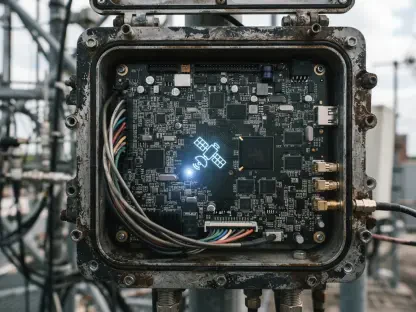

The clatter of industrial machinery and the hum of massive server rooms are gradually being replaced by the silent, efficient pulse of software-defined intelligence that fits within a single server chassis. In the current landscape of enterprise technology, the transition from fragmented hardware to unified digital systems is no longer a luxury but a fundamental requirement for survival. Modern organizations are seeking ways to bridge the gap between simple connectivity and deep, actionable intelligence. Samsung’s Network in a Server (NIS) emerged as a definitive answer to this challenge, offering a streamlined platform that integrates mobile core functions, radio access, and advanced artificial intelligence into a single, high-performance unit. This solution represents a significant leap toward the “all-in-one” infrastructure model, enabling businesses to deploy private networks with unprecedented speed and simplicity.
The Vanishing Hardware Rack and the New Era of Streamlined Connectivity
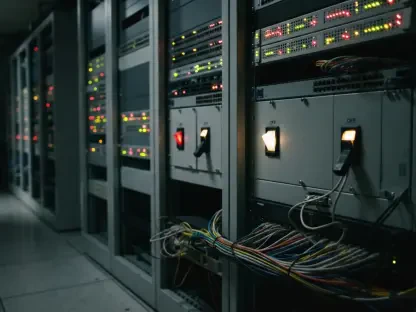
For decades, the standard for corporate network infrastructure required sprawling equipment rooms filled with dedicated hardware for every conceivable task. These environments were characterized by a chaotic web of cabling and massive power requirements that often hindered business agility. However, the emergence of the Network in a Server signaled a departure from this cluttered reality. By condensing the once-massive rack into a compact, software-defined server, enterprises achieved a level of physical efficiency that was previously unimaginable in high-performance networking. This reduction in the physical footprint allowed for more flexible deployment options, making it possible to install robust private networks in spaces where a full data center would be impractical.
The operational benefits of this consolidation extended far beyond simple space savings. By moving toward a virtualized architecture, the system eliminated the need for specialized hardware maintenance for each individual network component. Instead of managing separate boxes for core processing and radio management, IT departments moved toward a unified management interface. This shift not only reduced the complexity of daily operations but also lowered the total cost of ownership by decreasing energy consumption and cooling requirements. The transition to a more streamlined infrastructure stack allowed organizations to reallocate their resources from maintaining legacy hardware to developing innovative, high-value applications that drive growth.
Why Traditional Network Architectures Are Bottlenecking the AI Revolution
As industries attempted to integrate artificial intelligence into their daily workflows, legacy network designs became a primary obstacle. Traditional architectures typically relied on backhauling data to a centralized cloud for processing, a method that introduced significant latency. In an era where a millisecond delay can disrupt a robotic assembly line or cause a security sensor to miss a critical event, the round-trip time of cloud computing became unacceptable. The bottleneck was not just the speed of the connection but the physical distance between the data generation point and the processing unit. High-bandwidth tasks, such as real-time 4K video analytics, quickly saturated existing pipes, leading to dropped frames and unreliable insights.
Moreover, the fragmented nature of older systems prevented the seamless flow of information required for sophisticated AI algorithms. Data often became trapped in “silos,” where the network hardware could not communicate effectively with the applications running on top of it. This lack of integration meant that businesses could not leverage the full power of their data in real-time. To solve this, a shift toward edge computing became necessary. By processing data locally on the same server that manages the network, the NIS removed the latency barrier, providing the raw computational power needed for the “AI Revolution” to take hold within the enterprise walls.
Consolidating the Infrastructure Stack Through Virtualized Edge Computing
The technical foundation of the NIS relied on the sophisticated virtualization of the entire telecommunications stack. By utilizing a virtualized Radio Access Network (vRAN) and a virtualized Core, the platform effectively transformed hardware functions into agile software applications. This architectural shift allowed the system to host both network operations and high-performance computing on the same physical hardware. The integration of high-tier CPUs and GPUs directly into the server ensured that the network was not just a pipe for data but a powerful processing hub. This convergence of communication and computation allowed for a more dynamic allocation of resources, where processing power could be shifted between network management and AI tasks as demand fluctuated.
Furthermore, this integrated approach enhanced the reliability of the system through better hardware-software synergy. When the network and the applications share the same environment, the system can optimize traffic flow with microscopic precision. For instance, critical safety data from a robotic sensor can be prioritized over standard office traffic with zero overhead. This level of control is achieved through a hardware-software co-design that maximizes the throughput of the underlying silicon. By eliminating the middleman of external transport layers, the virtualized edge computing model provided a stable and predictable environment for the most demanding enterprise applications, from autonomous logistics to real-time industrial monitoring.
Transforming Retail and Industry with Intelligent Analytics and Robotic Synergy
The retail sector witnessed a radical transformation as the NIS turned standard surveillance cameras into proactive, intelligent sensors. Instead of simply recording footage for retrospective review, the system began analyzing video feeds in real-time to detect safety hazards and operational inefficiencies. Integrated AI algorithms became capable of identifying smoke for early fire detection or spotting unattended packages in high-traffic zones, alerting staff before a minor issue became a crisis. This shift from passive observation to active intervention empowered retail managers to improve safety standards while simultaneously optimizing the customer flow through data-driven insights into shopper behavior and store layout performance.
In the industrial and logistics sectors, the low-latency connectivity of the NIS facilitated a new level of human-robot interaction. Autonomous mobile robots and robotic arms gained the ability to exchange data with the network in milliseconds, ensuring they could navigate dynamic environments safely. If a human worker stepped into the path of a moving robot, the onboard AI, supported by the edge server, triggered an immediate pause to prevent accidents. Once the path was clear, the robot resumed its duties without manual intervention. This synergy between high-speed automation and human safety created a “smart” environment where productivity and security were no longer mutually exclusive, but rather mutually reinforcing.
A Practical Framework for Deploying Integrated Sensing and XR-Ready Systems
The future of professional training and corporate collaboration moved toward immersive technology, supported by the high bandwidth of the NIS platform. Extended Reality (XR), encompassing both Augmented and Virtual Reality, required a network capable of delivering massive amounts of data without the lag that causes motion sickness. Samsung’s solution provided the necessary infrastructure for AR glasses that overlaid critical project data or safety instructions onto a worker’s field of vision. This allowed for vision-guided assistance in complex manufacturing tasks and real-time data visualization during business meetings. By providing a stable, XR-ready environment, the NIS enabled enterprises to adopt immersive tools that improved both educational outcomes and employee productivity.
Beyond visual technologies, the introduction of Integrated Sensing and Communication (ISAC) repurposed radio signals to act as spatial sensors. This allowed the network to detect the movement and location of objects without relying on cameras or external hardware, acting as a secondary layer of environmental awareness. In logistics, this meant the system could track the path of goods and vehicles with extreme precision, even in blind spots. In summary, Samsung’s Network in a Server provided an objective solution to the complexities of digital transformation. It successfully streamlined redundant infrastructure, reduced operational overhead, and empowered businesses to activate AI capabilities with minimal friction. The platform’s versatility across retail, manufacturing, and logistics underscored a future where private networks served as the backbone of both physical safety and operational efficiency. Organizations that adopted these integrated systems found themselves better positioned to navigate the demands of a hyper-connected, data-driven global economy.