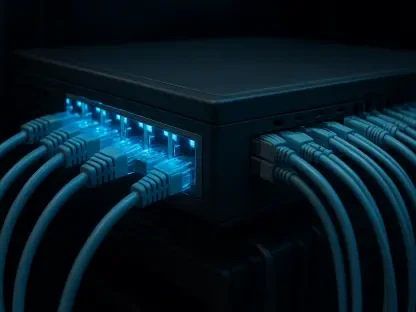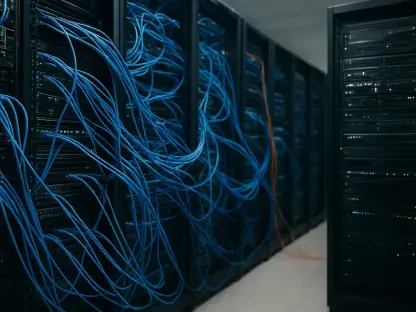

Current industry solutions like Nvidia’s NVLink and high-speed InfiniBand protocols are often limited by the physical performance floor of traditional glass fiber cables. Relativity Networks recently secured $22 million in funding to address this specific bottleneck by commercializing hollow-core fiber technology. As large-scale artificial intelligence models grow in complexity, the infrastructure supporting them must evolve beyond the constraints of solid glass cores. Standard fiber optic cables rely on silica, which inherently slows down the speed of light by approximately 31 percent. In contrast, hollow-core fiber utilizes air-filled channels to allow signals to travel at nearly the vacuum speed of light. This advancement represents a major shift for data centers where even microsecond delays translate into millions of dollars in lost efficiency. The fresh capital allows the startup to bridge the gap between experimental physics and the rigorous demands of high-density computing environments today. By targeting the physical layer of the network, the company aims to provide a 30 percent improvement in transmission speed, offering a much-needed reprieve for hyperscale operators struggling with the latency issues inherent in modern generative AI workloads.
The Physics of Air: Why Material Science Matters
The transition to hollow-core fiber is more than a simple incremental upgrade; it is a fundamental reimagining of how data travels across distances. Traditional cables are composed of a solid glass core where light bounces through a dense medium, a process that inevitably introduces signal degradation and latency. Hollow-core fiber, however, employs a complex internal structure often resembling a honeycomb or a series of concentric tubes to guide light through a central void. This architectural change means that photons encounter far fewer atoms, reducing the refractive index and allowing data to move significantly faster than in any previous iteration of fiber technology. For high-frequency trading platforms and massive neural network clusters, this reduction in time-of-flight latency provides a competitive edge that software optimizations alone cannot achieve. Relativity Networks is focusing its efforts on refining this manufacturing process to ensure that these air-filled channels remain stable under the intense thermal conditions of a modern server room.
In the current landscape of AI development, the interconnect has become just as critical as the compute power itself. When thousands of GPUs are synchronized to train a single model, the entire system is only as fast as its slowest communication link. If a signal takes too long to travel between racks, expensive processing units sit idle, waiting for the data packets required to continue the next cycle of computation. By integrating hollow-core fiber into the back-end fabric of these superclusters, Relativity Networks provides a way to maximize the utilization of existing hardware investments. This physical layer breakthrough directly addresses the tail latency problems that often plague large-scale distributed systems. Furthermore, because light traveling through air interacts less with the surrounding material, these cables can potentially handle higher power levels and a broader spectrum of light. This capability opens the door for even more sophisticated wavelength-division multiplexing techniques, effectively increasing the total bandwidth available.
Scaling Infrastructure: From Pilot Testing to Global Adoption
Transitioning from a successful laboratory demonstration to a multi-kilometer data center deployment involves overcoming significant engineering hurdles. Hollow-core fiber is notoriously difficult to handle compared to its solid-core predecessors; it is more sensitive to bending and requires specialized termination techniques to prevent dust or moisture from entering the air channels. Relativity Networks is utilizing its recent $22 million investment to develop proprietary connectors and automated splicing tools that simplify the installation process for technicians. These innovations are essential for gaining traction among hyperscale cloud providers who prioritize uptime and ease of maintenance above all else. Beyond the physical handling, the company must also prove the long-term reliability of these cables over a multi-year lifecycle. Environmental factors such as vibration and temperature fluctuations can affect the delicate internal structures of the fiber, necessitating rigorous stress testing during the current validation phase.
To effectively integrate this technology, infrastructure leaders conducted thorough audits of their current cabling topologies to identify latency hotspots. They recognized that upgrading to hollow-core fiber required not just new hardware, but a fundamental shift in how network performance was measured across the stack. Technical teams focused on establishing rigorous benchmarking protocols that accounted for the 30 percent reduction in signal delay, allowing for more precise synchronization in distributed GPU clusters. Collaborative efforts between industry stakeholders led to the initial drafting of safety and performance standards specifically for air-filled optical mediums. These initiatives provided a clear roadmap for mass adoption, ensuring that the benefits of reduced latency were accessible across a wide range of hardware platforms. By addressing the physical constraints of the fiber core, the industry moved toward a more resilient and efficient future, where the speed of light finally dictated the pace of innovation rather than the limitations of glass.