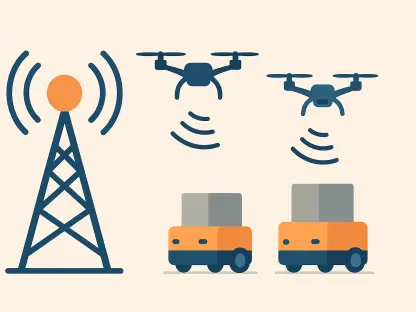

Autonomous robots tasked with repetitive and physically exhausting duties are now operating under a dedicated 5G spectrum to improve safety and efficiency in urban construction. This transition marks a significant milestone in Taiwan’s industrial digitalization, moving beyond mere experimentation into full-scale site deployment. The deployment utilizes a specialized 5G private network infrastructure that operates on the n79 frequency band, which is specifically reserved for industrial and private use to avoid interference with public cellular traffic. This dedicated lane ensures that high-bandwidth data from high-definition cameras and depth sensors can be transmitted with sub-ten-millisecond latency. By eliminating the lag traditional wireless systems suffer from, the project allows for instantaneous remote monitoring and precise control over heavy machinery. This technological leap addresses the chronic labor shortage while maintaining high standards of structural integrity. Builders now rely on these systems to establish a robust communication umbrella over job sites where cabling is impossible.
Network Infrastructure: The Backbone of Mobile Sites
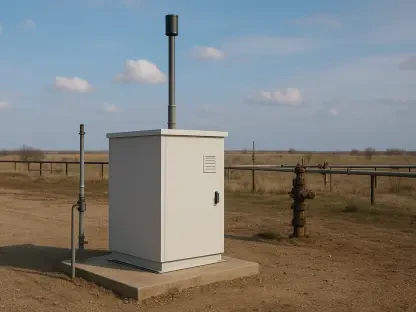
The core of this innovation lies in the portability of the 5G base stations, which can be deployed and recalibrated as a building rises from its foundation to the penthouse. Unlike fixed telecommunications towers, these compact units are designed to move with the work crews, ensuring that the signal penetrates thick concrete walls and steel reinforcements that typically degrade wireless connectivity. These portable stations utilize a distributed antenna system to maintain a seamless mesh network across multiple floors. This ensures that an autonomous rover transporting heavy materials from a loading dock to a specialized assembly area never loses its positioning data. The integration of edge computing within these portable units allows for localized data processing, which means the massive amounts of visual information generated by the robots do not need to travel to a distant cloud server. Consequently, the system can react to sudden obstacles or human presence in a fraction of a second, reducing the risk of workplace accidents.
Beyond simple connectivity, the 5G private network enables a level of multi-robot coordination that was previously unattainable on traditional Wi-Fi or 4G bands. On a typical high-rise project, various specialized robots now work in concert, with painting units following closely behind drywall finishers in a choreographed sequence managed by a centralized AI orchestrator. This synchronization requires constant, high-speed telemetry updates to prevent collisions and ensure that each unit is performing its task according to the most recent architectural revisions. The bandwidth provided by the n79 spectrum allows these machines to upload real-time 3D scans of the workspace, creating a living digital twin of the construction site. Project managers can then compare this live data against original Building Information Modeling files to detect deviations or structural flaws before they become costly to repair. This proactive error detection is only possible because of the network capacity to handle simultaneous lidar data.
Strategic Evolution: Safety and Operational Standards
The implementation of autonomous systems under a 5G umbrella has fundamentally reshaped the safety profile of the modern construction site. By delegating high-risk activities like exterior glass installation and hazardous chemical spraying to robots, firms have significantly lowered their insurance premiums and workplace injury rates. These machines are equipped with advanced environmental sensors that monitor air quality and structural stability, feeding this data back to a safety dashboard in real-time. If a hazardous condition is detected, the 5G network facilitates an instantaneous site-wide alert, pausing all automated operations and notifying human supervisors immediately. Moreover, the efficiency gains contribute to a reduction in material waste, as precision-guided robots apply coatings and adhesives with mathematical accuracy. This level of control minimizes the environmental footprint of the project, aligning with broader green building initiatives. This shift protects human workers from physical strain while creating new high-tech roles for managing and maintaining the robotic fleet.
To fully capitalize on these advancements, industry leaders moved toward standardizing the integration of private 5G protocols across all new large-scale developments. Stakeholders focused on developing modular robotic platforms that could be easily swapped or upgraded based on the specific requirements of a project phase. This approach required a shift in procurement strategies, where the digital infrastructure became as essential as the structural steel. Educational programs were established to retrain the existing workforce in the oversight of automated systems, ensuring that human expertise remained central to the decision-making process. Policymakers simplified the licensing for n79 spectrum usage, allowing smaller contractors to access the same high-speed benefits as major developers. Collaboration between telecommunications providers and robotics manufacturers led to the creation of turnkey solutions that reduced technical barriers. These actions ensured that the industry underwent a digital transformation that balanced technological power with safety.