
The transition from silicon-dependent ground facilities to high-altitude orbital processing represents a fundamental shift in how the global economy manages the massive computational requirements of artificial intelligence. As generative AI models grow exponentially in complexity, the traditional brick-and-mortar data centers that have anchored the internet for decades are beginning to show signs of structural and environmental fatigue. This evolution is not merely a flight of fancy for aerospace enthusiasts but a calculated response to the physical constraints of Earth, where land, power, and water are becoming increasingly scarce and expensive. Major technology conglomerates and agile startups are now pivoting their long-term infrastructure strategies toward the stars, viewing the vacuum of space as a vast, untapped resource for thermal management and energy harvesting. The race to establish these orbital outposts is fueled by the realization that the Fourth Industrial Revolution requires a scale of computing that may no longer be sustainable within the confines of our atmosphere. While the debate over whether this represents a true paradigm shift or an elaborate industry trend continues to simmer, the sheer volume of capital being deployed into space-based hardware suggests that the era of extraterrestrial data processing has arrived.
Navigating the Constraints of Terrestrial Infrastructure
Land Scarcity and Power Grid Limitations
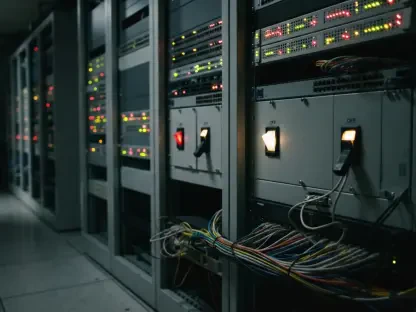
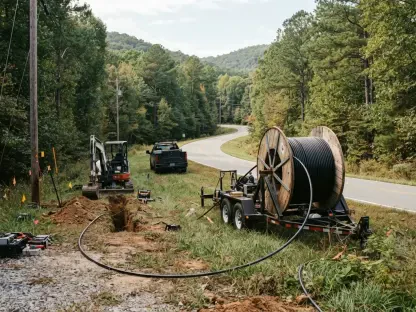
The physical footprint required for modern hyperscale data centers has reached a critical threshold, leading to a significant shortage of suitable land in established technological hubs like Northern Virginia and Dublin. Local governments and communities are increasingly vocal in their opposition to new developments, citing the massive land clearing involved and the subsequent displacement of local ecosystems or residential zones. These facilities often require hundreds of contiguous acres to accommodate the server halls, substations, and backup generation units necessary for 24/7 operations. In many instances, the legal and administrative hurdles to secure zoning permits have extended development timelines by several years, creating a massive backlog in capacity at a time when the demand for AI training is accelerating. Consequently, the industry is looking upward, recognizing that space offers an infinite expanse where land use conflicts and terrestrial zoning restrictions are non-existent, allowing for the deployment of massive computing clusters without infringing on local community interests or natural habitats.
Simultaneously, the energy demands of high-performance computing are placing an unprecedented strain on aging power grids that were never designed to support such concentrated electrical loads. Projections for 2026 indicate that the energy consumption of AI-dedicated facilities will continue to climb, potentially doubling or tripling by 2028 as more sophisticated models enter the market. Terrestrial grids are already struggling to balance the requirements of industrial growth with the basic needs of residential consumers, leading to moratoriums on new data center connections in several major metropolitan areas. This energy crisis is further complicated by the global transition toward renewable sources, which often lack the steady, baseload reliability that data centers require. Moving compute loads into orbit bypasses these terrestrial grid dependencies entirely, as satellites can harvest solar energy directly without atmospheric interference or the intermittent nature of ground-based solar farms. This shift allows for a more stable and scalable power model that does not compete with the energy needs of local populations or destabilize existing utility infrastructures.
Water Consumption and Environmental Solutions
The environmental impact of terrestrial data centers extends far beyond energy use, particularly regarding the millions of gallons of water required daily for evaporative cooling systems. In regions already grappling with seasonal droughts or long-term water scarcity, the operation of a single hyperscale facility can consume as much water as a small city, leading to significant ecological and political friction. As liquid-to-chip cooling becomes more common to handle the heat of dense GPU clusters, the reliance on local water supplies has become a major operational risk and a reputational liability for tech companies. By relocating these heat-intensive processes to the vacuum of space, the industry can eliminate the need for water-based cooling altogether. In an orbital environment, thermal management is achieved through radiative cooling, where heat is shed directly into the cold expanse of space via specialized surfaces. This provides a sustainable alternative that preserves precious terrestrial freshwater resources for agricultural and domestic use, aligning corporate AI goals with broader environmental conservation efforts.
Furthermore, the transition to orbital infrastructure addresses the growing pressure to reduce the carbon footprint associated with terrestrial construction and maintenance. Building massive concrete structures on Earth involves significant carbon emissions, from the production of materials to the heavy machinery used during assembly. In contrast, while the launch phase of a satellite involves its own set of emissions, the long-term operation of an orbital data center is powered by 100% clean solar energy with no ongoing carbon output for cooling or grid-based electricity. This creates a cleaner operational lifecycle that benefits from the constant, unfiltered radiation of the sun, which is significantly more efficient than solar panels positioned beneath the Earth’s atmosphere. This direct access to energy combined with the elimination of water waste positions space-based computing as a key component of the next generation of green technology. As organizations strive to meet ambitious sustainability targets by 2030, the move to space offers a practical path to scaling AI capabilities without exacerbating the environmental crises currently facing the planet.
The Economic Viability and Engineering Realities of Orbit
Shifting from Operational to Capital Expenditures
The economic logic supporting the transition to orbital data centers is rooted in a fundamental shift from high recurring operational costs to high upfront capital investments. On Earth, data center operators are burdened by perpetual utility bills, property taxes, and the expensive maintenance of complex physical cooling infrastructures and security personnel. These operational expenses, or OPEX, are subject to the volatility of global energy markets and local regulatory changes, making long-term financial forecasting difficult. By moving into orbit, companies can reduce their ongoing operational costs by an estimated 97%, as the primary resources for compute—power and cooling—are essentially free and infinite in the space environment. Although the initial capital expenditure, or CAPEX, required for specialized hardware and launch services is substantial, the long-term savings on utility and maintenance overhead provide a compelling return on investment that terrestrial facilities can no longer match as grid prices continue to rise through 2027 and beyond.
Bypassing the bureaucratic delays associated with ground-based infrastructure provides another significant economic advantage that is often overlooked in initial cost-benefit analyses. Terrestrial projects frequently face multi-year setbacks due to grid synchronization requirements, environmental impact studies, and local political maneuvering, all of which delay the time-to-market for critical AI services. In the fast-paced world of generative AI, a delay of two or three years can result in a massive loss of market share and technological relevance. Space-based deployments, while complex, follow a more predictable timeline dictated by launch schedules and satellite production rather than local land-use disputes. Once a satellite cluster is successfully placed in orbit, it begins operating at peak efficiency almost immediately, without the need for the gradual ramp-up often required for massive ground facilities. This agility allows technology providers to deploy and scale their AI infrastructure at the speed of global demand, ensuring they remain competitive in a landscape where computational capacity is the primary currency of success.
Overcoming Hostile Orbital Conditions
Despite the attractive economics, the engineering challenges of maintaining high-performance hardware in space are formidable and require a complete reimagining of computer architecture. Unlike terrestrial servers that sit in climate-controlled rooms, orbital hardware must withstand the intense bombardment of high-energy radiation and the extreme thermal cycles of the space environment. Radiation can cause bit flips and memory errors, known as Single Event Upsets, which could be catastrophic for sensitive AI training or financial data processing. To mitigate these risks, engineers are developing radiation-hardened components and redundant software architectures that can detect and correct errors in real-time. These systems must be significantly more resilient than their ground-based counterparts because there is no opportunity for a technician to replace a faulty part once the unit is in orbit. This necessity for extreme reliability has led to a surge in innovation within the semiconductor industry, focusing on materials like silicon carbide and gallium nitride that can survive the harsh realities of the vacuum.
Thermal management in space presents its own set of unique engineering hurdles, as there is no air to conduct heat away from the processors. In a terrestrial setting, fans and liquid cooling loops transfer heat to the surrounding environment, but in space, radiation is the only available mechanism for heat dissipation. This requires the use of massive deployable radiators and advanced phase-change materials to keep the server clusters within their optimal operating temperature range. Additionally, the constant cycling between the freezing shadow of the Earth and the intense heat of direct sunlight causes material fatigue that must be addressed through sophisticated structural engineering. Hardware must be designed to expand and contract without losing structural integrity or electrical connectivity over a lifespan that can span a decade or more. The result is a specialized class of “space-native” hardware that is far more durable and self-sufficient than anything found in a traditional data center, marking a new era of engineering excellence that prioritizes longevity and autonomous error correction.
Strategic Applications and the Future Roadmap
The Bandwidth Gap and Processing Specialization
One of the most significant technical hurdles currently facing orbital data centers is the disparity between the internal processing speeds of the servers and the communication bandwidth available to transfer data to and from Earth. Terrestrial data centers utilize ultra-fast fiber-optic interconnects that allow for the nearly instantaneous movement of massive datasets required for training large language models. In contrast, even the most advanced satellite laser communication links are currently limited by the physics of atmospheric interference and the immense distances involved, creating a bottleneck that makes large-scale model training difficult in orbit. Because of this bandwidth gap, the immediate future of space-based computing lies in specialized applications rather than a total replacement of ground-based training hubs. The focus is shifting toward “Inference at the Edge,” where AI models are deployed in orbit to process data locally, allowing for real-time analysis of satellite imagery and sensor data without the need to transmit raw, uncompressed files back to the ground.
By processing data at the source, orbital data centers can significantly reduce the latency and cost associated with space-to-ground communication, delivering only the most relevant insights to end-users. This specialization is particularly valuable for industries such as maritime logistics, environmental monitoring, and global defense, where immediate decision-making is critical. For instance, an orbital AI cluster can analyze thousands of square miles of ocean to identify illegal fishing or oil spills, sending a tiny, compressed alert to authorities instead of a massive, multi-gigabyte image file. This approach maximizes the utility of limited bandwidth and allows for more efficient use of the computing power available in orbit. As laser communication technology matures and the density of satellite constellations increases, the bandwidth gap is expected to narrow, eventually allowing for more complex tasks. However, for the next several years, the strategic advantage of space-based compute will remain centered on its ability to act as a high-speed filter for the torrent of data generated in orbit.
Data Sovereignty and Industry Timelines
The rise of orbital data centers is also being driven by the increasingly complex landscape of data sovereignty and international privacy regulations. Many nations have enacted strict residency laws that require sensitive data to remain within their physical borders, which complicates the operations of global cloud providers who must navigate a patchwork of conflicting legal frameworks. Orbital vaults provide a unique solution to this problem by positioning data in a neutral or internationally recognized space jurisdiction that is physically unreachable for most terrestrial adversaries. This creates a new category of “Data Embassies” in orbit, where high-value information can be stored and processed with a level of security and sovereign independence that is impossible to achieve on the ground. For corporations and governments dealing with high-stakes intellectual property or national security information, the physical isolation of space offers the ultimate “air gap” against unauthorized access and terrestrial legal disputes.
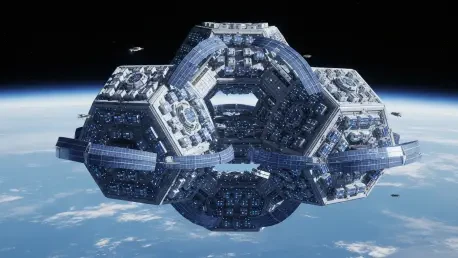
Looking toward the early 2030s, the roadmap for orbital infrastructure suggests a phased transition from experimental micro-centers to fully functional hyperscale clusters. The current era, starting in 2026, is defined by small-scale demonstrations and the validation of radiation-hardened hardware in Low Earth Orbit. As launch costs continue to plummet due to the increased frequency of heavy-lift rocket flights, the economic barrier to entry will lower, allowing for larger and more capable computing platforms. By the end of this decade, the integration of orbital and terrestrial networks will likely become seamless, with space-based assets serving as a vital layer of the global AI economy. This hybrid model will allow organizations to balance the high-speed training capabilities of ground-based centers with the sustainable, secure, and source-proximate processing power of orbital facilities. The evolution toward this multi-planetary computing architecture is now inevitable, as the industry recognizes that the future of artificial intelligence cannot be contained by the physical limits of a single planet.
The technology sector eventually concluded that the expansion of artificial intelligence required a radical departure from traditional terrestrial infrastructure models. By the late 2020s, the most forward-thinking organizations had already begun integrating orbital assets into their core computational strategies to bypass the constraints of land and power. This transition demonstrated that the vacuum of space was not an obstacle but a solution to the cooling and energy challenges that once threatened to stall the growth of generative models. Industry leaders emphasized the importance of developing specialized, radiation-hardened software and prioritizing inference-based workloads to manage the limitations of satellite bandwidth. These steps allowed for the creation of a more resilient and environmentally conscious digital ecosystem that was less dependent on the fragile resources of Earth. As the infrastructure matured, it became clear that the most effective way to secure a competitive advantage in the AI era was to embrace the unique physical properties of the orbital environment. This shift ultimately redefined the boundaries of the digital economy and established a new standard for sustainable, high-performance computing on a planetary scale.