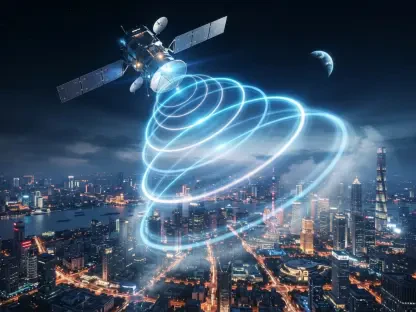

The recent surge in telecommunications infrastructure complexity has reached a point where manual management is no longer feasible for global providers aiming to maintain peak performance. During the DTW Ignite 2026 conference, NVIDIA introduced a suite of autonomous AI agents that promise to redefine the operational standards of modern connectivity. This development marks a transition from human-led automation to a model where the network manages its own lifecycle, encompassing everything from initial provisioning to complex fault resolution. As 5G matures, the demand for low-latency responses and high reliability has forced a move away from traditional methods that rely on human oversight. These AI agents are designed to sit within the core of the network, observing patterns and executing corrections in microseconds. By removing the latency of human decision-making, providers can ensure that services remain uninterrupted even as traffic spikes or hardware begins to degrade. This shift represents a broader industry trend toward sovereign, self-healing systems.
Redefining Network Operations with Independent AI
The Evolution: From Assistance to Autonomy
For several years, the telecommunications sector has utilized basic automation to handle repetitive administrative tasks such as ticket management and configuration updates. These early systems functioned primarily as assistants, requiring a human expert to validate data and provide the final approval for any significant changes. However, as 2026 progresses, the sheer scale of 5G deployments has rendered this collaborative model insufficient for real-time demands. NVIDIA’s autonomous agents differ from these legacy “copilots” because they possess the agency to act independently without waiting for a manual trigger. They process telemetry data directly from the edge and core, identifying anomalies that a human eye might miss across thousands of simultaneous data streams. This level of autonomy allows for a dynamic network that adapts to localized failures or congestion by rerouting traffic instantly. Consequently, the role of the network engineer is shifting toward high-level strategy rather than routine maintenance tasks.
Precision Control: Predictive Analysis and Real-Time Orchestration
The implementation of these autonomous operators addresses a critical bottleneck where human reaction times were becoming the primary cause of service delays. Traditional automation scripts were often rigid, failing when faced with scenarios that fell outside their pre-programmed parameters. In contrast, these new AI agents utilize advanced machine learning models to understand the context of network behavior, allowing them to solve novel problems on the fly. By integrating deep learning directly into the orchestration layer, NVIDIA provides a system that learns from every interaction, becoming more efficient with each corrective action it takes. This orchestration goes beyond simple logic, involving complex chains of reasoning that ensure a change in one part of the network does not negatively impact another. As networks become more virtualized and software-defined, the ability to manage these layers through intelligent agents becomes a prerequisite for operational stability. This transformation is not merely a technical upgrade but a necessary evolution for global digital resilience.
Economic Pressures and the Trust Barrier
Operational Efficiency: Managing Labor Shortages and Costs
The financial burden of maintaining massive 5G networks, combined with a persistent shortage of specialized talent, has created an urgent need for more efficient management solutions. High operational expenditures often stem from the need for around-the-clock monitoring by engineering teams who are increasingly difficult to recruit and retain in a competitive market. By deploying autonomous agents to manage tier-1 and tier-2 operations, telecommunications companies can achieve significant cost savings while maintaining high service levels. These systems can scale to manage millions of network nodes without a corresponding increase in headcount, allowing operators to expand their reach into new regions more aggressively. The ability to automate complex diagnostics and repairs means that fewer on-site technicians are required for routine issues, which optimizes the use of human resources for high-priority projects. This shift allows providers to focus their capital on infrastructure expansion and innovation rather than just keeping the lights on.
System Safety: Overcoming Risks with Explainable AI
Handing over control to an autonomous system requires a high level of trust, especially in a sector where connectivity is essential for emergency services and economic stability. To address these concerns, NVIDIA has integrated “explainability” into its AI platform, ensuring that every action taken by an agent can be traced and understood by human supervisors. This transparency is vital for meeting regulatory requirements and for ensuring that the system does not enter a feedback loop that could lead to widespread outages. If an agent decides to shut down a piece of hardware or reroute a massive amount of traffic, it must be able to provide the underlying logic for that decision in a human-readable format. This focus on clarity helps bridge the trust gap between human operators and machine intelligence, providing a safety net for mission-critical operations. By creating a transparent framework, the industry can move toward full autonomy without sacrificing the oversight necessary to prevent catastrophic systemic failures.
Strategic Competition and Future Applications
Market Strategy: NVIDIA’s Expansion Into Enterprise Software
This strategic move by NVIDIA underscores a broader ambition to transition from a hardware-centric company to a dominant force in the enterprise AI software market. By combining high-performance computing hardware with specialized software designed for the telecom industry, NVIDIA is challenging the dominance of traditional cloud providers in the networking space. This vertical integration provides a unique advantage, as the software is specifically optimized to run on the underlying silicon, resulting in lower latency and higher processing efficiency. Telecommunications providers are increasingly looking for integrated solutions that can handle the massive data throughput of 5G without needing to piece together disparate components from different vendors. As NVIDIA expands its footprint into this sector, it sets a precedent for how technology companies can provide end-to-end intelligence layers for specific industries. This strategy not only diversifies their revenue streams but also positions them as a foundational partner for the next generation of global infrastructure.
Global Implementation: Proving Grounds for Critical Infrastructure
Industry leaders recognized that the success of these autonomous agents in telecommunications would eventually serve as a definitive blueprint for other sectors requiring high reliability. If these systems proved they could manage the complexities of a global 5G network, their application in energy grids, manufacturing hubs, and logistics chains became a natural progression. Moving forward, organizations prioritized the development of standardized protocols for AI interaction to ensure interoperability across different network vendors. The deployment of these agents required a fundamental rethink of cybersecurity, shifting the focus toward protecting the intelligence layer itself from adversarial manipulation. Experts suggested that the next phase involved the integration of these agents into decentralized edge computing environments to further reduce response times. By addressing the trust barrier through transparent logic, providers successfully integrated AI into the core of their operations. This transition ultimately paved the way for a more resilient and self-sustaining global infrastructure.