
The sheer volume of data generated by modern generative models has finally pushed existing telecommunications architecture to its absolute breaking point. While coastal cities historically dominated the data landscape, the shift toward intensive machine learning workloads necessitated a fundamental rethink of how information traverses the continent. This shift culminated in the Heartland Fiber Project, a massive seven hundred million dollar investment designed to overhaul the infrastructure connecting the American Midwest and Mountain West. By deploying two thousand miles of high-capacity fiber optic cabling, this initiative does more than just speed up internet connections; it establishes the physical backbone required for the next phase of global computational evolution. The project represents a proactive attempt to eliminate the bottlenecks that currently stifle real-time data processing and large-scale model training. As organizations increasingly rely on remote high-performance computing, the reliability of these long-haul pathways becomes the primary determinant of success in the digital economy.
Collaborative Infrastructure: A Unified Vision for Connectivity
This ambitious undertaking is not the work of a single telecommunications giant but rather a strategic partnership between three regional powerhouses: DCN, Range, and WIN Technology. By pooling their resources and technical expertise, these providers are constructing a network that offers a level of redundancy and throughput that was previously unattainable for independent operators. The project involves the installation of high fiber count cables and future-proof conduit paths designed to remain relevant for several decades. This collaborative model allows for a more efficient deployment of capital and ensures that the infrastructure serves a wide variety of stakeholders, from local government agencies to multinational corporations. Building on this foundation, the partners have prioritized network resiliency to prevent service disruptions that could cause catastrophic failures in sensitive artificial intelligence environments. The resulting system acts as a high-speed arterial road for data, moving vast quantities of information with minimal interference or signal degradation across rugged and diverse terrains.
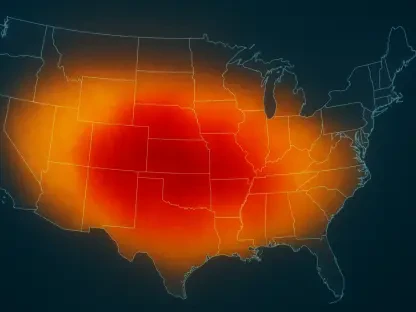
The route itself spans seven critical states, including Colorado, Wyoming, Montana, North Dakota, Minnesota, Wisconsin, and Illinois, effectively bridging the vital corridor between Denver and Chicago. This specific geography is significant because it links the growing tech hubs of the Mountain West with the established industrial and financial centers of the Great Lakes region. By providing a direct, high-capacity link, the Heartland Fiber Project reduces the number of hops data must take, which inherently lowers latency—a critical metric for any application involving real-time decision-making. Moreover, this expansive footprint brings state-of-the-art connectivity to historically underserved rural areas, fostering a more equitable distribution of technological resources. This approach naturally leads to a revitalization of regional industries, as sectors like agriculture and manufacturing can now leverage cloud-based analytics without the limitations of legacy copper or low-bandwidth satellite connections. The integration of these states into a unified digital ecosystem creates a formidable competitor to traditional coastal tech corridors.
Industrial Transformation: Sustaining the Hyperscale Expansion
The primary driver behind this massive construction effort is the rapid proliferation of hyperscale data centers, which are increasingly migrating toward the nation’s interior. These massive facilities require immense amounts of land and reliable power grids, both of which are more readily available in the heartland compared to the saturated markets of Northern Virginia or Silicon Valley. Furthermore, the cooler climate of the Upper Midwest offers a natural advantage for energy efficiency, as it significantly reduces the costs associated with cooling the high-performance hardware used in machine learning training. This project serves as the necessary plumbing to support these energy-intensive environments, ensuring that the data generated and processed within these centers can reach global end-users without delay. Without the robust fiber connections provided by this initiative, the potential of these data centers would be severely capped by the physical limitations of existing network egress. Consequently, the fiber project is as much an energy and land-use play as it is a telecommunications upgrade.
Beyond supporting the tech sector, this infrastructure was designed to facilitate the digital transformation of foundational industries like healthcare, finance, and logistics. For instance, remote surgical applications and advanced medical imaging require instantaneous data transfer that only high-capacity fiber can provide reliably. Similarly, financial institutions in Chicago and Denver can utilize this low-latency path to execute complex algorithmic trades or manage global risk models with higher precision. The project moved beyond the simple goal of providing internet access to creating a versatile platform for innovation across the entire economic spectrum. Leaders from the participating firms successfully implemented a strategy that balances the immediate needs of hyperscale operators with the long-term goal of fostering regional economic resilience. As construction progressed from the current period through the following years, the focus remained on delivering a network that could adapt to future technological shifts while maintaining peak performance. This proactive investment eventually solidified the Midwest’s position as an indispensable hub for the global data economy.