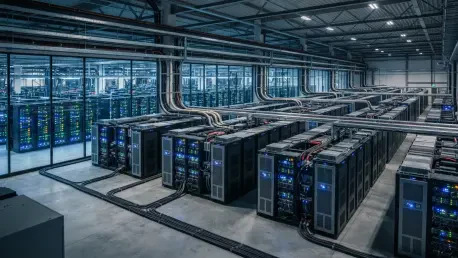

Traditional power grids often lack the response speed required to buffer the extreme frequency and voltage excursions caused by modern AI workloads. As the computing landscape shifts toward massive large language model training and real-time inference, the once-predictable energy consumption patterns of data centers have vanished. Facilities that used to draw steady baseload power now experience violent swings in demand that can destabilize local utility networks. This volatility stems from the nature of high-density GPUs and specialized accelerators, which consume power in bursts depending on the complexity of the task being processed. To prevent grid collapse and ensure internal hardware reliability, the industry is forced to reconsider the role of energy storage. No longer a dormant insurance policy, battery systems are becoming the primary stabilizers of the digital economy. This evolution is not just a technical necessity but a economic imperative for operators facing strict grid constraints and rising energy costs in a rapidly expanding market.
Managing Extreme Volatility and Power Density
The technical challenge of supporting next-generation AI hardware is most visible at the rack level, where power density has reached levels previously reserved for high-performance computing clusters. As the industry advances through 2026 toward the end of the decade, a single AI server rack is projected to demand peak power reaching 1 MW. This concentration of energy creates localized heat and electrical stress that traditional infrastructure cannot easily dissipate or manage. However, the sheer volume of power is only half of the story; it is the dynamic nature of the load that causes the most concern. During an inference operation, an AI cluster might ramp its energy draw from 30 percent to 100 percent in a few microseconds. Without an intermediate storage buffer to absorb these spikes, the resulting voltage drops could cause server reboots or hardware degradation. This environment demands a fundamental redesign of how power is delivered and regulated within the data hall to ensure continuous operation.
Historically, data center energy storage was characterized by rows of lead-acid batteries that remained idle until a catastrophic grid failure occurred. In the current landscape of 2026, this passive model is rapidly becoming a liability rather than an asset. Operators are now transitioning to an active stabilization model where energy storage systems provide ancillary services such as frequency regulation and peak shaving. By utilizing high-speed lithium-based or sodium-ion chemistries, data centers can discharge energy into the facility’s internal grid the moment a power surge is detected. This effectively hides the volatility of the AI workloads from the utility provider, allowing the facility to present a much flatter and more predictable load profile. This shift is critical for securing grid connection agreements, as many utilities now require proof of load smoothing before granting permits for large-scale expansions. Consequently, energy storage is now a core component of the power distribution architecture.
The Architecture of Multi-Layered Energy Solutions
To address the most immediate electrical disturbances, modern data centers are implementing a granular, multi-layered storage strategy that starts directly at the server rack. This first line of defense utilizes high-rate energy storage technologies designed to respond in milliseconds to the violent transitions of AI processing units. Technologies such as high-rate lithium iron phosphate, lithium titanate, and supercapacitors are becoming standard components within the power shelf of the rack itself. These systems do not need to provide long-duration backup; instead, they focus on delivering high bursts of power to cover the initial micro-spikes that occur when a model begins a massive computation. By catching these transients at the source, the facility reduces the stress on upstream transformers and uninterruptible power supply systems. This localized approach ensures that the most sensitive computing components are protected from the “noise” generated by their own fluctuating power demands.
Moving outward from the rack, the second layer of the storage architecture serves as a critical bridge for behind-the-meter operations and grid-interactive functions. As of 2026, many regional grids are struggling to keep pace with the electrification of the economy, leading to more frequent requests for data centers to curtail their power consumption during peak hours. Large-scale energy storage systems, often housed in centralized battery rooms or outdoor containers, allow these facilities to maintain full operational capacity during such curtailment periods. By drawing on stored energy for two to four hours, a data center can avoid paying peak-demand charges while simultaneously supporting grid stability. This bridging capability also facilitates the transition from utility power to on-site backup generators, providing the necessary ride-through time for mechanical systems to synchronize. The integration of this layer represents a shift toward energy independence, where the data center acts as a microgrid.
The third layer of this architecture focuses on supply security and the long-term sustainability of the AI ecosystem through front-of-the-meter storage and renewable integration. Because AI training is an energy-intensive process with a significant carbon footprint, there is a massive push to power these facilities with dedicated wind and solar farms. However, the intermittent nature of renewables requires long-duration energy storage solutions that can provide power for eight hours or more. Emerging technologies such as iron-air batteries and vanadium redox flow systems are being deployed to meet this specific need. These systems allow data centers to store excess renewable energy generated during the day and discharge it throughout the night, ensuring a 24/7 carbon-free energy supply. This long-term storage layer is essential for meeting corporate sustainability goals while providing a safety net against long-term grid outages. It turns the data center into a truly resilient node within the broader energy network.
Optimizing Technology, Logistics, and Intelligence
Selecting the appropriate battery chemistry is no longer a simple choice between cost and density; it is a strategic decision based on the specific operational environment of the data center. Lithium Iron Phosphate (LFP) continues to dominate the market in 2026 due to its proven safety profile and long cycle life, but alternative chemistries are beginning to find their niche. Sodium-ion batteries, for instance, are gaining traction for their ability to operate effectively in higher temperatures, which can significantly reduce the energy required for cooling systems in the battery room. Despite these technical advantages, the widespread adoption of new chemistries remains tethered to the concept of bankability. Financial institutions and insurance providers require extensive longitudinal data before they will underwrite large-scale projects using unproven technologies. Consequently, many operators use LFP for core stability while piloting sodium-ion or other novel chemistries in non-critical applications.
The true effectiveness of any energy storage system is determined not just by the battery cells themselves, but by the intelligence of the management systems and the efficiency of the power conversion hardware. A robust Battery Management System (BMS) is essential for monitoring the physical state of each cell, preventing thermal runaway, and ensuring that the pack operates within safe voltage limits. However, the higher-level Energy Management System (EMS) is what transforms a simple battery into a grid-stabilizing asset. This software layer must sense minute grid fluctuations and command the storage hardware to respond with extreme precision. Furthermore, the surrounding infrastructure, including bi-directional inverters and high-efficiency transformers, must be optimized for rapid cycling. Without high-quality power conversion systems, much of the energy stored would be lost as heat during the frequent charge and discharge cycles required by AI workloads. This coordination is the final piece.
Strategic Implementation: Building the Resilient Data Center
Beyond the physical hardware, the broader economic integration of energy storage into the global power market is reshaping the financial viability of AI-driven data centers. By 2026, many operators have begun to leverage their massive battery reserves to participate in demand response programs, effectively turning a necessary operational expense into a potential revenue stream. This financial flexibility allows for more aggressive infrastructure investment even in regions where electricity prices remain volatile. Furthermore, the standardization of storage modules—primarily utilizing the 20-foot containerized form factor—has streamlined global logistics and accelerated the time-to-market for new facilities. As supply chains move toward domestic production in response to current trade policies, the risk of project delays due to component shortages has significantly decreased. This maturing market for energy storage provides the predictable cost structure required for long-term growth in the sector.
The transition toward a storage-centric energy model was the primary solution for data centers facing the immense power demands of the mid-2020s. Operators who integrated intelligent energy management systems successfully mitigated the risks associated with high-density AI workloads while reducing their reliance on stressed utility grids. These efforts demonstrated that energy storage was not merely a fallback for emergencies, but a foundational requirement for high-performance computing stability. The strategic selection of diverse chemistries, such as lithium for speed and flow batteries for duration, provided a robust framework for handling both transient surges and long-term outages. Financial institutions eventually recognized these stabilized systems as lower-risk investments, which spurred further expansion in the sector. Ultimately, the industry learned that the ability to control and buffer power was just as important as the ability to generate it, ensuring a more sustainable and reliable future for artificial intelligence.