
Vladislav Zaimov stands at the forefront of modern connectivity, bringing decades of deep-trench experience in enterprise telecommunications and the high-stakes world of risk management for vulnerable networks. As the digital landscape shifts from the simple copper wires of the past to the complex, high-capacity fiber grids of the future, Zaimov’s perspective is essential for understanding how infrastructure truly serves a community. His background in securing networks ensures he sees not just the cables being laid, but the vital lifelines they represent for schools, hospitals, and national security hubs.
This discussion explores the comprehensive transformation of the Ohio Broadband & Technology Association, an entity that has mirrored the evolution of communication technology since the late 19th century. We delve into the massive capital investments currently being deployed, specifically the one billion dollars spent annually by member companies to modernize the state’s reach. The conversation also highlights the strategic synergy between state and federal funding aimed at bridging the digital divide for nearly one million residents, and the critical importance of middle-mile projects like the Route 30 corridor in supporting both local economies and national defense.
After more than 130 years of history rooted in the telephone industry, the organization has rebranded to the Ohio Broadband & Technology Association. How does this name change capture the physical and operational shift from traditional voice services to the data-heavy reality of today?
The transition from the Ohio Telecom Association to the Ohio Broadband & Technology Association is far more than a simple marketing update; it is a recognition of a fundamental shift in how human beings interact. When this organization launched back in 1895, the mission was entirely focused on the early telephone industry and the miracle of transmitting a human voice over a wire. Today, the reality is that whether you are a legacy phone company, a modern data center, or a network operator, the core mission has coalesced around the singular goal of building and expanding high-speed broadband networks. This new name reflects an industry that now prioritizes an “always-on” connection capable of moving massive volumes of words, pictures, and data through fiber, cable, and DSL. We currently represent 42 telecommunications providers and two wireless companies, all of whom have moved past the era of traditional phone networks to embrace a mission centered on advocacy for digital connectivity that is vital for every modern business and household.
Your member companies are investing a staggering $1 billion every year into the state’s infrastructure. In practical terms, how is this massive capital being used to enhance the network, and what does this mean for the 16,000 citizens employed in this sector?
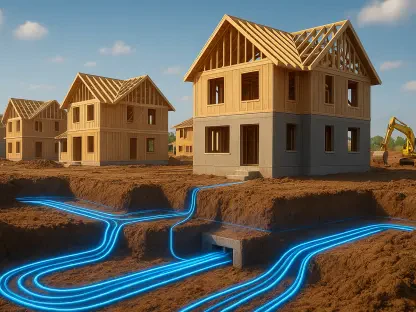
That $1 billion annual investment is a testament to the aggressive pace of development required to keep Ohio at the cutting edge of the global economy. Over the past decade, this sustained funding has been directed toward increasing the raw speed and capacity of our networks, ensuring that fiber optics reach deeper into our communities than ever before. For the 16,000 Ohioans employed by these companies, this represents a massive, ongoing commitment to high-skilled labor and long-term career stability in a field that is constantly evolving. These professionals are the ones on the ground, literally digging the trenches and splicing the glass that allows a student in a rural county to access the same educational resources as someone in a major metro area. The scale of this investment ensures that our infrastructure doesn’t just meet current demand but is built with enough overhead to handle the data-hungry applications of the coming decade.
Despite these investments, there are still approximately 300,000 households—roughly one million people—without high-speed access. How are state and federal funds, specifically the $800 million from the federal level and $300 million from the state, being coordinated to reach these underserved residents?
Closing the digital divide for those one million Ohioans requires a precise, surgical application of both state and federal resources to ensure no one is left in the dark. Under the current strategy, the state has directed roughly $300 million toward improving access for the unserved and underserved, creating a foundation that federal programs can then build upon. This state-level funding is being heavily supplemented by over $800 million in federal investments, including vital contributions from the Infrastructure Investment and Jobs Act and the BEAD program. By synchronizing these funds, we can tackle the “last-mile” challenges where the cost of laying fiber to a single remote farmhouse was previously prohibitive for private companies alone. It is a collaborative effort where public policy and private expertise meet to ensure that high-speed internet becomes a universal utility rather than a luxury reserved for densely populated areas.
The $20 million investment in the Route 30 Middle-Mile Infrastructure Project is a major highlight of recent progress. Why is this specific 15-county corridor so critical, and what impact will it have on strategic locations like the Mansfield Lahm Air National Guard Base?
The Route 30 project is a perfect example of why middle-mile infrastructure is the backbone of a successful network, as it provides the essential backhaul needed to carry wireline broadband traffic across the state. This $20 million fiber network will span Ohio from east to west, cutting through 15 counties and providing a high-capacity “superhighway” for data that local networks can then plug into. Its path is strategically chosen to serve local governments, healthcare facilities, and higher education institutions that require massive bandwidth to function. Perhaps most importantly, it provides critical connectivity to the Mansfield Lahm Air National Guard Base, which houses the 179th Cyberspace Wing, a unit that relies on secure, ultra-reliable data transmission for national security. By bolstering the Mansfield Industrial Park and other key hubs along this corridor, we are not just connecting homes; we are fortifying the economic and defensive infrastructure of the entire region.
What is your forecast for the state of broadband connectivity and the evolution of these networks over the next few years?
Looking ahead from 2026 through 2028, I anticipate a period of unprecedented network densification where the distinction between “rural” and “urban” connectivity speeds will finally begin to vanish. As the projects funded by the current $1.1 billion in combined state and federal support reach completion, we will see a surge in local business growth and a stabilizing of the workforce as remote capabilities become seamless across all 15 counties targeted in recent middle-mile expansions. The focus will shift from the initial “build-out” phase to a “resiliency” phase, where the priority becomes protecting these vulnerable networks from cyber threats and physical disruptions. We are entering an era where high-capacity fiber is as ubiquitous as electricity, and for the 16,000 workers in our industry, the mission will be to maintain and evolve these systems to support technologies we are only just beginning to imagine. My forecast is one of total integration, where Ohio’s infrastructure serves as a national model for how to successfully bridge the digital gap through aggressive private investment and strategic public partnership.