
The traditional quietude of a championship golf course is currently being punctuated by the invisible hum of ultra-high-speed data transmission as the United States Golf Association integrates advanced 5G solutions into its premier events. This technological evolution marks a significant departure from legacy connectivity standards that often struggled to maintain consistency across the sprawling, undulating terrains of world-class courses. By deploying a robust 5G infrastructure, T-Mobile has effectively addressed the logistical nightmare of providing high-capacity bandwidth to thousands of spectators, broadcasters, and tournament officials simultaneously. The deployment involves a sophisticated blend of millimeter wave and mid-band spectrum, ensuring that every corner of the venue remains a hotspot of digital activity. This shift is not merely about faster internet; it represents a fundamental re-engineering of how a multi-day sporting event operates in a hyper-connected society. Through this partnership, the USGA has unlocked new possibilities for real-time engagement that were previously constrained by the physical limitations of fiber-optic cabling and interference patterns common in dense wireless environments.
Architectural Foundations: Private Networks and Dedicated Bandwidth
Modern championship logistics require a level of network reliability that mirrors the precision of a professional golfer’s short game. T-Mobile has met this demand by implementing dedicated private 5G networks that operate independently from the public spectrum used by spectators. This strategic isolation ensures that critical operations—ranging from high-definition broadcast feeds to digital scoring systems—never compete for bandwidth with the thousands of smartphones uploading social media content. The use of network slicing technology allows the USGA to allocate specific lanes of data for different operational tiers, prioritizing low-latency connections for remote-controlled cameras and sensor-heavy telemetry equipment. Such granular control over the wireless environment has eliminated the jitter and lag that once plagued wireless broadcast setups in remote areas of the course. Furthermore, the integration of 5G Advanced features has enabled more efficient power management for battery-operated devices, allowing course sensors to remain active without maintenance.
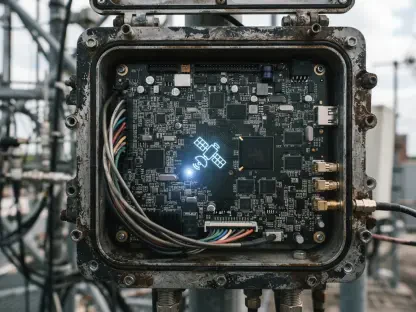
Beyond the immediate operational benefits, the underlying architecture of these 5G deployments provides a scalable blueprint for future smart stadiums and outdoor venues. The installation of massive MIMO antennas across the facility has vastly increased the capacity of the network, allowing it to handle sudden surges in data traffic when a major play occurs on a high-traffic hole. These antennas are strategically camouflaged within the landscape to preserve the aesthetic integrity of the historic courses while providing the necessary throughput for 4K video streaming and real-time data analytics. Engineers have optimized the backhaul connectivity to ensure that the massive amounts of data generated on-site are processed at the edge, reducing the time it takes for a ball-tracking graphic to appear on a viewer’s screen. This edge computing capability is crucial for the deployment of instantaneous feedback loops, where data from hundreds of individual sensors is aggregated and analyzed within milliseconds. The result is a seamless digital overlay that enhances the physical event.
Strategic Implications: Data-Driven Broadcasting and Fan Immersion
The impact of this high-speed connectivity is perhaps most visible in the enhanced fan experience, which now includes sophisticated augmented reality overlays and interactive mobile applications. Spectators on the course can utilize their personal devices to access real-time shot tracking, player statistics, and live leaderboards with zero perceptible latency. This level of immersion is powered by the high-frequency spectrum that T-Mobile has blanketed across the venue, facilitating the transfer of massive data packets required for high-resolution AR graphics. In addition to the on-course experience, remote viewers benefit from a more dynamic broadcast that features unique camera angles—such as those from 5G-connected drones and handheld wireless units—that were previously impossible to maintain. These mobile cameras provide a closer look at the action, capturing the nuances of the terrain and the players’ movements in ways that traditional fixed cameras could not achieve. The integration of high-bandwidth wireless links has also allowed the USGA to streamline its production costs.
The implementation of 5G technology at USGA events successfully established a new benchmark for the intersection of professional sports and advanced telecommunications. By transitioning to a wireless-first infrastructure, tournament organizers effectively resolved the historical challenges associated with delivering high-density data across expansive outdoor landscapes. The decision to prioritize dedicated private networks proved essential in maintaining broadcast integrity while simultaneously catering to the demands of a digitally savvy audience. Stakeholders recognized that the future of event management would necessitate even deeper integration of AI-driven analytics and automated course monitoring, both of which relied heavily on the low-latency foundations laid by T-Mobile. Moving forward, the focus shifted toward expanding these capabilities to include more personalized fan experiences and enhanced player performance metrics through wearable technology. Industry leaders concluded that the lessons learned from these deployments provided a vital roadmap for other organizations seeking to modernize their operations.