
Vladislav Zaimov brings an extensive background in the strategic management of telecommunications infrastructure, specifically focusing on how enterprise-grade networks can be fortified against modern vulnerabilities. As the landscape of mobile connectivity shifts toward higher frequencies and denser coverage, his insights provide a crucial look into the technical and operational hurdles of nationwide rollouts. With Germany reaching a critical tipping point in its digital transformation, we explore the intricacies of the recent massive network expansion and what it means for the future of mobile stability. The discussion covers the aggressive deployment of new mobile sites, the transition to dedicated 5G frequencies, and the innovative hybrid solutions that are bridging the digital divide in underserved regions.
How does the recent surge in mobile site development across key German states reflect the broader ambitions of the ultra-capacity network strategy?
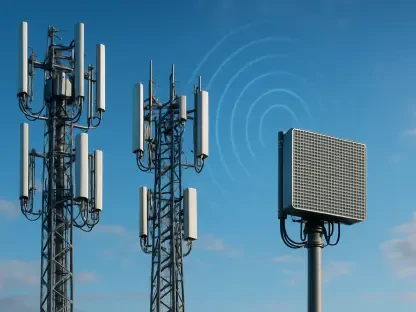
The recent activity we are seeing is a massive logistical undertaking, with 81 new mobile sites coming online and 548 existing facilities receiving significant capacity upgrades in just a single month. By focusing on industrial and residential hubs like Baden-Württemberg, North Rhine-Westphalia, and Bavaria, the goal is clearly to create a robust backbone that can handle the sheer volume of modern data demands. Reaching a 99% coverage rate for 5G among German households is a landmark achievement that transforms high-speed internet from a city luxury into a national standard. This isn’t just about placing antennas; it is a calculated effort to ensure that the “ultra-capacity” label translates into tangible reliability for millions of users. You can sense the shift in momentum as the network moves from broad, thin coverage to a deep, dense infrastructure capable of supporting the next decade of digital growth.
What are the technical implications of moving away from Dynamic Spectrum Sharing in the 2.1 GHz band toward a dedicated 5G approach?
Moving away from Dynamic Spectrum Sharing, or DSS, is a pivotal technical decision that prioritizes long-term stability over short-term compatibility. While DSS was a useful bridge that allowed LTE and 5G to share the same frequency lanes, it often led to a compromised experience where neither technology could reach its full potential. By dedicating the 2.1 GHz frequency band exclusively to 5G, the network effectively clears out the “traffic jams” caused by legacy signals, allowing for a much smoother and more predictable user experience. This transition, championed by leaders like Alexander Jenbar, signals that 5G has matured enough to stand on its own two feet without needing the safety net of 4G frequencies. It is a bold move that ensures that when a user sees that 5G icon on their phone, they are getting the full, unadulterated performance of the new standard.
In what ways is the hybrid connectivity model bridging the gap for users in regions where traditional fiber optics haven’t yet arrived?
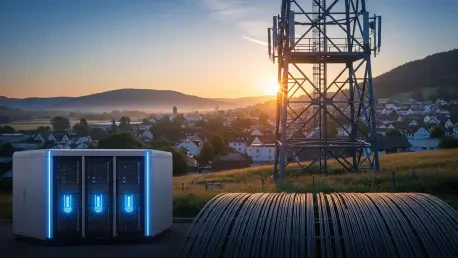
The MagentaZuhause Hybrid service is a clever engineering workaround for the physical limitations of rural infrastructure, blending the strengths of fixed-line and mobile networks into one seamless connection. For a family in a remote area currently limited to a basic 16 or 50 Mbps fixed line, the ability to jump to 100 Mbps through hybrid connectivity is a complete game-changer for their daily lives. Even more impressive is the XXL tier, which can push download speeds up to 500 Mbps and uploads to 50 Mbps, providing fiber-like performance without the need for immediate trenching or cable laying. This approach alleviates the frustration of slow broadband in areas where the geography makes traditional fiber deployment a slow and costly process. It ensures that the digital economy reaches every corner of the country, providing high-speed access to those who would otherwise be waiting years for a physical upgrade.
How does the combination of low-band spectrum and high-speed fiber backhaul change the landscape for mobile performance inside buildings and in crowded cities?
The strategy of using low-band spectrum, specifically the 700, 800, and 900 MHz frequencies, is essential for solving the age-old problem of signal penetration through thick concrete walls and indoor environments. However, the real power is found in the urban centers where 3.6 GHz antennas are deployed and connected almost entirely through 10 Gbps fiber optics. This massive backhaul capacity ensures that the lightning-fast speeds of 5G aren’t throttled by the infrastructure behind the tower, allowing for exceptional download speeds even in the most densely populated areas. We are also seeing a major push to upgrade internal network components to improve overall efficiency, which helps in managing the environmental impact by minimizing power consumption. It is a multi-layered approach: low bands for reach, mid-bands for a balance of speed and coverage, and high-capacity fiber to keep the whole system breathing.
What is your forecast for the evolution of German digital infrastructure over the next few years?
I anticipate that we will see the total capacity of the national mobile network effectively double as these ultra-capacity initiatives reach their full maturity. The focus will likely shift from achieving 99% coverage to optimizing the “quality of service” within that footprint, making 10 Gbps fiber connections the standard for every single mobile site. We are moving toward an era where the distinction between a fixed home connection and a mobile connection becomes irrelevant because the speeds and latencies will be virtually identical. This massive investment in 5G-centric infrastructure suggests that Germany is preparing for a future where autonomous systems and high-bandwidth applications are part of the everyday fabric of society. As more resources are dedicated to fully utilizing the 3.6 GHz band and retiring legacy shared frequencies, the network will become more than just a utility—it will be a powerhouse for national innovation.