
While 55% of Glo Fiber complaints cite total broadband failure, another 38% of users report being unable to maintain a stable WiFi connection during this ongoing service gap. This widespread disruption has rippled through communities, affecting thousands of residential and commercial subscribers who have come to view high-speed fiber-optic connectivity as a fundamental utility rather than a luxury. The sudden loss of service has created a significant hurdle for those whose lives are deeply integrated with the digital landscape, highlighting how quickly daily routines can be upended when the invisible threads of the internet are severed. As the situation unfolds, the scale of the failure suggests a systemic breakdown within the provider’s regional architecture. Glo Fiber, known for its rapid expansion and high-speed offerings, now faces intense scrutiny as customers demand answers and a clear path toward restoration. The incident serves as a stark reminder of the inherent vulnerabilities present in even the most advanced fiber networks, where a single point of failure can have cascading effects across multiple state lines and different sectors of the local economy.
Regional Scope and Timing of the Failure
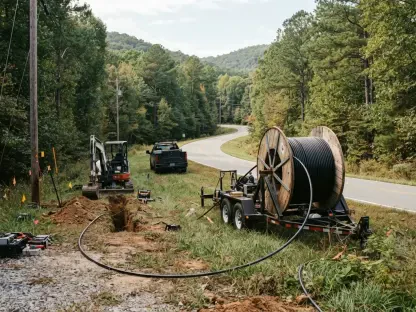
The current outage is not confined to a single neighborhood or city but has established a distinct multi-regional footprint that spans several hundred miles. Significant clusters of service loss have been identified in Suffolk, Virginia, and Lancaster, Ohio, indicating that the problem likely stems from regional hubs or backbone infrastructure rather than a localized physical line break in a residential street. One specific report from a user in Lancaster timed the onset of the disruption at exactly 5:55 PM EST on October 1, 2026, providing a critical marker for when the network began to buckle under the weight of an unidentified technical fault. This geographical diversity suggests that the issue is not a simple cable cut by a construction crew but something far more complex within the network’s core. The fact that users in geographically distinct states are experiencing identical symptoms at the same time suggests a synchronization of failure that often points toward centralized routing errors or the collapse of a primary data exchange point.
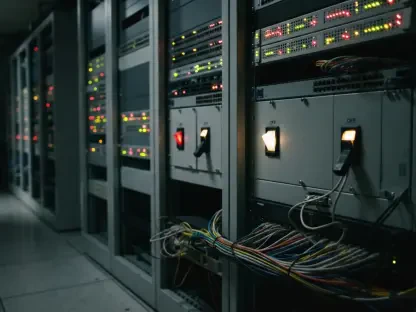
Building on the geographical data, technical experts suggest that a multi-regional impact of this nature often involves software updates or large-scale hardware failures at central offices. In the world of high-capacity fiber optics, data is routed through major hubs that manage traffic for entire regions; if one of these hubs experiences a power surge, a cooling failure, or a corrupted configuration file, the results can be catastrophic for the “downstream” customers. Because the impact spans from the coastal regions of Virginia to the Midwestern plains of Ohio, it is unlikely that a single physical accident is to blame. Instead, the focus is shifting toward the provider’s internal management systems and the automated protocols that govern data flow between states. This type of incident underscores the complexity of modern telecommunications, where the efficiency gained by centralizing network control also creates a massive blast radius when those central systems fail to perform their duties correctly.
Impact on Smart Homes and Remote Work
The loss of a reliable broadband connection has immediate and severe consequences for the modern “smart home” environment, which relies on constant connectivity to function. When the “last mile” of fiber-optic cable stops transmitting data, every connected device—from high-definition security cameras and smart thermostats to streaming hubs and voice-activated assistants—becomes effectively non-functional. This creates a ripple effect of frustration and insecurity, as users find themselves unable to monitor their property remotely or even adjust their home environments through traditional digital interfaces. This scenario proves how deeply embedded fiber technology has become in the American household, moving beyond simple entertainment to become the backbone of home security and domestic management. For many families, the outage transformed their high-tech residences into offline shells, illustrating the high stakes of our collective transition toward a fully connected lifestyle that assumes the internet is always available.
For the modern workforce, the outage represents a total halt to productivity that cannot be easily mitigated by home-based troubleshooting. In an era where remote work and digital education are the professional and academic norms, a lack of internet is more than a minor inconvenience; it is a total barrier to meeting obligations. Users have taken to public forums and real-time heat maps to document their experiences, noting that standard troubleshooting steps, such as power-cycling modems or checking physical connections, have failed to restore service. This collective frustration is amplified by the fact that many remote workers do not have an office to go to, making them entirely dependent on the stability of their home ISP. The economic toll of such an outage is difficult to quantify but is felt immediately by freelancers, corporate employees, and small business owners who must now scramble to find alternative locations or risk missing critical deadlines and losing potential revenue during the downtime.
Corporate Response and Resolution Uncertainty
One of the most challenging aspects of this disruption is the current lack of a definitive technical explanation or a concrete restoration timeline from the service provider. Without official communication regarding the root cause of the failure, customers are left to speculate on various scenarios, ranging from a sophisticated cyber-security incident to accidental damage of a major trunk line or a botched maintenance update. This information vacuum is particularly difficult for business customers who depend on steady uptime and strict Service Level Agreements to remain operational. In the absence of a proactive update, the relationship between the provider and its subscriber base begins to fray, as transparency is often just as important as the technical fix itself. The uncertainty prevents users from making informed decisions about whether to wait for a resolution or seek more permanent alternative arrangements, such as switching to a different provider or investing in expensive satellite-based backup systems.
Until the provider addresses the core network failure, local efforts to fix the connection by individual users will remain largely ineffective and potentially counterproductive. For now, affected users are being forced to rely on mobile hotspots and limited cellular data plans to stay connected to the outside world. This reliance on mobile data is often a poor substitute for the high-capacity speeds of fiber, leading to data caps being quickly reached and slower performance for data-heavy tasks like video conferencing. The situation serves as a stark reminder of the fragility of our digital infrastructure, where a single point of failure at a major service provider can disrupt the lives of thousands across the country. It also highlights the necessity for ISPs to develop more robust communication protocols that can function even when their primary data networks are compromised, ensuring that users are never left in the dark during a crisis that affects their livelihood and safety.
Strategic Redundancy and Future Safeguards
The recent disruption across Virginia and Ohio demonstrated that even the most advanced fiber-optic networks were susceptible to sudden and total failure. As the outage persisted, the initial confusion among users transitioned into a broader discussion about the necessity of network redundancy for both residential and commercial applications. Many businesses that lacked a secondary internet source suffered complete operational shutdowns, which proved to be far more costly than the monthly fee for a backup connection would have been. This event highlighted that the primary goal for any modern user should be the elimination of single points of failure within their personal or professional infrastructure. Those who had already implemented dual-WAN routers or automated cellular failover systems managed to maintain their essential services, though at reduced speeds, while their neighbors remained completely offline. The experience served as a localized case study in the importance of resilience over pure performance.
Moving forward, the primary recommendation for users in regions served by high-speed fiber is to diversify their internet portfolio to include at least one secondary, non-fiber delivery method. For residential users, this could involve maintaining a high-performance mobile hotspot or a low-cost 5G home internet plan that serves as an emergency backup. For businesses, the implementation of a sophisticated failover strategy that automatically switches traffic to a different carrier during an outage is no longer optional but a basic requirement for continuity. Furthermore, consumers should advocate for greater transparency and more frequent status updates from their primary providers, as the lack of information was often more disruptive than the technical failure itself. Investing in a secondary connection and demanding better communication will ensure that individuals and companies can navigate future service gaps without experiencing the total productivity loss that characterized this multi-state fiber outage.