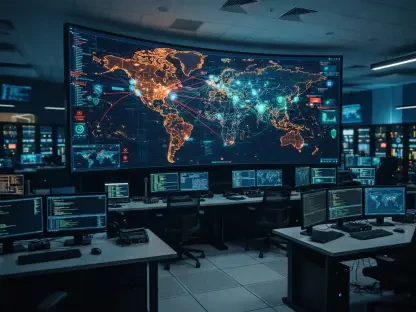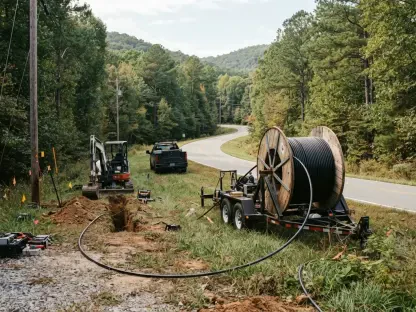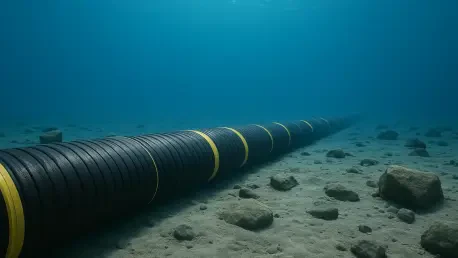

Deep beneath the ocean’s surface, a complex network of fiber-optic glass strands carries over ninety-nine percent of all international data, forming the fragile nervous system of our global digital economy. This infrastructure is no longer just a telecommunications utility; it has become a central theater for geopolitical competition and a critical requirement for the burgeoning artificial intelligence sector. As reliance on these cables grows, the industry is moving away from isolated point-to-point routes toward a complex, integrated ecosystem of partnerships designed to handle a massive influx of traffic.
The Digital Bedrock: Global Connectivity in an Era of High-Stakes Infrastructure
Hyperscalers and large technology firms have taken the lead as the primary financiers of new deployments. Their involvement has fundamentally altered the market, shifting the focus toward building massive capacity that can support real-time data processing across continents. This change reflects a broader movement where national security and data sovereignty are now inseparable from the physical layout of the seabed.
The Twin Engines of Transformation: AI Demands and Shifting Market Dynamics
Technological Evolution and the Surge of Artificial Intelligence
The rapid expansion of AI training and inference is creating an insatiable demand for high-bandwidth, low-latency routes. While initial development was centralized within major hubs, the current trend shows a transition toward a distributed global network. This move involves placing edge data centers closer to cable landing stations to reduce the time it takes for data to travel between processing units and users.
Consumer behaviors are also shifting as traditional voice and text traffic are replaced by data-heavy media and AI-driven applications. This evolution requires infrastructure that can handle unpredictable bursts of traffic without compromising performance. Consequently, subsea providers are designing systems that prioritize flexibility and rapid scaling over rigid, legacy configurations.
Market Projections and the Performance of Emerging Regional Hubs
Growth forecasts from 2026 to 2030 highlight the Gulf region as a central corridor for data moving between Europe, Asia, and Africa. This geographic advantage is turning the region into a vital intersection for global connectivity. Meanwhile, India has become a massive traffic catalyst, fueled by its dominant IT sector and the connectivity needs of its large population.
Despite the rise of satellite technology, subsea fiber remains the gold standard for long-distance transit. Fiber optics offer a level of reliability and capacity that satellite constellations cannot yet match for the core backbone of the internet. This ensures the seabed will remain the primary focus of infrastructure investment for the remainder of the decade.
Navigating a Fragmented World: Strategic Obstacles and Resilience Solutions
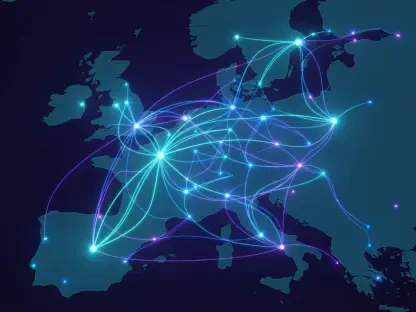
Physical vulnerability remains a significant concern, with cables facing threats from accidental damage and deliberate sabotage. To counter these risks, operators are developing redundant paths and mesh networks. These systems allow traffic to be rerouted instantly if a single line is severed, ensuring service continuity in high-risk zones.
Financial challenges also loom as traffic patterns fluctuate more rapidly than ever before. To mitigate the risk of pre-construction investment, industry players are relying on anchor customers. These large-scale users provide the necessary capital and guaranteed demand to make massive subsea projects economically viable in an increasingly uncertain global market.
Sovereignty and Security: The Evolving Regulatory and Geopolitical Landscape
Subsea cables are now viewed as strategic national assets, leading to much stricter governmental oversight. This shift means that data sovereignty laws now dictate where cables can land and who is allowed to own the underlying fiber. Such regulations have made the process of cross-border planning much more complex than it was in previous years.
Navigating this polarized environment requires a delicate balance of international compliance and local alliances. Operators are strengthening security protocols and ensuring end-to-end quality control to meet the rigorous standards set by various nations. These partnerships are essential for maintaining a unified global network in a fragmented world.
Future Horizons: Innovation, Low Latency, and the Integration of Global Networks
The introduction of smart cables equipped with integrated sensors represents a major technological leap. These cables can monitor environmental conditions and detect security threats in real-time, offering a new layer of protection for global data. This innovation is expected to disrupt traditional monitoring methods and enhance the overall safety of the network.
As trade alliances evolve, they will continue to dictate the routing of the next generation of subsea infrastructure. Balancing the need for affordability with high-security requirements remains a top priority. While the digital economy expands, the dominance of fiber optics will persist, serving as the essential foundation for all global interactions.
Securing the Future Flow of DatRecommendations for a Resilient Industry
The industry successfully recognized the necessity of shifting from pure competition toward collaborative ecosystems. Strategic investments focused on geographic diversity and the creation of AI-ready infrastructure provided the best path forward. Leaders acknowledged that maintaining redundancy was the only way to safeguard against unpredictable global events. Ultimately, the integration of secure and high-capacity networks became the standard for supporting the next decade of digital growth. Stakeholders prioritized long-term resilience over short-term gains, ensuring that the bedrock of the global internet remained stable. This proactive approach allowed the industry to thrive despite the shifting geopolitical and technological landscape.