
The relentless surge in sophisticated automated robocalls has forced the Federal Communications Commission to implement aggressive regulatory countermeasures that could fundamentally reshape how telecommunications providers manage user identity and personal data security. This push for accountability, while intended to curb the billions of dollars lost to fraud, has inadvertently positioned the agency at odds with the cryptocurrency sector. By mandating that voice service providers verify the exact identities of their users, the government is effectively creating a centralized registry of sensitive information. Security analysts warned that this move might transform telecommunications databases into lucrative targets for cybercriminals who specialize in digital asset theft. The tension between public safety and individual privacy remains high, as the requirement to link every phone number to a verified government identity could strip away the last layers of anonymity that protect many investors from targeted harassment or financial exploitation.
The Regulatory Drive: Universal Identity Verification
Under the current 2026 framework, carriers must collect a comprehensive suite of personally identifiable information, ranging from full legal names and physical home addresses to government-issued identification numbers. For high-volume or commercial users, the requirements have intensified, often necessitating the tracking and storage of IP addresses to provide a clear audit trail for automated communications. One of the most contentious aspects of this policy involved the mandatory data retention period, which required providers to maintain these records for at least four years even after a customer terminated their service. With the threat of non-compliance penalties reaching thousands of dollars per individual call, telecommunications companies faced immense pressure to strictly adhere to these protocols. This environment prioritized regulatory box-checking over the implementation of robust security measures, potentially leaving the underlying data structures vulnerable to breach.
The accumulation of such sensitive data within centralized corporate servers established a massive “honeypot” that sophisticated hacking syndicates found difficult to ignore in the current digital landscape. In the modern era, a mobile phone number serves as a primary gateway to a person’s entire online existence, especially for those utilizing SMS-based two-factor authentication for financial services. If a carrier’s internal database suffered a compromise, an attacker could potentially gain access to every piece of evidence required to impersonate a victim convincingly. This centralized approach simplified the workload for criminals, who no longer needed to piece together information from disparate sources to launch a successful attack. Instead, the regulatory mandate provided a one-stop shop for identity theft, allowing malicious actors to bypass traditional security layers and gain unauthorized entry into private cryptocurrency exchanges and personal digital wallets with alarming efficiency.
Navigating the Risks: SIM-Swap Vulnerabilities
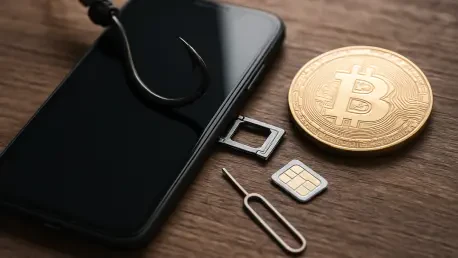
The primary threat arising from this regulatory shift is the escalation of SIM-swap attacks, a technique where fraudsters deceive service providers into porting a victim’s number to a device the attacker controls. Once a criminal controlled the phone number, they could intercept verification codes and reset passwords for critical digital assets, leading to irreversible financial losses. This trend became increasingly dangerous as the value of digital currencies grew, with recorded losses from such exploits jumping from roughly twelve million dollars to over sixty-eight million dollars in recent reporting cycles. Unlike traditional banking, where transactions can often be reversed or insured, the permanent nature of blockchain ledgers meant that a single successful SIM-swap could result in the total depletion of a victim’s life savings. The inherent lack of a central authority in decentralized finance meant that once the private keys were accessed via a hijacked phone line, there was virtually no recourse for recovery.
Critics argued that the FCC proposal effectively handed attackers a “full social engineering package” on a silver platter by ensuring that every account was tied to a verified identity. Historically, many prepaid phone accounts offered a layer of protection through pseudonymity, as they contained very little personal information that could be used against the owner. By eliminating this option, the new rules provided hackers with the perfect toolkit to manipulate customer service representatives, who are often the weakest link in the security chain. Armed with a victim’s home address and government ID details obtained from a carrier breach, a criminal could bypass almost any standard identity challenge presented by a call center. The telecommunications industry’s historically poor record of protecting consumer data from sophisticated breaches only exacerbated these fears, suggesting that the drive for robocall prevention might come at the cost of broader digital account security for millions.
Privacy Conflicts: The End of Pseudonymous Access
A significant point of contention involved the unresolved scope of the KYC requirements and whether they would apply universally to every retail and prepaid customer in the country. If these rules were applied without exception, the possibility of maintaining a pseudonymous phone line in the United States would essentially vanish, forcing high-risk individuals into the spotlight. For privacy-conscious citizens and those managing substantial digital portfolios, the loss of anonymity significantly increased the likelihood of both remote cyberattacks and more direct forms of physical extortion. Without the ability to decouple their digital identity from their telecommunications provider, users found themselves in a precarious position where their phone became a beacon for potential threats. This forced transparency did not just endanger digital assets but also raised concerns about personal safety, as the link between a phone number and a physical home address became more accessible to attackers.
Despite the aggressive push for expanded data collection, the regulatory proposal initially lacked a standardized framework for data encryption or a clear liability system for carrier negligence. This oversight left consumers in a legal limbo, where they provided sensitive information without a guarantee that the recipient would be held accountable for its loss or misuse. Security experts responded by urging the cryptocurrency community to decouple their security protocols from mobile phone numbers entirely, favoring more resilient methods. The transition toward hardware security keys and independent authenticator apps became a critical defensive strategy as the reliability of the traditional phone number as a security anchor diminished. This shift highlighted a growing realization that relying on a third-party telecommunications provider for identity verification was no longer a viable option in an era of sophisticated social engineering where the stakes involved the total loss of generational wealth.
Strategic Adaptation: Securing the Digital Frontier
The shift in the regulatory environment prompted a significant evolution in how digital asset holders approached their personal cybersecurity. Security professionals prioritized the adoption of FIDO2-compliant hardware keys, which provided a physical barrier that remained immune to the vulnerabilities of the telecommunications network. By moving away from SMS-based two-factor authentication, users successfully mitigated the risks associated with centralized carrier databases and the potential for SIM-swap fraud. Developers also integrated more robust biometric and multi-signature solutions into digital wallets to ensure that no single point of failure could compromise a user’s funds. This proactive approach underscored the necessity of self-custody and independent verification in a landscape where government mandates unintentionally increased the surface area for cyberattacks. The industry eventually recognized that true security required a move toward decentralized identity solutions that minimized the storage of sensitive personal data.